
Reviewed · EASTER ISLAND TOURS
Ahu Vinapu, Rano Kao and Orongo City Half-Day Tour
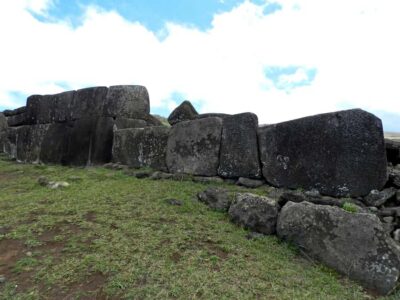
Ahu Vinapu gives this short tour its sharpest edge: one of Rapa Nui’s largest ceremonial platforms is built from tightly fitted stone slabs that recall Inca construction in Cusco. Add the Rano Kau crater and Orongo’s cliff-top village, and you get three very different sides of Easter Island in one morning or afternoon.
I like the efficient route and the small group, limited to 10 people. I also like that the guide explains the legends and meaning behind the sites instead of leaving you to stare at stones without context. Uka, one guide named in the feedback, is described as pleasant and interesting to listen to.
The main catch is cost. The tour is listed at $91 per person, but the Rapa Nui National Park entrance fee of $100 is extra, so you should budget $191 per person before any other travel costs. Three hours is useful, but the schedule leaves little room for a slow wander.
Key points to know before you book
- Ahu Vinapu’s fitted stonework: See one of the largest ahu platforms on Rapa Nui and compare its careful construction with the stonework of Cusco.
- Rano Kau’s crater lake: Look into one of Easter Island’s largest volcanic craters and one of its three natural sources of fresh water.
- Orongo’s birdman setting: Walk among about 50 elliptical stone houses above the ocean, near the sacred precinct of Mata Ngarahu.
- Small-group transport: Hotel pickup and drop-off in Hanga Roa are included, with groups limited to 10 people.
- Bilingual guiding: The tour operates in English and Spanish, with legends and site history explained along the way.
- Extra park fee: The $91 tour price does not include the $100 Rapa Nui National Park entrance fee.
Three major Rapa Nui sites in three hours
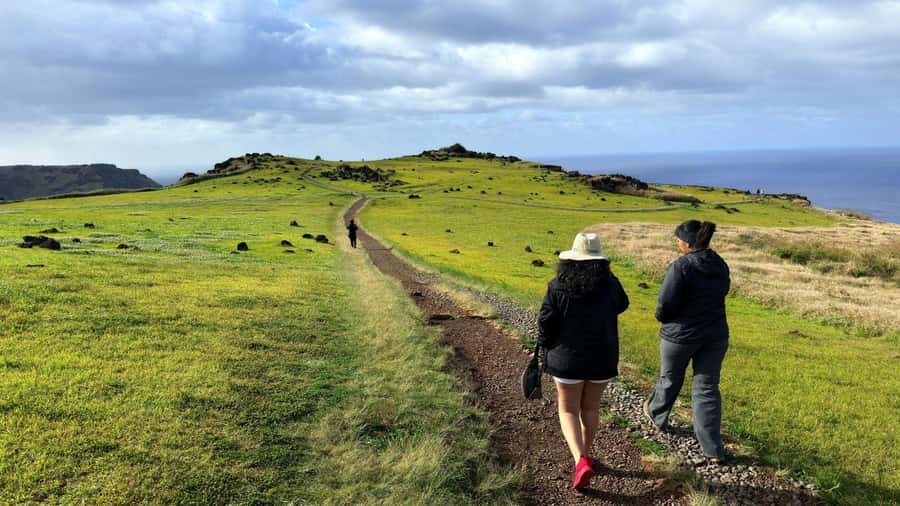
This half-day outing links Ahu Vinapu, Rano Kau, and Orongo on the southwest side of Easter Island. The order matters because the experience moves from stone engineering, to volcanic geology, to ceremonial life connected with the birdman tradition.
You are picked up at your hotel in Hanga Roa and driven between the sites. The arrangement is practical for you if you want an introduction to this part of the island without hiring a car or arranging separate transport.
A three-hour tour is long enough to see the main points, but it is not designed for a leisurely day outdoors. Your guide needs to keep the route moving, especially if the group reaches the sites at busy times. If you want extended photography stops or long walks, you may prefer a private outing or a full-day plan.
More moai and Rapa Nui sites:
- From Hanga Roa: Rapa Nui Culture Sightseeing Tour
★ 4.6 · 307 reviews - From Hanga Roa: Journey from Orongo to Ana Te Pahu
★ 4.3 · 75 reviews - Two days of Full Day Tour of Rapa Nui + Sunrise in Tongariki
★ 4.8 · 55 reviews
Ahu Vinapu and the careful work of its stone platform
Ahu Vinapu is the tour’s most striking stop for anyone interested in how the island’s ceremonial platforms were made. An ahu is a ceremonial platform associated with Rapa Nui’s monumental stone culture, and Vinapu includes one of the largest on the island.
The platform is formed from large slabs fitted closely together. The precision of the work has led to comparisons with Inca construction in Cusco, an unusual detail that gives the site a special point of interest. Your guide can help you focus on the joints, the scale of the stones, and the way the platform was assembled rather than treating it as just another ruin.
I like this stop because it raises questions without forcing a simple answer. The stonework is impressive on its own, but the comparison with Cusco adds another layer. You can look closely at the construction while listening to the stories and theories tied to the island’s past.
Keep your expectations measured. The attraction here is not a reconstructed village or a large museum display. It is an outdoor ceremonial complex, and the value comes from the remains, the setting, and the explanation your guide provides.
Comfortable shoes are a sensible choice. The tour information specifically asks you to bring them, and that is good advice for walking around historic sites rather than relying on smooth indoor paths.
Rano Kau’s enormous crater and three offshore islets
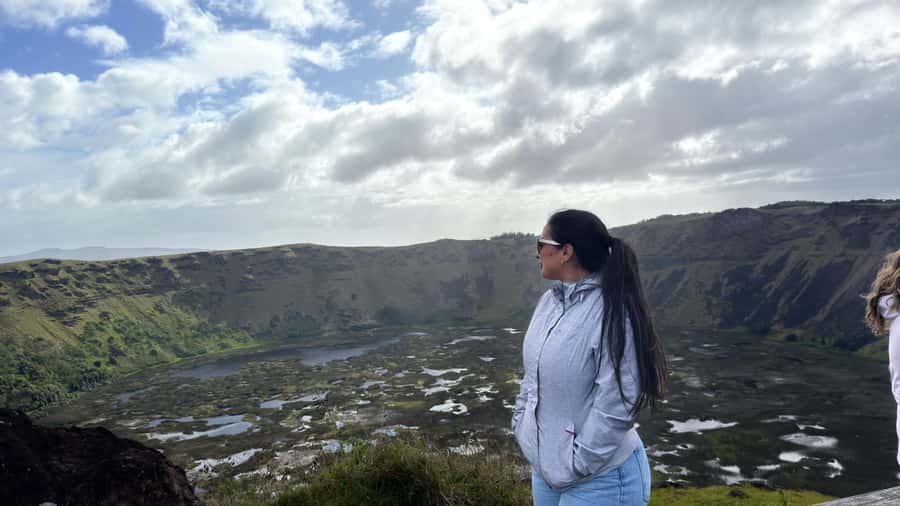
From Vinapu, the route continues to Rano Kau, one of Easter Island’s defining natural features. The volcano has a broad crater with a lake inside, and that lake is one of the island’s three natural bodies of fresh water.
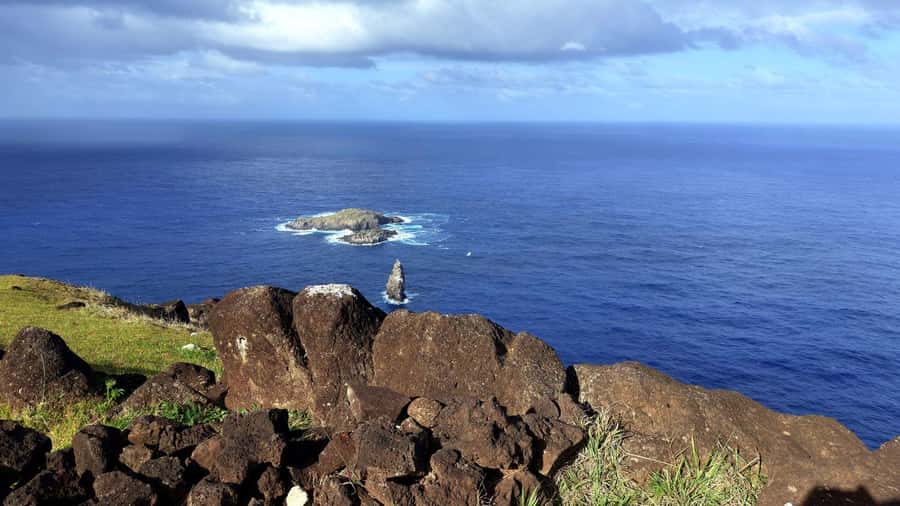
The view from the slopes is a major reason to book this tour. You can see the offshore islets of Motu Nui, Motu Iti, and Motu Kao Kao from the volcano area. Their position in the ocean helps you understand why this part of Rapa Nui became so important to the birdman ceremony.
Rano Kau gives the tour a welcome change of pace. At Vinapu, your attention is on cut and fitted stone. Here, you look across a huge volcanic bowl and out toward the sea. The combination makes the short itinerary feel more varied than a simple sequence of archaeological sites.
The crater itself is also a reminder that Rapa Nui is not only about moai. Its volcanic origin shaped the island’s water sources and its dramatic coastal views. Your guide’s explanation helps connect the physical setting to the human ceremonies held nearby.
The tour description refers to views from the slopes, so do not assume that the schedule includes a long hike around the crater. This is a viewpoint-focused stop within a three-hour route. If you need extended time for walking, ask about the exact plan when you check available departure times.
Orongo, the village linked to the birdman ceremony
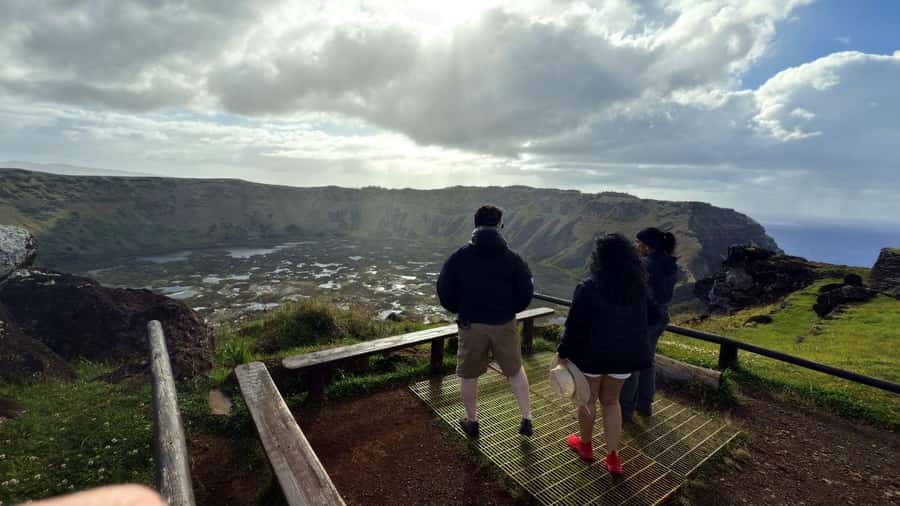
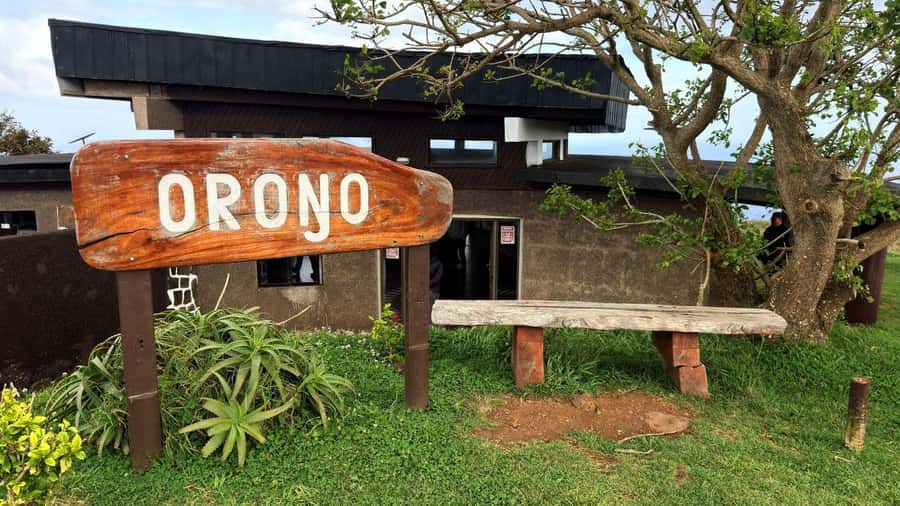
Orongo is the tour’s strongest stop for understanding the island’s later ceremonial traditions. Between 1600 and 1866, the village was connected with worship of the birdmen, a tradition tied to the nearby sea stacks and the sacred precinct of Mata Ngarahu.
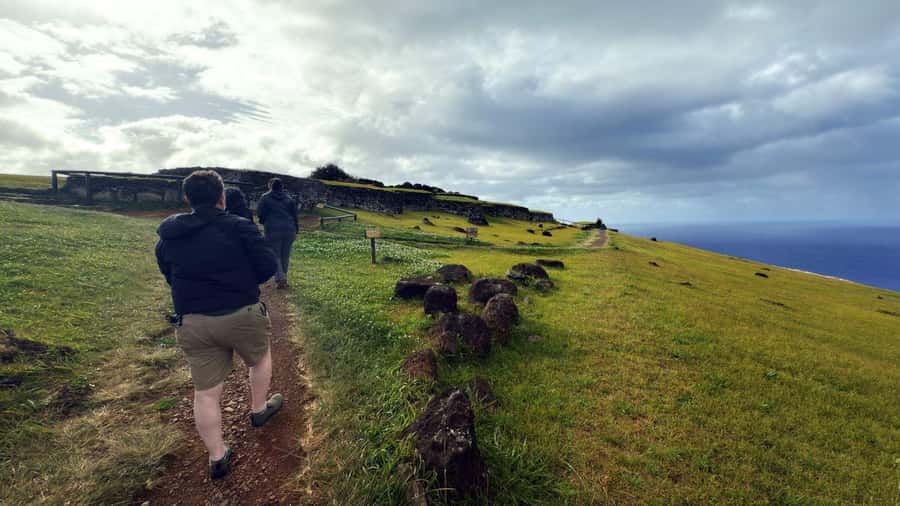
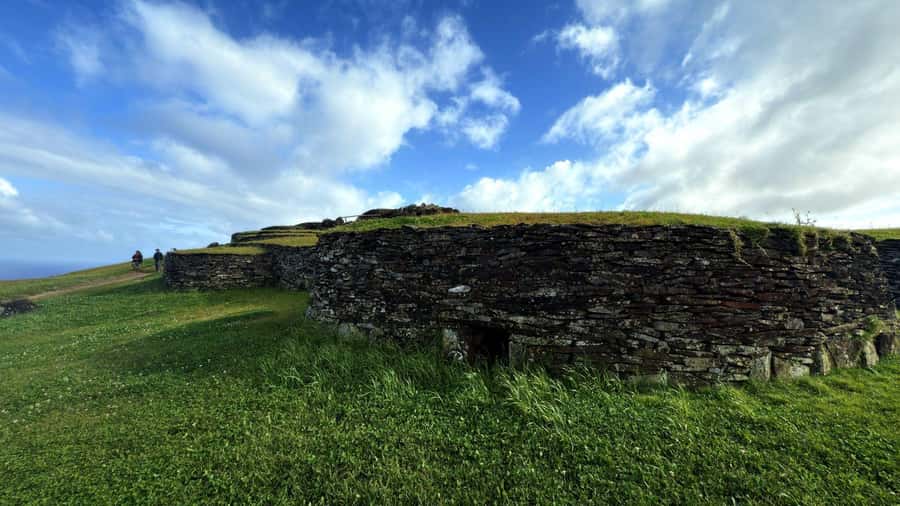
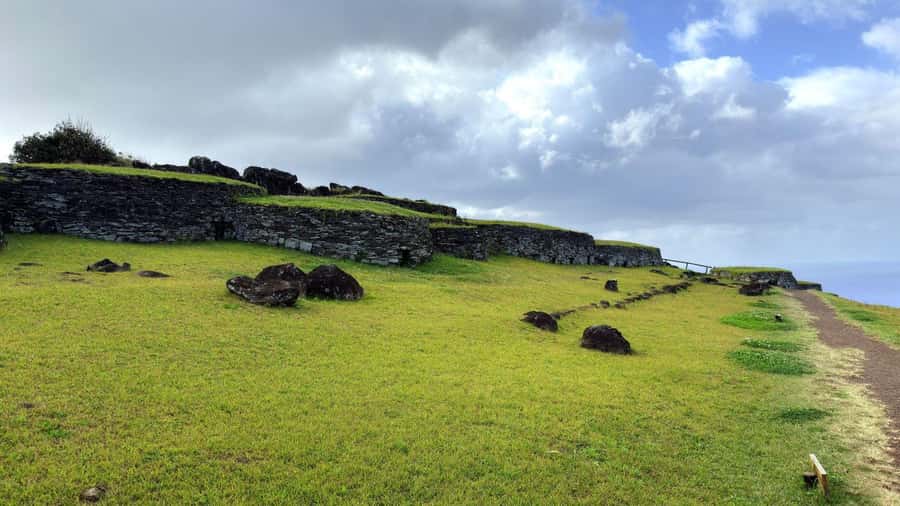
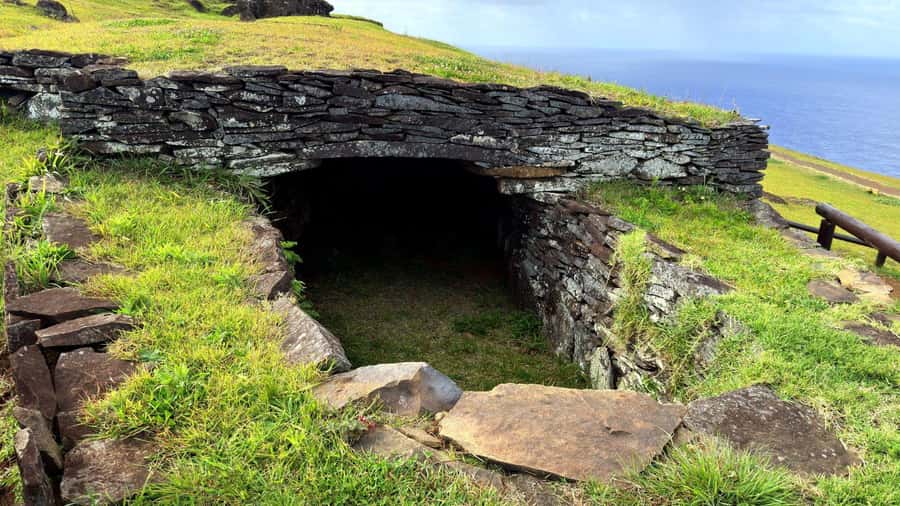
The village contains about 50 elliptical houses built with shale walls. Each has a small square entrance facing the ocean. The houses are arranged in two uneven rows, with the lower row ending at Mata Ngarahu.
That layout is easy to miss if you walk through quickly. Take time to notice how the homes sit above the coast and how the openings face outward. The design and position make more sense once you hear about the ceremonies and the islets visible offshore.
Mata Ngarahu is particularly important because it contains one of the island’s most heavily decorated petroglyphs. Your guide’s explanation is valuable here. Without context, the carvings and stone houses can seem disconnected. With the story of the birdman tradition, the village becomes a ceremonial setting rather than a collection of walls.
I would save questions for Orongo, especially questions about how the village, petroglyphs, crater, and offshore islets relate to one another. The guide is not simply moving you from one photo stop to the next. The information about legends and local history is a central part of the experience.
The site may appeal most to you if you enjoy places where natural surroundings and ritual life are closely connected. It is less suited to anyone looking only for a quick view of moai. The focus here is on ceremonial buildings, petroglyphs, oral traditions, and the setting above the ocean.
A few more Hanga Roa half-days to weigh up
- Easter Island: Half-Day Archaeology Tour
★ 4.2 · 19 reviews - Santiago Half-Day Walking Tour with Hotel Pick up & Brunch
★ 4.7 · 148 reviews - Half-Day Small-Group Panoramic Santiago Tour
★ 4.0 · 89 reviews - Half-Day Tour to Laguna Cejar
★ 5.0 · 54 reviews
What the guide adds to the experience
The tour is available with a live guide in English or Spanish. That matters at Rapa Nui, where the meaning of a platform, house, or carving is not always obvious from its appearance.
The guide is expected to explain the mysterious history of Ahu Vinapu, the volcanic setting at Rano Kau, and the legends surrounding Orongo. Uka is specifically praised for being pleasant and interesting to listen to, so if Uka leads your departure, you can expect a guide-centered experience with storytelling at its heart.
Do keep in mind that guide quality can vary by departure. The reliable detail is that the tour is guided in English and Spanish and that the route is limited to a small group. A group of up to 10 gives you a better chance to hear explanations and ask questions than a large coach tour.
Small does not mean private. You will still share the vehicle and site time with other people, and the exact pace will depend on the group. Still, the 10-person limit is a useful middle ground between arranging an expensive private tour and joining a large bus.
Is $91 a good value?
At first glance, $91 per person is a moderate price for a guided half-day tour with hotel transport. The value improves if you want to see several key sites without arranging a vehicle, directions, and a guide on your own.
The important budget detail is the separate $100 Rapa Nui National Park entrance fee. That makes the combined cost $191 per person. You should compare the full amount, not just the advertised tour price.
For that total, you receive hotel pickup and drop-off in Hanga Roa, transport between the sites, and a bilingual guided visit lasting about three hours. The price makes more sense if you value interpretation and convenience. It is less attractive if you already have transport and plan to visit the same places independently.
The short duration can also be a benefit. If your time on Easter Island is limited, this route covers a ceremonial complex, a volcanic crater, and Orongo in one compact outing. You still have part of the day free for another activity.
I would treat the tour as an orientation rather than a complete study of Rapa Nui. It gives you a clear starting point, but the three-hour format cannot cover every detail or allow long periods at each site.
Hotel pickup, timing, and practical limits
Pickup and drop-off are included for hotels in Hanga Roa. This is useful because you do not need to arrange a separate taxi or work out how to reach the first site.
Starting times vary, so check availability before booking. A morning departure may leave your afternoon free, while an afternoon departure could fit better around another plan. The supplied details do not promise a specific departure hour, so avoid building a tight connection immediately before or after the tour.
The tour is not suitable for wheelchair users, and non-folding wheelchairs are not allowed. Baby strollers are also not allowed. Large bags and luggage are prohibited, so bring only what you need for a few hours outdoors.
Alcohol and drugs are not allowed. Comfortable shoes are the one item specifically recommended, and you should follow that advice.
Cruise ship passengers should pay close attention to the pickup rule. The tour is intended for people staying in hotels and does not include pickup or drop-off from shore. If you are visiting Easter Island by cruise ship, this is not the right option according to the stated conditions.
Who will enjoy this half-day route?
I would recommend this tour to you if you are staying in Hanga Roa, want a guided introduction to southwest Rapa Nui, and prefer a short, organized route. It suits first-time visitors who want the main ideas explained while they see the sites.
It also works well for anyone interested in both natural and cultural places. Vinapu covers ceremonial stonework, Rano Kau gives you the crater and ocean views, and Orongo connects the area with birdman worship and petroglyphs.
The tour may not suit you if you dislike fixed schedules or want to spend hours at one site. It is also a poor fit if you are arriving by cruise ship, need wheelchair access, or plan to carry large luggage.
Photographers should consider the three-hour limit. You will have chances to photograph the fitted stones, crater, islets, village walls, and petroglyph area, but the route is not built around extended waits for perfect light.
Should you book the Ahu Vinapu, Rano Kau, and Orongo tour?
Book it if you want three important Rapa Nui sights explained in a small group, with hotel transport and a bilingual guide. The best reasons are the unusual stonework at Ahu Vinapu, the view from Rano Kau, and the clear link between Orongo, Mata Ngarahu, the petroglyphs, and the offshore islets.
Before paying, add the $100 national park entrance fee to the $91 tour price. Also confirm that you are staying at a Hanga Roa hotel, can manage the walking with comfortable shoes, and do not need wheelchair access.
I would choose this tour as a practical first look at southwest Easter Island, especially if your schedule is tight. If you have more time and want a slower experience, use it as a starting point and leave room elsewhere in your trip for longer exploration.
FAQ
How long does the tour last?
The tour lasts three hours. Starting times vary, so you need to check availability for the date you want.
What sites does the tour visit?
The route visits the Ahu Vinapu ceremonial complex, Rano Kau volcano, and Orongo Ceremonial Village.
Is hotel pickup included?
Yes. Pickup and drop-off are included for hotels in Hanga Roa on Easter Island.
Is the Rapa Nui National Park entrance fee included?
No. The national park entrance fee is listed separately at $100 per person.
What languages are available?
The tour has a live guide in English or Spanish.
How large is the group?
The tour is limited to 10 participants.
Can cruise ship passengers join?
No. The tour is intended for passengers staying in hotels and does not include pickup or drop-off from shore.
What should I bring?
Comfortable shoes are recommended.
Is the tour accessible for wheelchair users?
No. The tour is not suitable for wheelchair users. Non-folding wheelchairs, baby strollers, luggage, and large bags are also not allowed.
Just added around Hanga Roa
- Easter Island: Customized recreational-tourist diving★ 5.0 · 3 reviews
- Ancestral fishing: Fishing with an experienced Rapa Nui★ 4.4 · 3 reviews
- Rapa Nui: Polynesian Massage★ 4.8 · 5 reviews
- Rapa Nui: 3 Excursions with Hotel Transfers★ 4.3 · 6 reviews
- Volcanic Refuges: Excursion to Underground Civilization★ 4.7 · 8 reviews
- Easter Island: The Moai Trail Private Archeological Tour★ 4.9 · 12 reviews
- Easter Island: Tropical Diving★ 4.8 · 13 reviews
- Rapa Nui Highlights Program: 3 incredible tours to discover!★ 4.8 · 18 reviews
Easter Island Tours, compared.

Two days of Full Day Tour of Rapa Nui + Sunrise in Tongariki
Read our review →
Browse the lists this tour appears in