
Reviewed · SANTIAGO TOURS
Half-Day Small-Group Panoramic Santiago Tour
Santiago makes a strong first impression from above. This tour gives you that view from San Cristóbal Hill or Santa Lucía Hill, then fills in the picture with La Moneda, the Plaza de Armas area, Bellavista, the Fine Arts Museum, and Central Market. I like the mix of short walks and van rides, and I like the hotel pickup, which saves you from sorting out Santiago transport on your first morning.
I also like the small-group format and the chance of a flexible guide. Daniel has been praised for adjusting the pace, while guides including Christian, Consuelo, Ignacio, Erick, Yaman, Romi, and Giovanni have been noted for clear English and strong local background. The main concern is reliability: several bookings ended with a missed pickup, and one short outing lasted only about 90 minutes instead of four hours.
Key points to know before booking
- The hill choice changes the tour: San Cristóbal offers the grand city-and-Andes panorama, while Santa Lucía gives you a more historic park with stairs, fountains, and Castillo Hidalgo.
- You cover a lot of ground: Expect downtown government buildings, colonial-era sights, Bellavista, the Fine Arts Museum, modern financial districts, and Central Market.
- The tour mixes driving with walking: This is useful for seeing more in four hours, but sightseeing time at individual stops is often brief.
- The group is intended to stay small: The supplied details list a maximum of eight in one place and 15 in another, so confirm the actual group size when booking.
- The price is reasonable for a first look: At $39.50, hotel transfers and a bilingual guide add real value, but food, drinks, and some admission costs are extra.
- Pickup deserves care: The strongest practical warning is to confirm the time and meeting point with the operator before departure.
Why this four-hour route works for a first day
Santiago is spread between the Mapocho River, the coastal range, and the Andes. A walking tour alone cannot cover the historic center, Bellavista, San Cristóbal, and the newer financial district in half a day. This outing uses an air-conditioned van to connect the pieces, then gets you out for short walks and viewpoints.
That format suits you if you have just arrived, have limited time, or want an introduction before exploring on your own. The guide adds context that you would miss from a quick taxi ride, especially around Chile’s political past, architecture, and public spaces.
The pace is brisk. A typical stop may last 5 to 10 minutes, with longer periods at the hill, the park, or a viewpoint. You should think of this as an orientation tour, not a museum visit or a slow neighborhood walk. Bring shoes you can walk in, since both hills involve uneven paths or steps, especially Santa Lucía.
A few more Santiago half-days to weigh up
- Santiago Half-Day Walking Tour with Hotel Pick up & Brunch
★ 4.7 · 148 reviews - Santiago: Main Chilean Wineries Private Half-Day Tours
★ 3.7 · 8 reviews - Santiago de Chile: Half-Day City Tour with Local Cuisine
★ 4.5 · 3 reviews
Starting with Santiago’s grand architecture
The route begins with hotel pickup in the morning and a ride in an air-conditioned van. One early stop is Club Hípico de Santiago, the city’s elegant equestrian club. Its design was inspired by a similar club in France, and the stop introduces the architecture of one of Santiago’s older, wealthier areas.
This is a useful opening because it moves beyond a simple checklist of monuments. You get a sense of how the city’s elite districts were planned and how European ideas shaped Santiago’s public buildings. The tour then heads toward the center, where the focus shifts from grand avenues to civic power and daily city life.
The route may also pass through the upper financial area, known locally as Sanhattan. That contrast, old equestrian architecture beside modern office towers, helps you read Santiago as a city of several eras rather than one unified style.
Walking through the civic center and Plaza de Armas
Paseo Ahumada is a four-block pedestrian shopping street connecting Plaza de Armas with Avenida Libertador General Bernardo O’Higgins. You get about 10 minutes here, enough to see the downtown flow and understand the street’s role as a north-south spine.
From there, the Metropolitan Cathedral is one of the key historic stops. Construction began in 1753 and finished in 1799, with later changes giving the building its present neoclassical appearance. If the doors are open, step inside and look beyond the exterior. The cathedral is the seat of Santiago’s archbishop and remains one of the central religious buildings in the capital.
The timing matters here. One outing found the cathedral closed, so you should treat an interior visit as dependent on opening conditions rather than a sure thing. Even when you cannot enter, the Plaza de Armas setting gives you a useful look at Santiago’s colonial center.
Nearby, the Central Post Office occupies the north side of the square. It sits beside the former Royal Audience building, on land linked to Pedro de Valdivia, the Spanish founder of Santiago. You may only have five minutes, so this is mainly an exterior view and a quick explanation from your guide.
The former Congress building is another important political marker. Chile’s Congress met there until the 1973 military coup, after which Congress moved to Valparaíso. The building later housed the foreign ministry and was declared a national monument. This is one of the places where a short guide explanation can add far more than a photograph alone.
La Moneda and the memory of Chilean politics
La Moneda is the seat of Chile’s president and occupies a full block in downtown Santiago. The surrounding Plaza de la Constitución forms the heart of the civic district, with the finance, foreign affairs, justice, and central bank buildings nearby.
You will usually view La Moneda from outside. The supplied details do not include an interior tour, and admission is not listed as included. That is not a serious flaw for a half-day overview, but it is worth knowing if you hoped to tour the palace itself.
The area carries heavy historical weight. La Moneda was the site of the 1973 coup, when Salvador Allende’s government was overthrown. A good guide can explain this period without turning the tour into a lecture. Several guides, including Ignacio, Erick, and Christian, have been praised for explaining Chilean political history clearly and at a manageable pace.
The Centro Cultural Palacio de La Moneda lies beneath Plaza de la Ciudadanía. Its glass roof brings daylight into the underground space, which includes the Cineteca Nacional and temporary exhibition halls. The stop is listed as free, but the brief schedule means you are more likely to see the building and hear about its role than attend an exhibition.
Same base, a completely different landscape:
- Santiago: Cajon del Maipo/Embalse del Yeso Tour with Picnic
★ 4.3 · 3,789 reviews - Santiago: Vina Del Mar, Valparaiso, Casablanca & Reñaca Tour
★ 4.2 · 2,838 reviews - Small-Group Cajón del Maipo Full-Day Tour and Picnic
★ 4.5 · 2,277 reviews - Santiago: Cajon del Maipo & Embalse El Yeso Trip with Picnic
★ 4.5 · 1,859 reviews
Choosing between San Cristóbal and Santa Lucía Hill
This is the most important choice you make when booking. The two hills are not interchangeable.
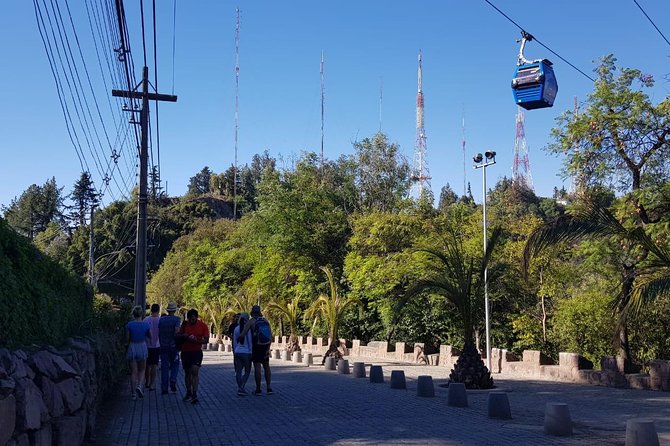
San Cristóbal Hill gives you the broader panorama. From the high point, you can orient yourself between the Andes and the Cordillera de la Costa, while Santiago spreads below. The route may include the funicular or cable car, and the hill section can last around 30 minutes. The ride and the views are among the strongest parts of the outing, particularly on a clear day.
Choose San Cristóbal if you want the classic Santiago postcard: city blocks below, mountains beyond, and a better sense of the capital’s size. One practical limitation is weather. Haze can soften the mountain view, so the experience depends heavily on visibility.
San Cristóbal also connects with Parque Metropolitano, the large urban park that includes the Chilean National Zoo and the hill’s public facilities. The park stop is listed at about 25 minutes when this option is selected. You should not expect enough time to explore the park fully, but the visit gives you a better feel for the green space surrounding the viewpoint.
Santa Lucía Hill is smaller and more historical. It is the remnant of a 15-million-year-old volcano and was used as a lookout by the conquistadors. Pedro de Valdivia declared Santiago’s founding from this hill in 1541.
In the late 19th century, Governor Benjamín Vicuña Mackenna reshaped it as a public park. Today, bronze gates, metal stairways, fountains, statues, and Castillo Hidalgo create a more ornamental setting. The stop lasts about 20 minutes, so you will need to keep moving, but it offers a closer look at the city’s past than the wider San Cristóbal view.
Choose Santa Lucía if you prefer architecture, history, and a compact walk. Choose San Cristóbal if your priority is the biggest panorama. Admission to the selected hill is listed as included, but one booking reported having to pay an entrance fee, so I would confirm this before departure.
Bellavista, Neruda, and Santiago’s creative side
After the civic center, the route moves toward Bellavista, the district between the Mapocho River and San Cristóbal Hill. Bellavista is known for art galleries, boutiques, antique mansions, bars, clubs, and restaurants. It is also associated with Chilean poet Pablo Neruda, whose Santiago home, La Chascona, is here.
The tour does not list a visit inside La Chascona, so expect an introduction to the neighborhood and Neruda’s connection to it rather than a house museum visit. That distinction matters if you are a serious Neruda fan. You may want to return later for the full museum experience.
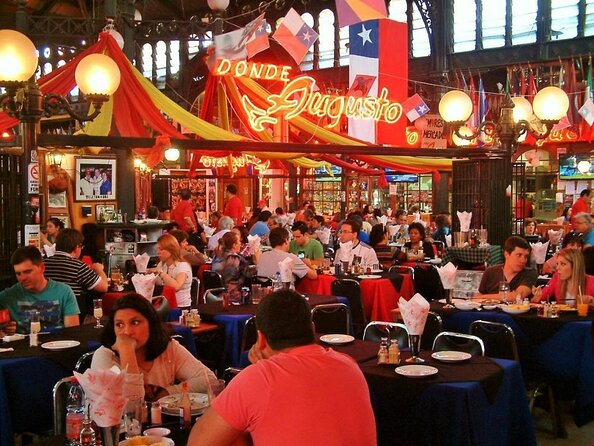
The area is also a good place to note the difference between a sightseeing stop and a place worth revisiting at night. The outing gives you a quick look at Bellavista’s character, but 10 or 15 minutes cannot capture its restaurants, galleries, and nightlife. I would use the tour to decide where you want to return for dinner.
A traditional Chilean craft shop is included somewhere along the route. This can be useful if you want to see local handicrafts or buy a small souvenir, though shopping stops are not the main reason to book the tour.
Fine Arts Museum and Parque Forestal
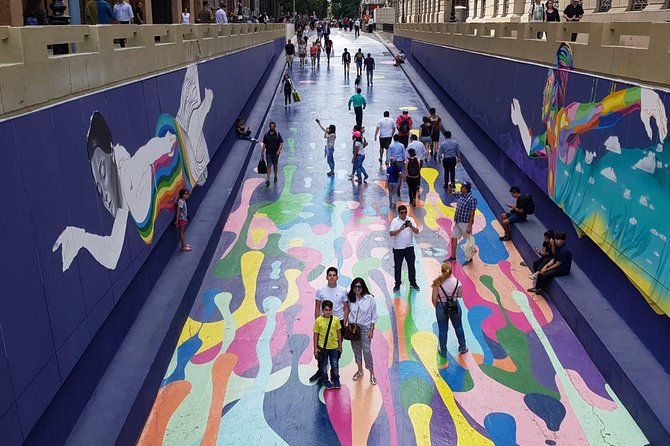
The Chilean National Museum of Fine Arts sits in Parque Forestal and opened in 1880, making it the oldest major art museum in South America. Its present Beaux-Arts building dates to 1910 and was designed by Chilean architect Emile Jéquier for the centennial of Chilean independence.
The schedule gives you only a short stop, so plan on seeing the exterior and hearing an introduction rather than touring the galleries. If art interests you, mark the museum for a separate visit. The nearby park stretches along the Mapocho River from Plaza Baquedano toward Estación Mapocho, with Mercado Central and other sights close by.
The park helps connect several stops on the route. It also places the museum in a broader urban setting, where public art, river views, and grand civic buildings sit close together. This is a good example of the tour’s strength: it shows how the city fits together, even when it cannot give you long inside visits.
Central Market and the final taste of local life
Central Market is one of the tour’s most appealing final stops. National Geographic has included it among the world’s top food markets, and it is a practical place to see fresh produce, seafood, prepared food, and everyday commerce in one roofed setting.
The supplied schedule does not give a fixed time for this stop, so your visit may be brief. You should not count on a full meal unless the guide allows enough time and you pay for it yourself. Food and drinks are not included.
Still, this is the right kind of place to end a city introduction. Government buildings tell you how Chile is administered. Central Market shows you how the city eats and trades. If you have time after the tour, return independently and explore at a slower pace.
The modern city beyond the old center
Some versions of the route include Parque Bicentenario in Vitacura, beside Santiago’s financial district. This carefully maintained park has wide lawns, two artificial lagoons, swans and other birds, and spaces for leisure activities. The stop lasts about 25 minutes.
Parque Bicentenario gives you a very different Santiago from the cathedral and colonial center. It is polished, spacious, and modern, with the financial district close by. The tradeoff is time. Every additional neighborhood means less time for downtown walking, so the exact route may feel slightly different depending on traffic and the selected hill.
Other sights listed along the broader route include the National Library, the Supreme Court, the Gabriela Mistral cultural center, the Costanera Tower, the Sculpture Park, and the bars and restaurants around Pio Nono and Constitución. These may be viewed from the vehicle or used as brief photo stops rather than full visits. That is normal for a four-hour circuit, but do not book it expecting entry to every named attraction.
Price, group size, and what you really receive
At $39.50 per person, this is a fair price for a four-hour introduction if the pickup runs on time and the route includes the main sights. Hotel pickup and drop-off alone can save money and effort, especially when you are unfamiliar with Santiago. The guide, bilingual commentary, and air-conditioned van make the price stronger than a simple hop-on bus ride.
The small group is another advantage. The supplied information gives a regular minimum of two people and a maximum of 15, while another field lists a maximum of eight. I would ask the operator to clarify the expected group size. Some departures have effectively become private tours when only one booking was made, which can be a bonus if the arrangement feels comfortable to you.
Food, drinks, and unspecified admission charges are not included. The selected hill is shown as included, but because one booking reported paying at the entrance, confirm the current arrangement. Also note that the tour requires good weather and a minimum number of bookings. If the operator cancels for either reason, you are offered another date or a full refund.
Free cancellation is available up to 24 hours before the start time. Changes or cancellations inside that window are not accepted for a refund.
How to avoid the biggest practical problems
The sharpest weakness is pickup reliability. More than one booking ended with people waiting at the hotel and receiving no timely notice. In one case, the operator later cited too few bookings or a vehicle problem. That is a serious issue when you have only one day in Santiago.
I would confirm your hotel address, pickup time, and the operator’s contact method the day before. Keep the confirmation message available, wait in the hotel lobby, and ask the front desk to help identify the vehicle if needed. The stated procedure is that the guide asks for your name in the lobby or at the provided address.
Once the tour begins, the best guide experiences have involved clear English, clean vehicles, good air conditioning, and a willingness to adjust the pace. Daniel slowed the route for someone with a chest problem, while Erick was praised for walking up the hill steps with the group instead of waiting below. Those details matter more than a polished speech.
Traffic can also affect the outing. One guide managed rush-hour conditions well, and Sunday was noted as a good day because Santiago traffic is lighter. If your schedule allows, a Sunday departure may help, though the exact conditions can change.
Who should book this Santiago tour?
I would choose this tour if you want a broad first look at Santiago, have four hours available, and prefer a guide to explain the city as you move between districts. It works especially well after a morning arrival, once you have rested and eaten at your hotel.
It also suits couples, families, and small groups that want the main sights without arranging several taxis. Most people can participate, and service animals are allowed, but the hill stops may involve walking and stairs. If mobility is a concern, ask in advance which hill is being used and how much walking is expected.
I would not choose it if you want long museum visits, an extended Central Market meal, or a slow exploration of Bellavista. I would also be cautious if your schedule cannot tolerate a missed pickup. The itinerary is ambitious, and the quality depends heavily on the assigned guide and the operator’s communication.
Should you book it?
Book it for coverage and orientation, not depth. San Cristóbal gives you the city view you need to understand Santiago, while La Moneda, the cathedral, Bellavista, and Central Market supply the essential downtown story. At $39.50, that is good value when the vehicle, guide, and hotel transfer all work as promised.
Before paying, confirm the pickup and ask about the actual group size, hill admission, and expected route. Pick San Cristóbal for mountain views and city scale. Pick Santa Lucía for history and a shorter, more architectural walk. If those details are clear, this is a sensible way to get your bearings fast and decide what deserves a longer visit later.
FAQ
How long does the Santiago tour last?
The tour lasts approximately four hours, although one supplied experience lasted only about 90 minutes. Confirm the expected duration with MTO Tour Chile before departure.
Does the tour include hotel pickup and drop-off?
Yes. Pickup and return transportation from your Santiago hotel or provided address are included. The guide asks for your name in the lobby or at the stated pickup location.
Which hill can I visit on the tour?
You choose either San Cristóbal Hill or Santa Lucía Hill when booking. San Cristóbal is listed with about 30 minutes, while Santa Lucía is listed with about 20 minutes.
Are the hill admission fees included?
The selected hill admission is listed as included. One supplied experience reported paying an entrance fee, so confirm the current policy before the tour.
Is food included?
No. Food and drinks are not included unless specifically stated. Central Market is visited, but the available details do not promise a meal or a set amount of time for eating.
What is the cancellation policy?
You can cancel up to 24 hours before the start time for a full refund. The tour may also be rescheduled or refunded if poor weather or an insufficient minimum number of bookings causes a cancellation.
Just added around Santiago
- Santiago: Private Pomaire, Isla Negra, and Pablo Neruda Tour★ 3.9 · 3 reviews
- Santiago de Chile: Half-Day City Tour with Local Cuisine★ 4.5 · 3 reviews
- Santiago: Guided City Tour through the historic center of Santiago★ 4.1 · 3 reviews
- ISLA NEGRA AND ALGARROBO WITH VINICOLA UNDURRAGA – TOUR : CHILE★ 3.3 · 3 reviews
- Valparaíso Tour with Funicular Ride and small groups★ 5.0 · 3 reviews
- Portillo & Laguna del Inca with Lunch at the Hotel Portillo★ 5.0 · 3 reviews
- Santiago: Private Half-Day City Tour★ 4.2 · 3 reviews
- From Santiago: Isla Negra, Pablo Neruda Museum & Winery Tour★ 5.0 · 3 reviews
Santiago Tours, compared.

Cajon del Maipo/Embalse del Yeso Tour with Picnic
Read our review →
Vina Del Mar, Valparaiso, Casablanca & Reñaca Tour
Read our review →
Small-Group Cajón del Maipo Full-Day Tour and Picnic
Read our review →
Valparaiso -Casablanca -Reñaca-Oceanic Rock-Concon
Read our review →
Valparaiso, Viña del Mar, & Casablanca Valley Tour
Read our review →
Portillo and Laguna del Inca Day Trip with Picnic
Read our review →Browse the lists this tour appears in