
Reviewed · EASTER ISLAND TOURS
Two days of Full Day Tour of Rapa Nui + Sunrise in Tongariki
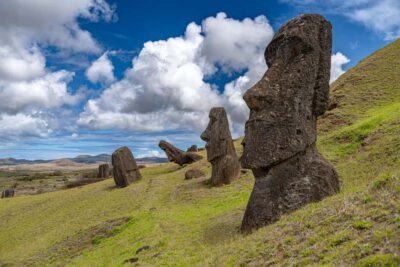
Rapa Nui’s Moai are not simply statues to tick off a list. They sit among volcanic craters, open grassland, and sacred ceremonial sites, and a good local guide helps you understand why they were placed there. This three-day plan gives you two full touring days followed by sunrise at Ahu Tongariki, the island’s most famous row of Moai.
I like the use of certified local guides, since Rapa Nui’s stories include oral traditions, legends, and theories rather than one neat written record. I also like the practical support: hotel pickup and drop-off, rain ponchos, multilingual guides, and help with planning other island activities. The main caution is the sunrise timing. At least one departure around 6 a.m. left too little time to wait for the complete sunrise before the guide had to return for the morning tour.
Key points to know before booking
- Three separate outings: You get two full-day tours plus a dedicated sunrise visit, not one continuous three-day trip.
- Ahu Tongariki at sunrise: This is the signature moment, but confirm the pickup and return timing if seeing the full sunrise matters to you.
- Different guides may lead each day: Alejandro, David, Alex, and Ariki are among the guides connected with recent departures, giving you varied viewpoints.
- The national park ticket is extra: Buy it before the first excursion through the Ma’u Henua offices or the official online ticket page.
- Bring your own food and drinks: Meals are not included, though you can buy food at points along the route.
- Small-group or private options: The tour can suit people who want company, or those who prefer a more personal format.
Two full days to understand Rapa Nui
The strength of this tour is its broad coverage. Over two full days, you visit the island’s famous archaeological places while moving through the volcanic terrain that shaped Rapa Nui culture. The exact order and site list should be confirmed when you book, but the program is designed around the major attractions rather than a quick introductory loop.
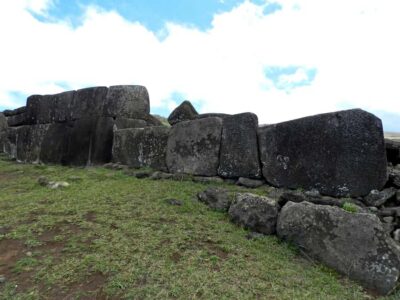
You will see Moai, ceremonial platforms, ancient sites, and wide views across the island. The point is not only to photograph the statues. Your guide explains the rituals, legends, construction, and theories connected with the ancient civilization, giving the stones a human setting.
I especially like this format for a first visit. Rapa Nui is remote, and a short stay can feel confusing if you try to piece everything together alone. Two full days give you time to compare sites and ask follow-up questions instead of hearing one fast explanation and moving on.
The physical demands are moderate rather than extreme, but you should still wear comfortable shoes and clothes. The organizers ask you to have a moderate level of fitness, and the open sites may involve walking on uneven ground. High heels are not allowed, which is sensible advice even if it sounds obvious.
More moai and Rapa Nui sites:
- From Hanga Roa: Rapa Nui Culture Sightseeing Tour
★ 4.6 · 307 reviews - From Hanga Roa: Journey from Orongo to Ana Te Pahu
★ 4.3 · 75 reviews - Rapa Nui Dreams: Experiencie Pack 3 Days
★ 4.7 · 32 reviews
Ahu Tongariki and the sunrise question
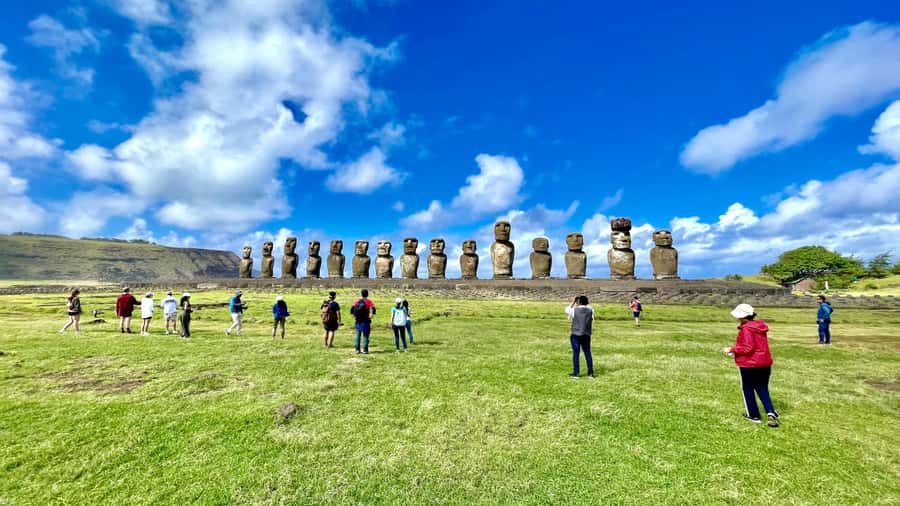
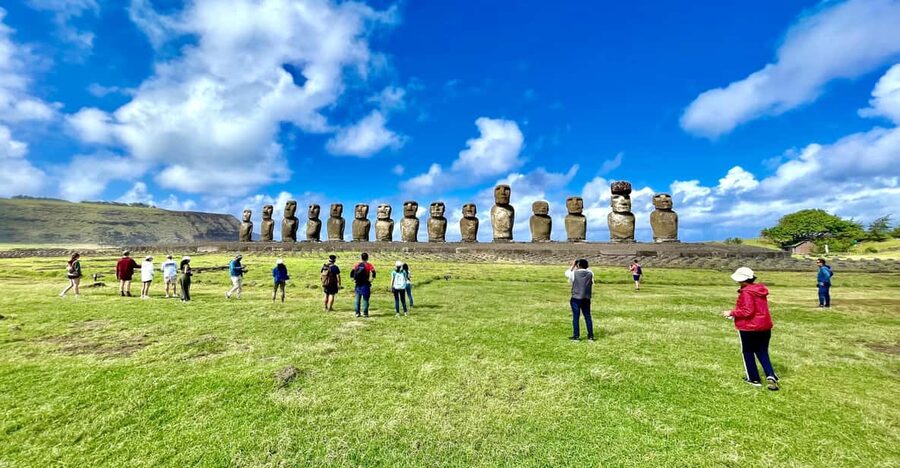
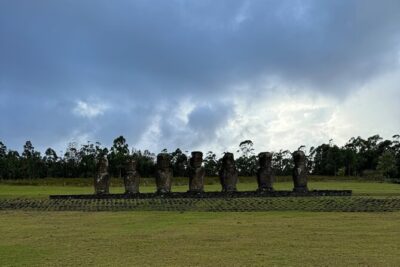
Ahu Tongariki is the emotional centerpiece of the program. Its line of Moai facing inland makes a powerful sight at any hour, but early light adds a changing quality to the stone and the surrounding volcanic ground. If you have seen images of Rapa Nui, this is likely one of the places you already recognize.
The sunrise visit is scheduled as a separate outing on the third day. That separation is useful because you do not have to squeeze Tongariki into one of the long touring days. You can focus on the site in the early morning, then return to your accommodation.
Still, timing deserves close attention. One departure collected participants around 6 a.m., while sunrise began around 8 a.m. The guide then needed to leave in time for a full-day tour starting near 9 a.m. That meant the group could not remain until the sunrise was fully complete.
This is not a small detail if sunrise is the main reason you are booking. Ask for the exact pickup time, expected arrival time, time allowed on site, and return schedule. You may get beautiful early light, but the schedule may not allow a long wait for the sun to clear the horizon.
There is also a useful lesson in the report of someone being taken to a less suitable viewpoint. A guide should help you understand where the best viewing position is before the sun appears, not after the moment has passed. If the sunrise is important to you, ask directly about the viewing spot and how long you can stay.
Guides who add context, with some variation
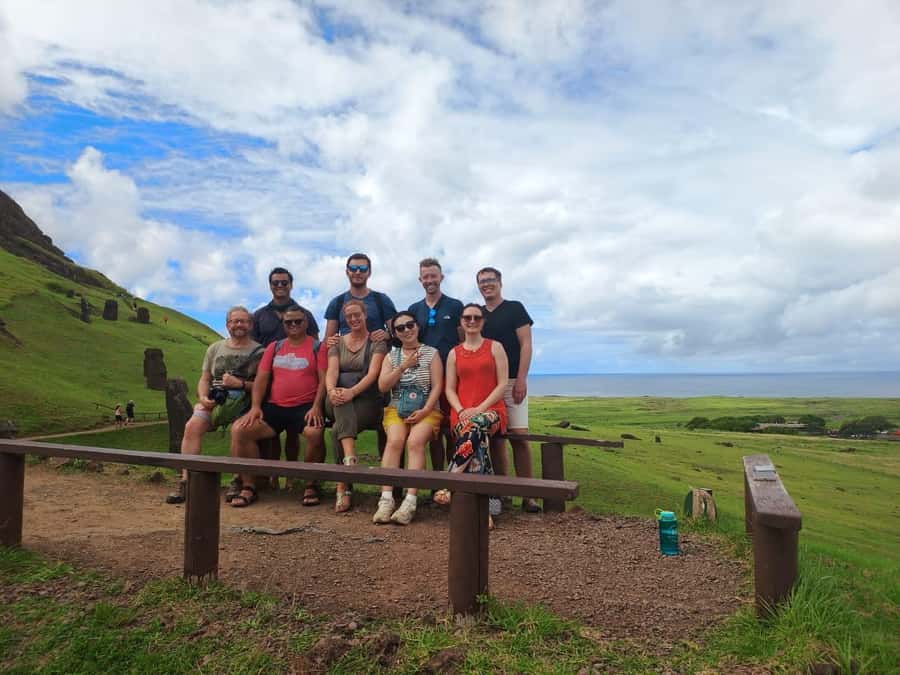
The guiding is one of the tour’s strongest features. Guides speak English, Spanish, or French, and the company presents local knowledge as a central part of the service. That matters on Rapa Nui, where many places have names and stories that are easy to reduce to a postcard caption.
You may have a different guide on each day. Alejandro is described as logical and informative, while David brings a more controversial and inventive approach to theories about the island. Alex is also praised for knowing the subject well and for bringing energy to the work.
Different guides can be a real benefit here. Some aspects of Rapa Nui’s past do not have a single agreed explanation, so hearing more than one interpretation can make the sites more interesting. One guide may focus on archaeology, another on oral tradition, and another on the questions that remain unsettled.
The tradeoff is uneven delivery. One sunrise guide, Ariki, was described as acting mainly as transport and attendance rather than providing much interpretation. That may not matter if you only need a ride to Tongariki, but it will disappoint you if you expect a full guided explanation at dawn.
The company promises support before and after the tour, along with guide availability for questions about Rapa Nui. Use that access. Ask which language is available for each day, whether you can request a particular guide, and how the guides handle the sunrise schedule.
What the day-to-day rhythm may feel like
A full-day island tour asks you to be ready early, stay with the group, and manage your own food and water. Pickup and drop-off are included, but you must wait in your accommodation’s reception or lobby. The vehicle does not go to room doors, and the group cannot wait for late arrivals.
That rule is worth taking seriously. Transfer routes can include several accommodation pickups, and one account described the vehicle making what felt like random circles before collecting everyone. A little patience at the start may be necessary, especially if you are sharing transport.
Bring drinks and snacks each day. Food is not included, although there are places where you can buy it. The program does not promise a restaurant stop or a provided lunch, so you should not assume that meals will appear at a convenient time.
Rain ponchos are supplied if the weather turns wet. That is a helpful touch on an exposed island, but I would still wear practical clothes that can handle changing conditions. A towel is also listed among the items to bring, though no particular use is specified.
The day before your first activity, you receive instructions for the next day. Read that message carefully. It should help you confirm the pickup point and timing, and it gives you a chance to ask about food, language, and the sunrise plan before you are standing outside in the dark.
A few more Hanga Roa half-days to weigh up
- Sunrise Tongariki: Sunrise at Tongariki Park Private Tour
★ 4.5 · 47 reviews - Atacama: San Pedro de Atacama Sunrise Hot Air Balloon Ride
★ 4.7 · 76 reviews - Tongariki Sunrise: Half Day Private Tour
★ 3.8 · 9 reviews - Geysers del Tatio: Sunrise and breakfast in Atacama
★ 4.4 · 5 reviews
Why local guiding matters on Rapa Nui
The company’s local focus is more than a marketing line if it results in guides, drivers, and support staff from the island benefiting directly. The experience is designed to support the local economy and fair trade in Rapa Nui, while presenting the island through people who work there.
That local connection can shape how you see the sites. A Moai is not just a large stone figure, and an Ahu is not just a platform for photographs. The guide can place the monuments within stories about ancestors, ritual, community, and the island’s changing past.
You should still expect interpretation rather than a final answer to every question. The program itself points toward legends, rituals, and competing theories. That makes a guide’s ability to separate established information from speculation important.
I prefer this kind of explanation to a rigid script. If you enjoy asking why a site was built, what a tradition means, or how different theories fit together, the changing perspectives across the three outings may be one of the best parts of the trip.
Price, park fees, and the real value
The listed price is $250 per person. The currency is not specified in the supplied details, so check the booking page carefully before paying. The price covers the guided outings, accommodation pickup and return, rain ponchos, and pre- and post-tour assistance.
The national park admission is not included. The stated price is 20,000 Chilean pesos for Chilean nationals and 72,000 Chilean pesos for foreign nationals. You must have the ticket before the first day, and you can buy it in person at the Ma’u Henua offices or through the Rapa Nui National Park ticket website.
Food is also extra. Add the park ticket and your meals, drinks, and snacks when working out the final cost. The tour can still offer good value if you want two long days with organized transport and local interpretation, since arranging every major site and transfer independently may take more time and planning.
The best value comes from the breadth of coverage and the help around the tours. The company also offers advice about other activities and viewpoints during your stay. If you want a private or small-group format, ask about the price difference, since that may change the value for couples or families.
Who will enjoy this program most
I would choose this tour if you are visiting Rapa Nui for the first time and want an organized introduction without giving up local interpretation. It fits people who enjoy archaeology, oral tradition, volcanic scenery, and plenty of questions.
It is also a good match if you want several languages available. English, Spanish, and French are offered, though you should confirm your preferred language for each outing rather than assume the same guide leads every day.
The program suits active adults with moderate fitness who can walk in comfortable shoes and remain on schedule. It may be less suitable if you need very slow pacing, guaranteed long stops, or a highly predictable guide from start to finish.
Sunrise photographers should look carefully at the timing. The setting may be excellent, but the schedule can be tight. If your priority is witnessing the full sunrise rather than simply arriving before first light, ask for a clear commitment about how long the vehicle will remain at Tongariki.
Booking details that can save you trouble
You can cancel up to 24 hours in advance for a full refund, and the reserve-now, pay-later option lets you hold a place without paying immediately. Starting times depend on availability, so check the schedule for all three outings rather than looking only at the first day.
Have your national park ticket ready before the first activity. Keep the confirmation accessible, and do not leave the purchase until the morning of the tour if you can avoid it.
Wait in the lobby or reception area at the set pickup time. Since the vehicle cannot knock on room doors and cannot wait for late passengers, arriving early is the simplest way to protect your day.
A private or small-group booking may help if you want more time for questions or have a specific pace in mind. It will not automatically solve every timing issue, so discuss the Tongariki departure and return plan before booking.
My verdict: a strong first look at Rapa Nui
I would book this program if I wanted two full days of organized sightseeing, local guides, and a separate chance to see Tongariki in the early morning. The high overall rating reflects the program’s clear strengths: good organization, strong communication, enthusiastic guiding, and wide coverage of the island’s famous sites.
I would not book it without asking about the sunrise schedule. That is the one point that can change the experience from special to rushed. Also budget separately for the park ticket, food, and drinks.
For most first-time visitors, the balance is good. You get practical support, several guide perspectives, and time at the major archaeological places. Just arrive ready, carry snacks, and make sure your idea of sunrise matches the actual timetable.
FAQ
How long does the Rapa Nui program last?
The program lasts three days: two full-day tours followed by a sunrise outing at Tongariki.
Is the national park admission included?
No. You must purchase the Rapa Nui National Park ticket separately before the first activity. The stated price is 20,000 Chilean pesos for Chilean nationals and 72,000 Chilean pesos for foreign nationals.
Where can I buy the national park ticket?
You can buy it in person at the Ma’u He nua offices or online through the Rapa Nui National Park ticket website provided by the operator.
Is food included?
No. Food is not included, but there are points along the touring routes where you can buy it. You should bring drinks and snacks.
Which languages are available?
The available guide languages are English, Spanish, and French.
Does the tour include hotel pickup?
Yes. Pickup and drop-off at accommodations are included. You must wait in the reception or lobby area, since the pickup team does not enter rooms to knock.
What should I bring?
Bring comfortable shoes, comfortable clothes, and a towel. Rain ponchos are provided if it rains, and high-heeled shoes are not allowed.
More 2-Day Experiences in Hanga Roa
- From Hanga Roa: Easter Island Highlights 2-Day Tour
★ 4.3 · 205 reviews - Santiago: 2-Day Hop-On Hop-Off Bus Ticket and Cable Car
★ 4.3 · 162 reviews - 2 Days in Patagonia. Torres del Paine and Balmaceda and Serrano Glacier.
★ 4.1 · 4 reviews
More Full-Day in Hanga Roa
- Easter Island: Full-Day Tour to Anakena
★ 4.7 · 27 reviews - Hanga Roa: Full Day Moai and Mistery
★ 4.4 · 22 reviews - Small-Group Cajón del Maipo Full-Day Tour and Picnic
★ 4.5 · 2,277 reviews - Piedras Rojas, Altiplanics Lagoons & Salar Full-Day Tour
★ 4.7 · 592 reviews
Just added around Hanga Roa
- Easter Island: Customized recreational-tourist diving★ 5.0 · 3 reviews
- Ancestral fishing: Fishing with an experienced Rapa Nui★ 4.4 · 3 reviews
- Rapa Nui: Polynesian Massage★ 4.8 · 5 reviews
- Rapa Nui: 3 Excursions with Hotel Transfers★ 4.3 · 6 reviews
- Volcanic Refuges: Excursion to Underground Civilization★ 4.7 · 8 reviews
- Easter Island: The Moai Trail Private Archeological Tour★ 4.9 · 12 reviews
- Easter Island: Tropical Diving★ 4.8 · 13 reviews
- Rapa Nui Highlights Program: 3 incredible tours to discover!★ 4.8 · 18 reviews
Easter Island Tours, compared.
Browse the lists this tour appears in