
Reviewed · EASTER ISLAND TOURS
From Hanga Roa: Rapa Nui Culture Sightseeing Tour
The quarry at Rano Raraku is the heart of this day. Unfinished moai still rise from the volcanic rock, giving you a rare look at how these famous statues were made. From there, the route links the great ahu platforms, ruined ceremonial sites, a magnetic stone, and Anakena beach in one long circuit from Hanga Roa.
I like the use of native Rapa Nui guides, including guides such as Frank, Hivi, Javiera, and Zoe, because local knowledge can add meaning that a quick photo stop cannot. I also like the smart one-day coverage: Tongariki, Rano Raraku, and Anakena are the places many people come to Easter Island to see. The tradeoff is a busy schedule, with frequent stops and limited time at some sites. A delayed lunch has even caused some people to miss the final stop.
Key points to know before you go
- Rano Raraku is the day’s main event: You see unfinished moai where they were carved, not just statues displayed on distant platforms.
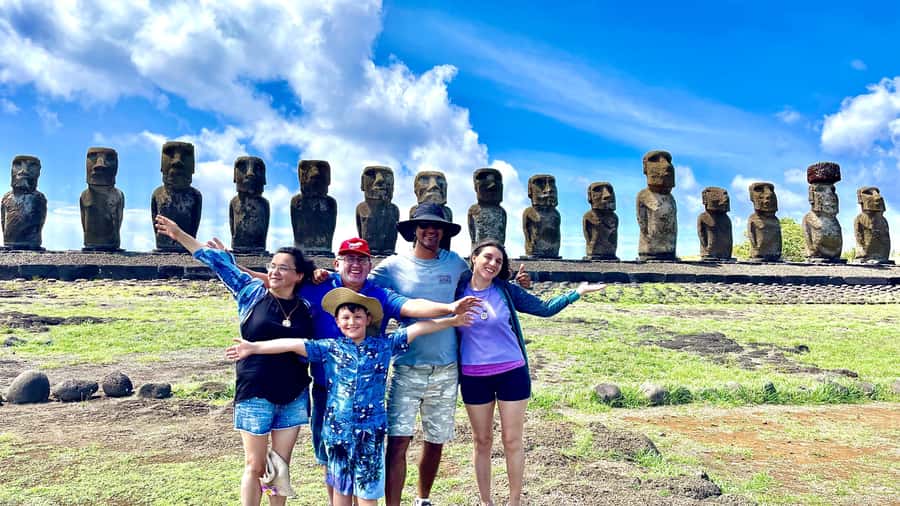
- Tongariki delivers the iconic view: Fifteen moai line the island’s largest restored ceremonial platform.
- Anakena adds a welcome change of pace: You get 1.5 hours of free time at a palm-lined beach after a day of archaeology.
- Local guides make the difference: Strong guides explain customs, legends, and island life in English or Spanish.
- The $80 price covers transport and guiding: You still need to pay for the National Park ticket and lunch.
- Plan for a full eight hours: Hotel pickup and drop-off in Hanga Roa are included, and the tour is wheelchair accessible.
Why this one-day Rapa Nui route works
Easter Island, or Rapa Nui, is small enough to cross in a day, but its major sites are spread around the coast and inland hills. Renting a car gives you freedom, yet it leaves you to sort out the park rules, site order, and meaning behind what you see. This tour takes care of the route and puts a local guide beside you.
At $80 per person, the value is strongest if you have only one full day on the island. You get transport, hotel pickup and drop-off, and a live guide for eight hours. That is a fair price for seeing the main ceremonial sites without arranging a vehicle yourself. The National Park ticket is extra, and lunch is also on your own, so the real cost will be higher.
I would choose this outing early in an Easter Island visit. It gives you the basic map of Rapa Nui, then leaves you free to return later to a site you want to study at a slower pace. If you have several days, a smaller private outing may offer more time at each stop. If you have one day, this route is efficient.
More moai and Rapa Nui sites:
- From Hanga Roa: Journey from Orongo to Ana Te Pahu
★ 4.3 · 75 reviews - Two days of Full Day Tour of Rapa Nui + Sunrise in Tongariki
★ 4.8 · 55 reviews - Rapa Nui Dreams: Experiencie Pack 3 Days
★ 4.7 · 32 reviews
From Hanga Roa to the island’s eastern sites
Pickup is at your Hanga Roa hotel, with a requested wait in the lobby 10 minutes before departure. The first drive lasts about 45 minutes, giving you a useful transition from town to the open countryside.
The transport is by bus or coach. One recent experience used a good-quality minivan, though vehicle size can vary. The day involves getting on and off several times, so wear shoes that are comfortable for walking and bring protection from sun or rain. Heavy rain has not stopped the route from visiting the sites, but the weather can affect how long you want to walk around.
The first stop is described as a traditional village and includes about 45 minutes of guided walking at Vaihu. Here you see fallen moai and an ahu area surrounded by the island’s stark coastal scenery. It is not the grandest introduction to the statues, but it helps you understand that many Rapa Nui monuments are archaeological places, not polished attractions.
Vaihu is useful for setting the mood. The moai are not all standing in a perfect row. Some lie face down, and the remains give you a sense of the changes that affected the island’s ceremonial sites. Your guide’s explanation matters here, since the stones alone do not tell you much.
Akahanga and the stories behind fallen moai
At Ahu Akahanga, you spend around 45 minutes with a guide and on foot. This is another place where moai lie among the remains of a ceremonial platform, with rugged ground and open views around them.
Akahanga carries legend as well as archaeology. A good guide can explain what is known, what belongs to oral tradition, and what remains uncertain. That distinction is important on Rapa Nui, where dramatic stories can easily become mixed with fact.
This stop may feel quieter than Tongariki or Rano Raraku. One practical point is that the early stops can seem less impressive if your main goal is to see standing moai. Still, they give the day a useful sequence: you begin with damaged or fallen monuments, then later see the quarry and the great restored platform.
Several guides have been praised for placing answers in context rather than simply reciting dates. That is the sort of guiding you want at Akahanga. Ask questions about how the ahu worked, how the statues were positioned, and what the site tells you about ceremony and community life.
Rano Raraku, where the moai were carved
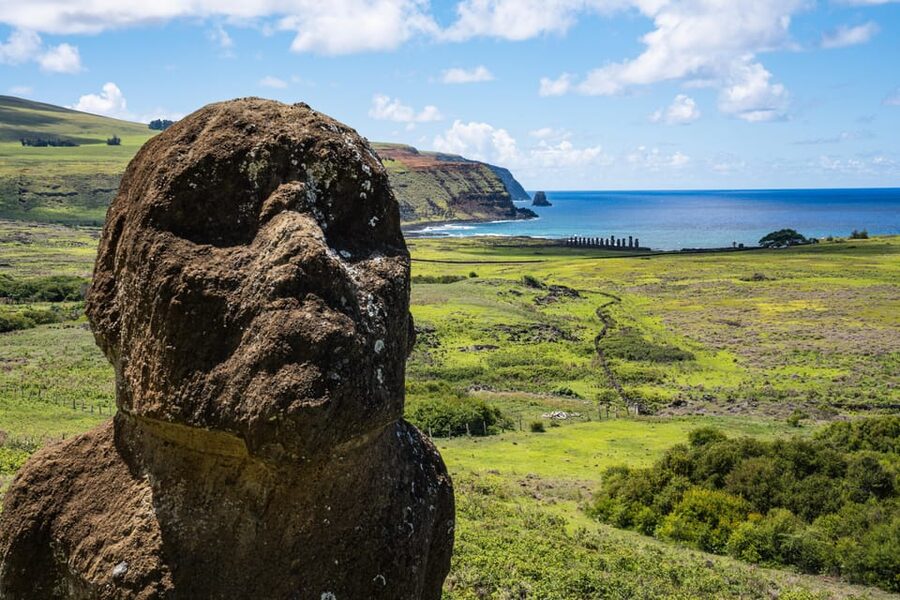
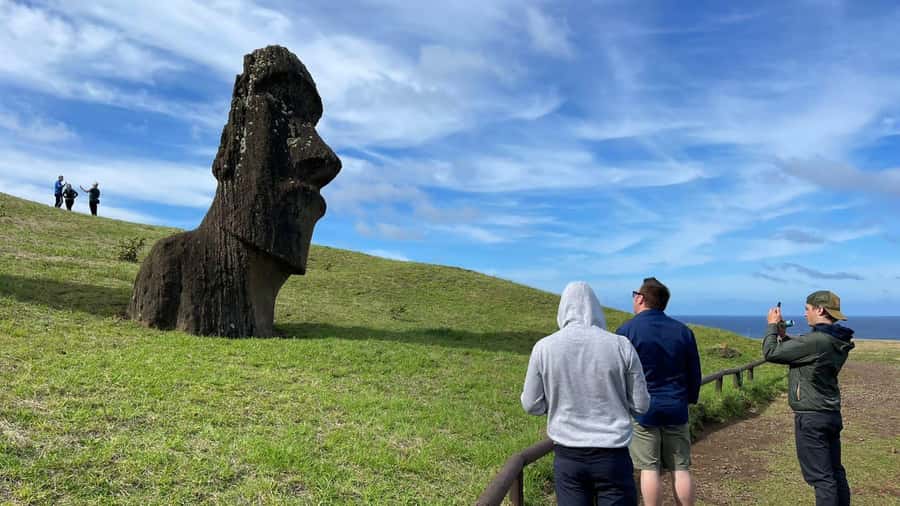
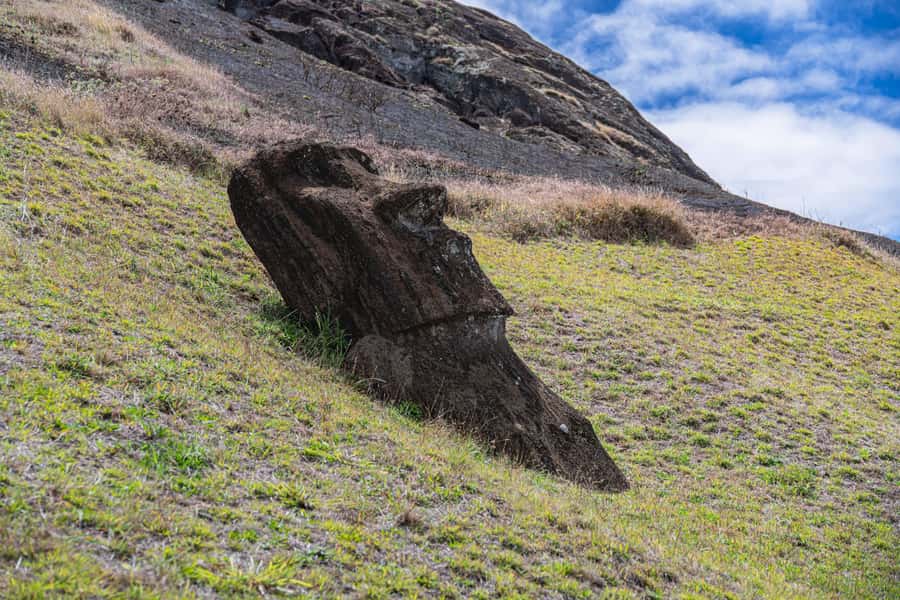
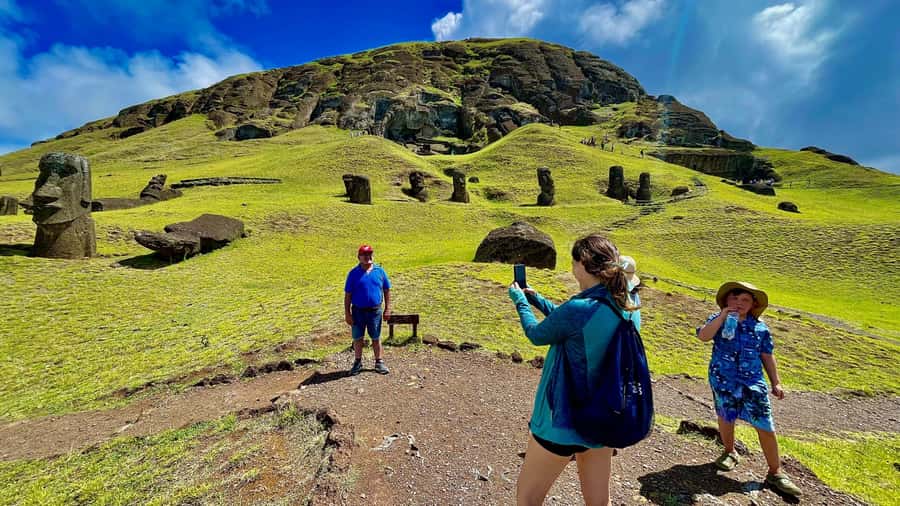
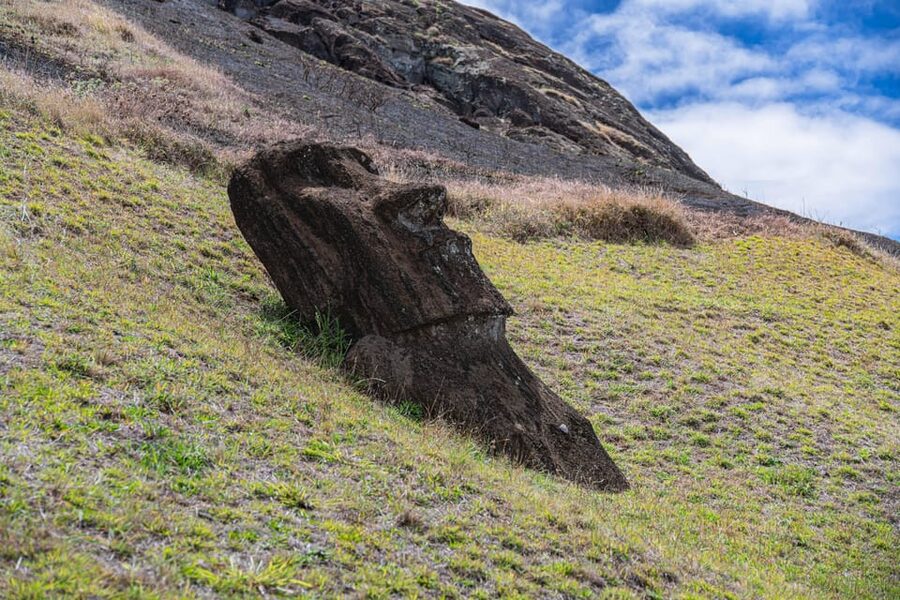
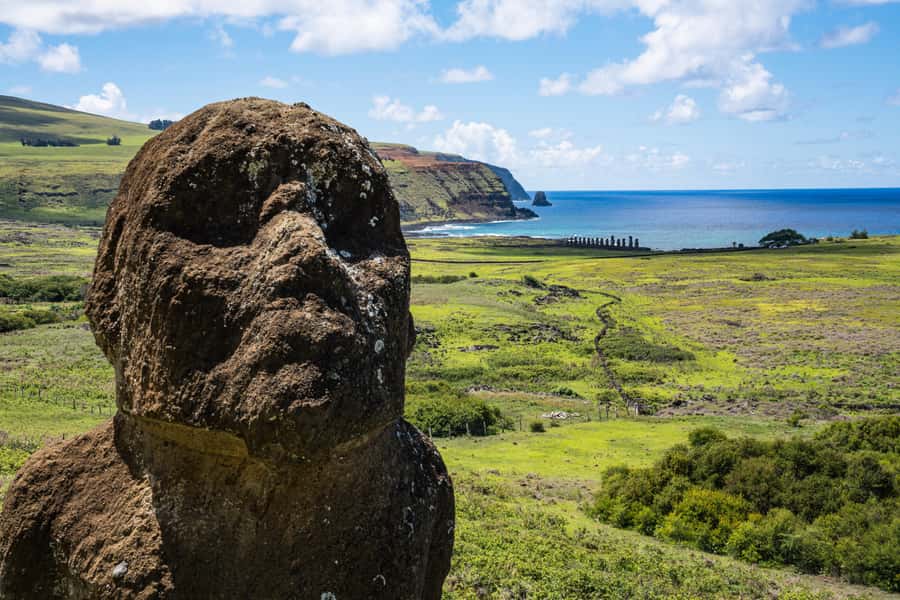
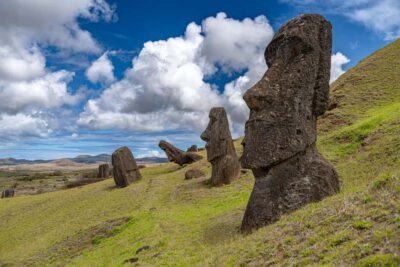
Rano Raraku gets about an hour, and it deserves that time. This volcanic quarry is where many of the island’s moai were carved. You walk among unfinished figures, some partly buried in the slope and others still attached to the rock.
This is the most revealing stop on the route. At a completed ahu, you mainly see the final product. At Rano Raraku, you see the work in progress. The quarry helps you understand that the moai were not brought to the island from somewhere else. They were shaped here, then moved to ceremonial platforms around Rapa Nui.
The ground can require walking, and the schedule does not allow you to wander without limit. Listen carefully when your guide sets the meeting point and return time. You will want photos, but it is worth saving a few minutes to look closely at the unfinished statues and the marks in the volcanic stone.
Lunch is not included. The group may stop at a restaurant near the quarry, and the food has been described as good with reasonable prices by one visitor, but meal timing can be late. One person reported eating around 3 p.m. and missing the last stop because the restaurant took too long. I would carry a snack and ask your guide how much time lunch will take before you order.
A few more Hanga Roa half-days to weigh up
- From Hanga Roa: Easter Island Highlights 2-Day Tour
★ 4.3 · 205 reviews - Sunrise Tongariki: Sunrise at Tongariki Park Private Tour
★ 4.5 · 47 reviews - Easter Island: Full-Day Tour to Anakena
★ 4.7 · 27 reviews - Hanga Roa: Full Day Moai and Mistery
★ 4.4 · 22 reviews
Tongariki and the island’s most famous row
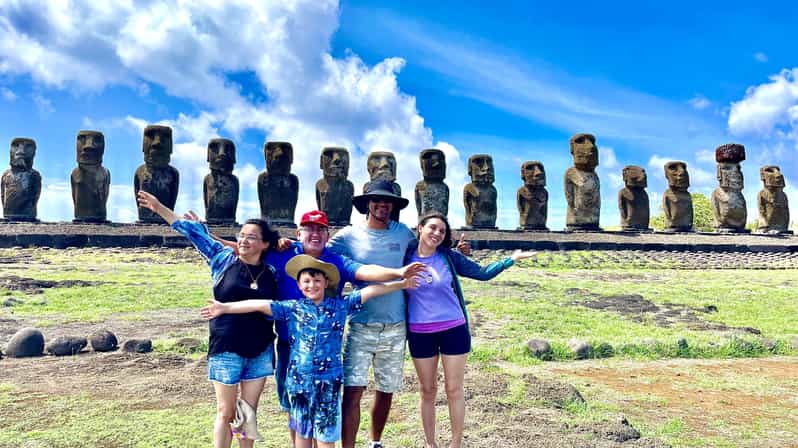
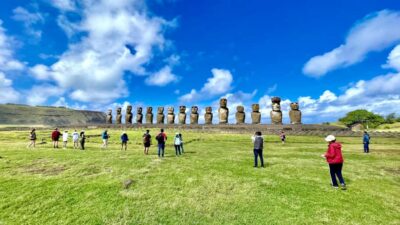
Ahu Tongariki is the visual centerpiece for many people. The platform holds 15 standing moai, arranged in a broad row against the open coast. You get about 45 minutes here, enough to take in the full platform, photograph the figures, and hear how the site was restored.
This is where the scale of Rapa Nui culture becomes clear. The statues are not isolated curiosities. They were part of a large ceremonial setting, and Tongariki shows how carefully the moai were placed together.
The stop is guided, but you also get time to look for yourself. I suggest first stepping back to see the whole platform, then moving closer to study the differences in size, posture, and condition. The group may be eager to take the classic photo, so use the quieter edges of the viewing area when you want a better sense of the site.
Tongariki can feel brief because it is so important. Some people would gladly trade one of the minor stops for more time here or at Rano Raraku. That is the central compromise of this tour: you see the major places, but you do not have unlimited time at the best ones.
Te Pito Kura and the magnetic stone
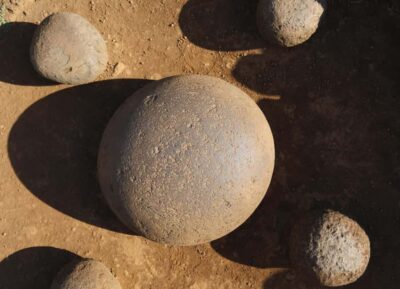
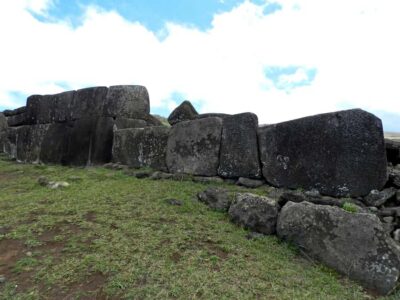
The route continues to Ahu Te Pito Kura for about 45 minutes of guided walking. The site is linked with a large rounded stone often called the magnetic stone. It has spiritual importance in Rapa Nui tradition and is connected to stories about unusual power.
Your guide is especially valuable here. The stone is easy to photograph, but its meaning comes from the cultural setting around it. Listen for the difference between traditional belief, later interpretation, and scientific claims. You do not need to decide what is mystical to appreciate why the stone matters.
Te Pito Kura is not as instantly dramatic as Tongariki, and the stop may feel less essential if your priority is moai photography. It adds another layer to the day by showing that Rapa Nui heritage is about more than statues. Sacred places, oral traditions, natural features, and family memory all belong to the story.
Anakena, palm trees, and time to slow down
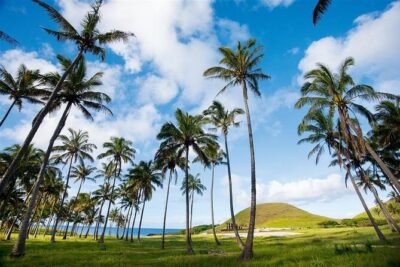
Anakena is the final major stop, with about 1.5 hours of free time. After a day of ruins and volcanic stone, this beach is a welcome change. Palm trees frame the sand, and the water offers a chance to rest, swim, or simply sit and think about what you have seen.
Bring swim shorts and a towel if you want to use the beach. One person described Anakena as the best beach they had ever visited, while another called swimming there a must. Those are personal judgments, of course, but the practical point is clear: do not treat Anakena as only a quick photo stop.
The free time also gives you a break from constant guiding. You can walk, take pictures, or relax without trying to absorb another explanation. That balance helps make the eight-hour day feel less relentless.
The main warning is timing. If lunch runs late, Anakena may be shortened or missed. Since it is the only stop with a long rest period, confirm the lunch plan early and keep your meal simple if the schedule is tight.
The guide can make or break the day
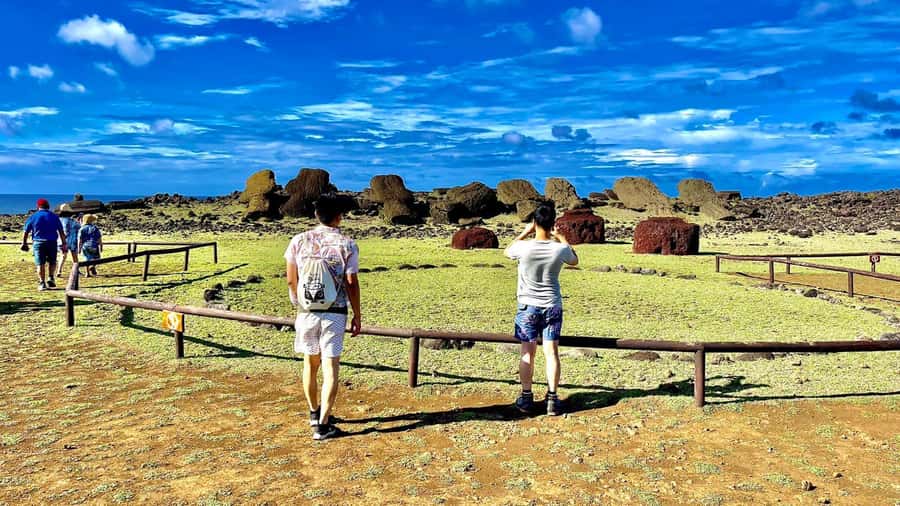
The best part of this experience is the human side. Guides such as Frank, Hivi, Javiera, and Zoe have been singled out for clear English, local insight, patience, warmth, and strong knowledge of Rapa Nui traditions. Frank has also guided in English, Spanish, and Rapa Nui, which can help a mixed-language group.
A good guide does more than name each ahu. You want someone who explains why the site matters, answers questions without rushing, and separates established facts from legend. Several guides have been praised for making the island’s past easier to understand while also sharing present-day local culture.
Quality can vary. One account describes a guide who gave only surface information, skipped an important cultural subject, provided incorrect details, and made an insulting remark. That is not a small flaw on a tour built around interpretation. If your guide is not communicating well, ask direct questions and speak up early rather than waiting until the end.
The tour can handle English- and Spanish-speaking participants. One guide was praised for moving between both languages smoothly, but the amount of detail in each language may depend on the group and the guide. If a particular subject matters to you, ask about it directly.
Comfort, pace, and what to pack
The tour includes hotel pickup and drop-off in Hanga Roa, which removes the need to find the starting point. Pickup is scheduled, so be in the lobby 10 minutes early.
You will spend time in the vehicle and then walk at six different places. The day is not a hard trek, but it is active enough that sandals or stiff shoes could become annoying. Weather can change the feel of the outing. One person completed the route in heavy rain and still saw many important sites, but a waterproof layer would make the day easier.
Pack:
- Water and a snack
- Sun protection
- A light rain layer
- Comfortable walking shoes
- Swimwear and a towel for Anakena
- Camera or phone with spare battery
Lunch is not included, and prices on Rapa Nui can be high. Carrying something small protects you against a late meal and lets you focus on the archaeological sites instead of watching the clock.
The tour is listed as wheelchair accessible. Because the itinerary includes guided walks at archaeological sites, ask the operator about the exact access conditions for your needs before booking.
Is the $80 price fair?
For a full day, $80 is good value if you want the island’s major sites without hiring separate transport. The package includes the ride, guide, and hotel service. It also gives you a planned route, which matters when you are trying to see several distant sites in one day.
You should budget separately for the National Park ticket and lunch. The lunch cost is not fixed here, and the timing can affect Anakena. If you are comparing options, check whether another tour includes the park entrance, since that can change the final price.
The strongest value comes when you have limited time. You see Vaihu, Akahanga, Rano Raraku, Tongariki, Te Pito Kura, and Anakena in one circuit. The weaker value is for someone who dislikes group schedules or wants to spend half a day at one quarry or platform.
Who should book this tour?
I would book it if you are visiting Rapa Nui for one full day, want to see the famous moai sites, and prefer local explanation over driving yourself. It also suits first-time visitors who want a clear overview before exploring on their own.
It is a good match for history fans, photographers, curious families, and people who want a beach stop built into an archaeological day. The English and Spanish guide options make it practical for mixed-language groups.
I would hesitate if you need long, unhurried time at each site, want complete control over lunch, or are uncomfortable with frequent stops. In that case, a private or slower outing may fit better.
Overall, I would choose this tour for its route and its local guides, while treating the schedule as a framework rather than a promise of deep time at every monument. Confirm the National Park ticket, carry lunch insurance in the form of a snack, and protect the Anakena portion of the day. With those points handled, this is a sensible way to see the essential Rapa Nui sites in one memorable circuit.
FAQ
How long does the Rapa Nui Culture Sightseeing Tour last?
The tour lasts eight hours, including transportation from Hanga Roa and the return to town.
Where does pickup take place?
Pickup and drop-off are provided at hotels in Hanga Roa. You should wait in the hotel lobby 10 minutes before the scheduled pickup.
Which sites are included?
The route includes Vaihu, Ahu Akahanga, Rano Raraku, Ahu Tongariki, Ahu Te Pito Kura, and Anakena.
Is a local guide included?
Yes. A live local guide is included, with English and Spanish available.
Is lunch included?
No. Lunch is not included. A restaurant stop may be part of the day, but you pay for your own meal.
Is the National Park ticket included?
No. The National Park ticket is not included in the $80 price.
Can I swim at Anakena?
Yes, Anakena is a beach stop with 1.5 hours of free time. Bring swimwear and a towel if you want to swim.
Just added around Hanga Roa
- Easter Island: Customized recreational-tourist diving★ 5.0 · 3 reviews
- Ancestral fishing: Fishing with an experienced Rapa Nui★ 4.4 · 3 reviews
- Rapa Nui: Polynesian Massage★ 4.8 · 5 reviews
- Rapa Nui: 3 Excursions with Hotel Transfers★ 4.3 · 6 reviews
- Volcanic Refuges: Excursion to Underground Civilization★ 4.7 · 8 reviews
- Easter Island: The Moai Trail Private Archeological Tour★ 4.9 · 12 reviews
- Easter Island: Tropical Diving★ 4.8 · 13 reviews
- Rapa Nui Highlights Program: 3 incredible tours to discover!★ 4.8 · 18 reviews
Easter Island Tours, compared.
Two days of Full Day Tour of Rapa Nui + Sunrise in Tongariki
Read our review →
Browse the lists this tour appears in