
Reviewed · EASTER ISLAND TOURS
Easter Island: Half-Day Archaeology Tour
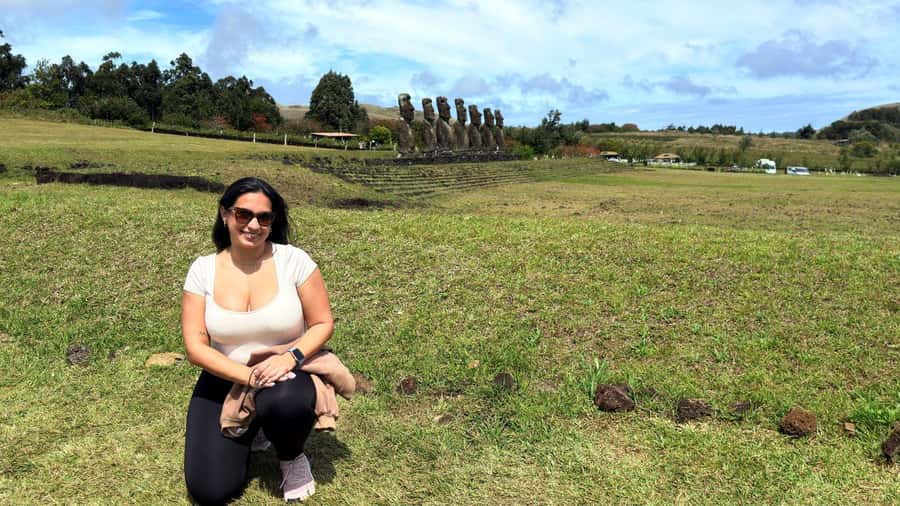
The most striking stop here is Ahu Akivi, where seven large moai face the ocean. That unusual position gives the statues a storybook quality, especially when you learn the theory that they represent explorers sent from Hiva to find Rapa Nui. You also visit Puna Pau, the quarry that supplied the red-stone topknots worn by some moai.
I like the efficient route and the small group, limited to 15 people. I also like that hotel pickup and drop-off from Hanga Roa are included, which saves you from arranging transport on an island where the major sites are spread out. The tradeoff is the short three-hour schedule: this is a useful introduction, not a full study of Easter Island. The $91 price also excludes the $100 Rapa Nui National Park entrance fee.
Key Points About This Three-Hour Moai Tour
- Seven moai facing the sea: Ahu Akivi offers one of Easter Island’s most unusual statue arrangements.
- Red pukao at Puna Pau: See the volcanic quarry connected with the heavy topknots placed on some moai.
- Four major stops: The route includes Ahu Tahai, Puna Pau, Ahu Akivi, and Ahu Huri a Urenga.
- A quick look at Rapa Nui culture: Your guide explains ahu, moai, ancestor worship, and island traditions in English or Spanish.
- Small-group transport: Up to 15 people share the vehicle, with pickup and return at Easter Island hotels.
- Extra cost to plan for: The national park entrance fee is $100 per person and is not included.
Why This Half-Day Route Works
Easter Island, also called Rapa Nui, is not a place where you can casually walk between the main sights. The moai sites sit around the island, and some are inland rather than along the coast. For a first look, a guided vehicle tour gives you a useful sense of scale and saves time.
This outing lasts about three hours. That is long enough to visit several important sites, yet short enough to fit around other plans in Hanga Roa. I would view it as an orientation tour. It can help you learn the basic vocabulary and see the main styles before deciding how much more time you want to spend at individual sites.
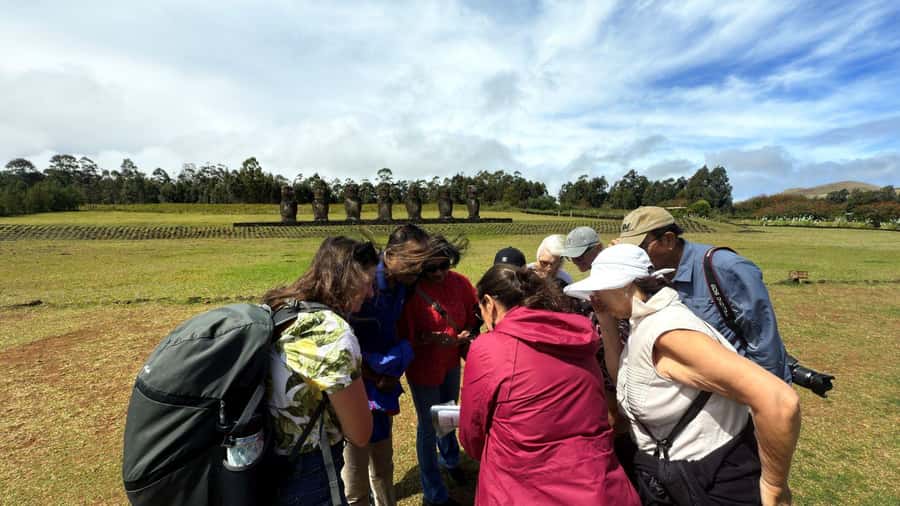
You travel with a live guide in English or Spanish. That matters here because the statues can look similar at first glance. The guide helps explain why one ahu has seven moai, why some figures wear red pukao, and why one ceremonial platform sits inland beside agricultural land.
The group limit of 15 people is another practical plus. You should not expect a private visit or unlimited time at each site, but a group this size is easier to manage than a large coach party. It also gives you a better chance of hearing the guide without constantly moving closer.
A few more Hanga Roa half-days to weigh up
- Ahu Vinapu, Rano Kao and Orongo City Half-Day Tour
★ 4.6 · 20 reviews - Santiago Half-Day Walking Tour with Hotel Pick up & Brunch
★ 4.7 · 148 reviews - Half-Day Small-Group Panoramic Santiago Tour
★ 4.0 · 89 reviews
Ahu Tahai and the First Look at the Moai
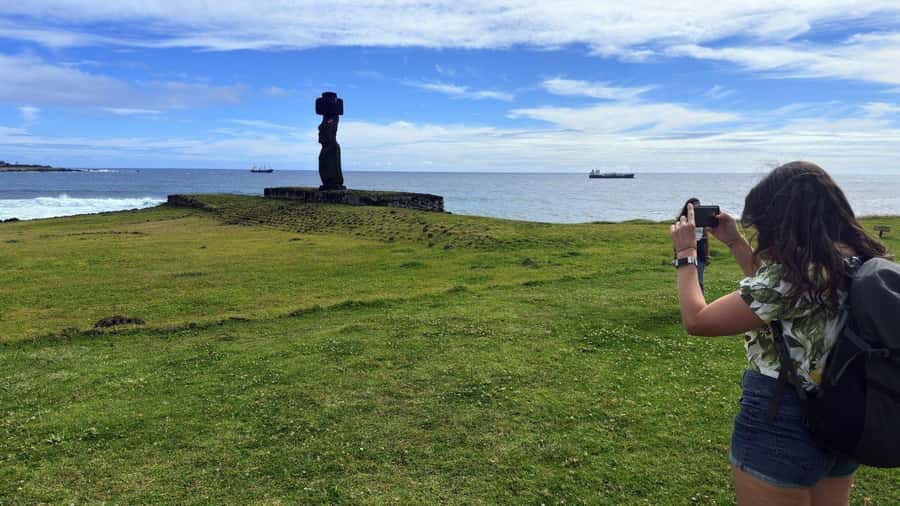
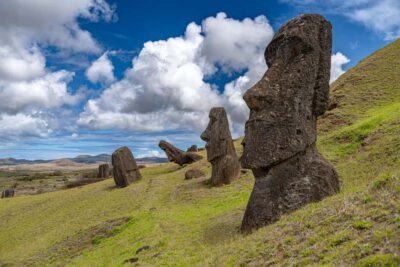
Ahu Tahai is the first named stop on the route. It is a ceremonial platform with a single moai, described as a stone giant more than 13 feet tall. The lone figure gives you a clear introduction to the scale of these statues without the visual competition of a large row.
This is a helpful first stop because the tour is not only about taking pictures. Your guide introduces the basic idea of the ahu, the ceremonial platforms on which moai were placed. Across Rapa Nui National Park, there are about 900 moai and roughly 300 ahu.
The moai were carved from solidified volcanic ash. They are generally understood to represent ancestors and high-ranking members of tribal groups. That context changes how you look at them. Instead of treating each statue as a mysterious decoration, you begin to see it as part of a ceremonial system tied to family, status, and memory.
Ahu Tahai is also a good place to notice the difference between the figure and the platform beneath it. The statue gets most of the attention, but the ahu is part of the meaning. The platform formed the ceremonial setting for the moai and connected the statue to the people who honored it.
Because the entire tour is compressed into three hours, your time at Ahu Tahai may feel brief. If you prefer to study one site slowly, this stop will not provide the same freedom as a full-day private outing. If you want a clear first lesson in Rapa Nui archaeology, it earns its place on the route.
Puna Pau, Where the Red Pukao Were Made
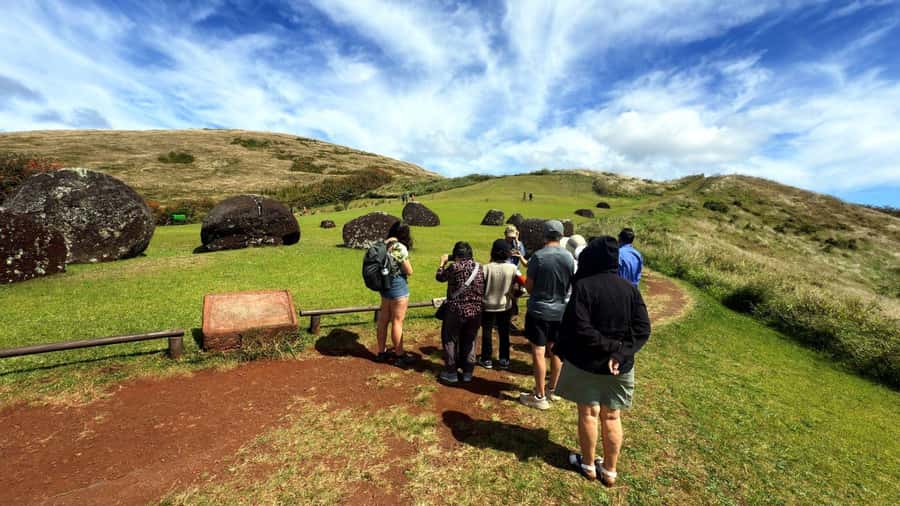
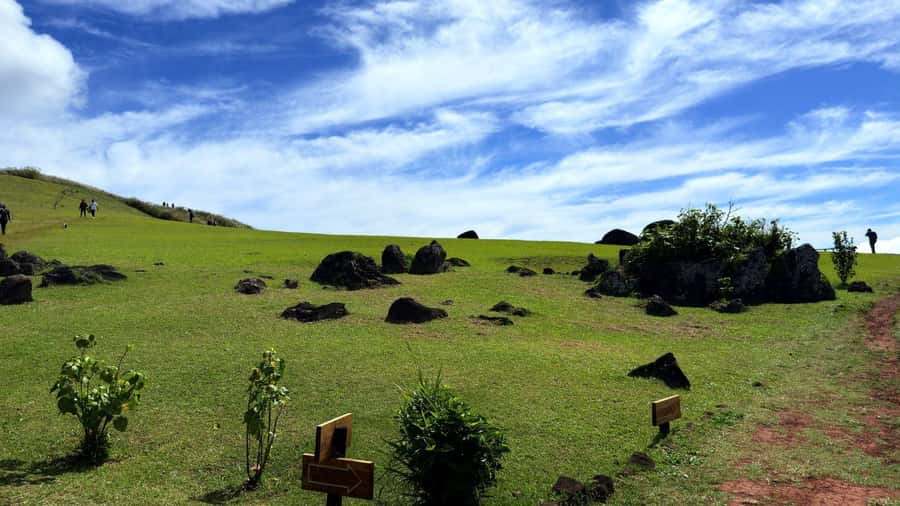
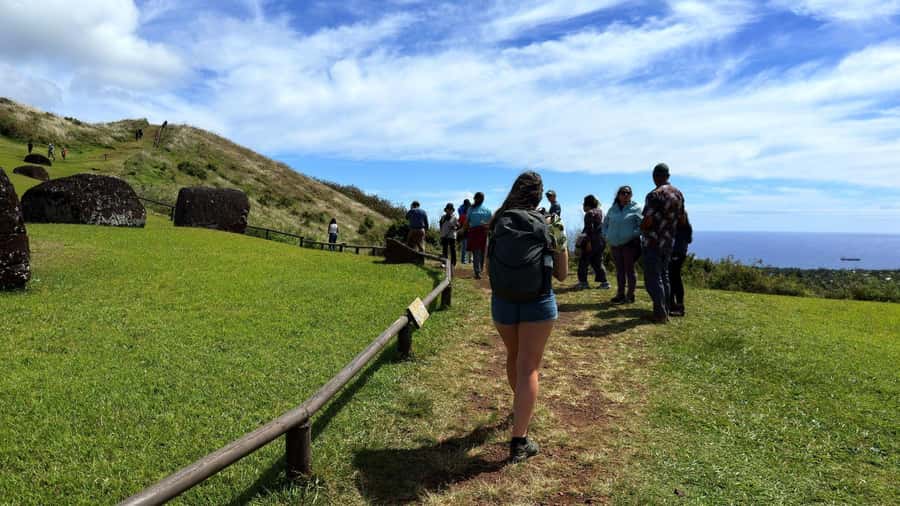
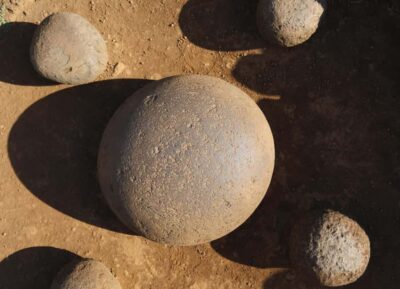
At Puna Pau, the focus shifts from the moai themselves to the red volcanic stone used for their topknots, known as pukao. Around 30 pukao are located in or near this quarry, which gives you a direct link between the raw material and the finished statues seen elsewhere on the island.
The red scoria gives these moai a different look. It is easy to think of the topknots as part of the statue’s hair, but the important point is that they are separate pieces made from another kind of volcanic rock. Your guide can help you understand how the pukao changed the appearance of a moai and may have carried social or political meaning.
One explanation is that rival tribal groups used the red stone to impress one another. The wording matters: this is an interpretation, not a simple fact with every detail settled. That uncertainty is part of what makes the archaeology interesting. The quarry lets you see the material side of the island’s statue tradition, while the guide adds the competing theories.
Puna Pau also breaks up the sequence of ceremonial platforms. Instead of seeing only finished moai, you get a look at the source of one distinctive feature. For me, that makes the tour feel more complete. You are not simply moving from statue to statue. You are following part of the process that made the statues recognizable.
Wear comfortable shoes, as requested for the tour. The experience is outdoors, and the itinerary is built around moving between archaeological sites rather than spending the whole time in the vehicle. Large bags, luggage, baby strollers, alcohol, and drugs are not allowed.
Ahu Akivi and the Seven Ocean-Facing Figures
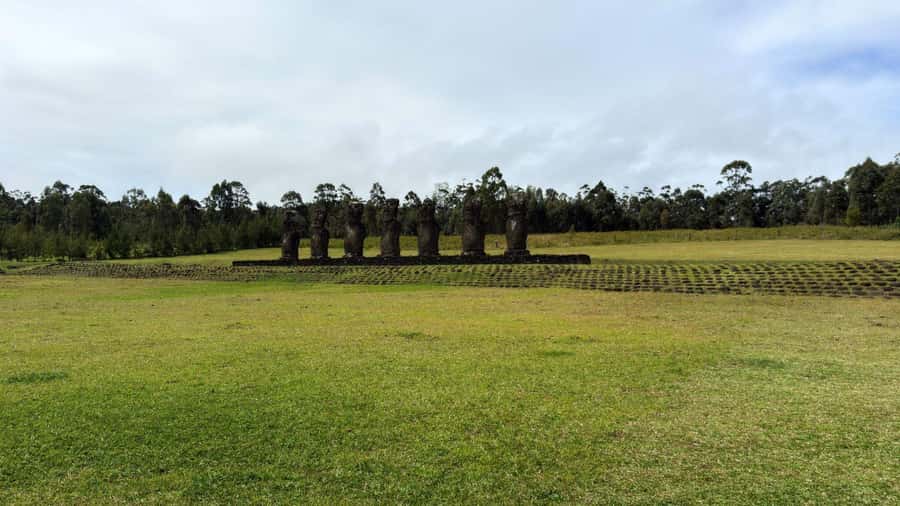
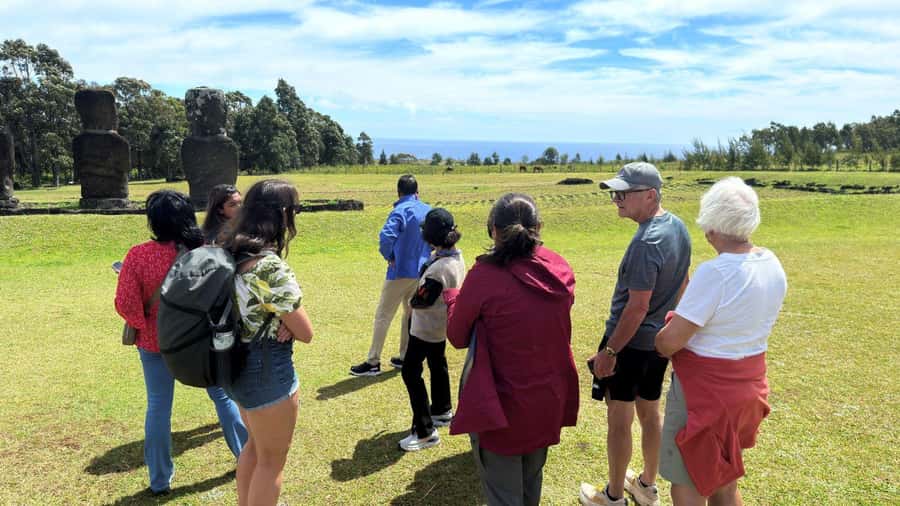
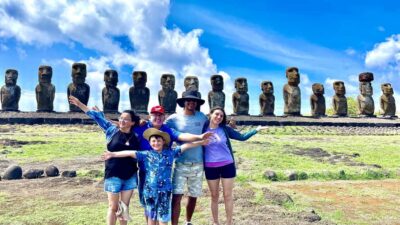
Ahu Akivi is the centerpiece of this half-day tour. Seven moai line the ceremonial platform, each about 16 feet tall and weighing roughly 18 tons. Their size is impressive, but their direction is what makes the site special.
Most moai on ahu face inland, with their backs toward the water. At Ahu Akivi, the statues face toward the ocean. The arrangement raises an obvious question: why are these figures turned the other way?
One theory says they represent seven explorers from Hiva, the Polynesian homeland, who were sent by a chief to locate Rapa Nui. If that idea is correct, their ocean-facing position may point toward the direction from which they came. It is a memorable explanation because the statues seem to look beyond the island rather than over the community in front of them.
You should treat the story as a theory, not a final answer. Rapa Nui archaeology includes many questions about the purpose, movement, and placement of the moai. A good guide will explain the idea without pretending that every mystery has been solved.
This is likely the most rewarding stop for anyone who wants the iconic moai experience in a short window. The row of seven figures is easy to understand visually, and the guide has a strong starting point for explaining the island’s ancestors, ceremonies, and tribal identity.
The limitation is time. Seven statues of this scale deserve more than a hurried photograph, and a three-hour route has several stops to cover. You will see the site and hear its central story, but you may not have the leisure to linger as long as you would on a full-day archaeological visit.
Same base, a completely different landscape:
- From Hanga Roa: Rapa Nui Culture Sightseeing Tour
★ 4.6 · 307 reviews - From Hanga Roa: Easter Island Highlights 2-Day Tour
★ 4.3 · 205 reviews - From Hanga Roa: Journey from Orongo to Ana Te Pahu
★ 4.3 · 75 reviews - Two days of Full Day Tour of Rapa Nui + Sunrise in Tongariki
★ 4.8 · 55 reviews
Ahu Huri a Urenga and the Inland Setting
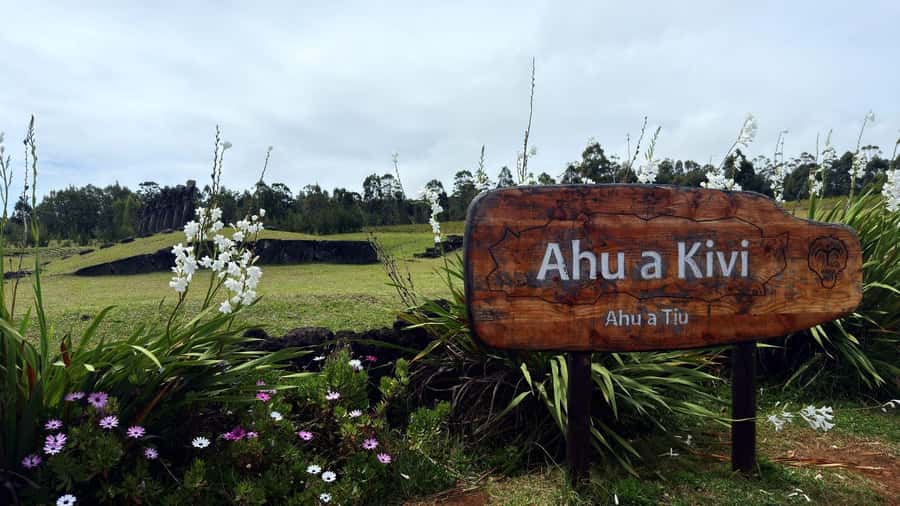
The final named stop is Ahu Huri a Urenga, one of about 25 platforms located inland rather than on the coast. Its setting corresponds to an agricultural area, which adds an important piece to the picture of Rapa Nui.
The coast gets most of the attention because so many famous ahu sit near the water. An inland platform reminds you that ceremonial life was also connected to the interior of the island and its food-producing areas. This stop helps link the moai to the practical life of the people who built and honored them.
Ahu Huri a Urenga is useful as a closing site because it broadens the tour’s message. You have seen a lone moai at Ahu Tahai, the red-stone source at Puna Pau, and the seven unusual figures at Ahu Akivi. Here, you see that ceremonial platforms were not limited to one type of location.
The tour then returns you to your Hanga Roa hotel. Since pickup and drop-off are included, you do not need to organize a separate ride back after the final stop. Be ready in the hotel lobby 10 minutes before the scheduled pickup. Drivers wait no more than five minutes after the pickup time, so this is not the moment for a slow breakfast.
What the $91 Price Really Means
The advertised cost is $91 per person, but the national park entrance fee adds another $100. That brings the known total to $191 per person before any other personal spending. The park fee is a major part of the cost, so be sure to include it when comparing this tour with other Easter Island options.
At first glance, $91 for three hours may seem high. The value improves if you need transport, a guide, and a short introduction to several sites. You are paying for a prepared route, hotel transfers, and interpretation across four different archaeological locations rather than simply buying a short drive to one monument.
The tour makes the most sense for a first visit, a tight schedule, or anyone who prefers not to arrange island transport. It is less compelling if you already have a private vehicle, a longer guided program, or plenty of time to return to the same sites at your own pace.
The small-group format helps protect the value. With no more than 15 participants, the guide can provide a more focused explanation than on a large bus. Still, you should not expect the flexibility of a private tour. The route and timing need to work for the group.
The activity allows cancellation up to 24 hours in advance for a full refund, and you can reserve now and pay later. Those terms are useful if your wider Chile itinerary is still changing.
Who Should Book This Experience
I would recommend this tour if you want to cover several major moai sites in one compact outing. It suits first-time visitors, people staying in Hanga Roa hotels, and anyone who values a guide’s explanation more than a long, unstructured stop at one location.
It is also a sensible choice if you have only part of a day available. The three-hour format leaves room for other plans, though the available starting times depend on the booking date. Check the schedule before you commit to another activity afterward.
The tour is less suitable if you use a wheelchair, since it is not listed as wheelchair accessible. It is also not designed for cruise ship passengers. The pickup arrangement is for people staying at Easter Island hotels, so cruise visitors should not book it on the assumption that the hotel transfer will work from a ship.
Families with baby strollers should note that strollers are not allowed. Anyone carrying luggage or large bags will need to make other arrangements. Comfortable shoes are the only item specifically recommended, but that advice makes sense for an outdoor archaeological route.
How to Get More From the Three Hours
Arrive in the lobby early, not exactly at the pickup time. The five-minute driver wait limit is strict enough that a delayed elevator or a last-minute bag collection could cost you the tour.
Bring comfortable footwear and keep your belongings light. Large bags and luggage are not allowed, and a small, simple setup makes it easier to move between the sites.
Listen for the differences between the stops. Ahu Tahai introduces the ceremonial platform and the power of a single moai. Puna Pau explains the red pukao. Ahu Akivi raises the question of ocean-facing statues, while Ahu Huri a Urenga connects ceremony with the inland agricultural area.
Take notes if you are especially interested in archaeology. Three hours goes quickly, and the names can blur together. Writing down Ahu Akivi, Puna Pau, and Ahu Huri a Urenga will help you remember which site answered which question.
If the guide gives you a theory about the moai, pay attention to the wording. Rapa Nui is full of compelling explanations, but not every point is settled. The best experience comes from enjoying the mystery while keeping the difference between evidence and tradition clear.
Should You Book the Easter Island Half-Day Archaeology Tour?
Book it if you want a practical introduction to Rapa Nui National Park, hotel transportation, and several of the island’s key archaeological sites in one small group. The seven moai at Ahu Akivi and the red pukao quarry at Puna Pau give the tour two memorable anchors.
Think carefully about the price. With the $100 park entrance fee added to the $91 tour, this is not a cheap three-hour outing. Its value comes from convenience, a bilingual guide, and a focused route that would be harder to arrange on your own.
I would choose it for a first orientation or a short stay, then spend more time elsewhere if your schedule allows. I would skip it if you are a cruise passenger, need wheelchair access, want a private guide, or already have a longer island tour arranged. For the right visitor, it is a compact and useful way to begin understanding the moai rather than simply checking them off a list.
FAQ
How long is the Easter Island archaeology tour?
The tour lasts three hours.
Where does the tour begin?
Hotel pickup is provided from Easter Island hotels in Hanga Roa.
Is hotel drop-off included?
Yes. The tour includes pickup and drop-off at Easter Island hotels.
Which languages are available?
The live guide speaks English or Spanish.
How many people can join the tour?
The activity is a small-group tour limited to 15 participants.
Which archaeological sites are included?
The route includes Ahu Tahai, Puna Pau Quarry, Ahu Akivi, and Ahu Huri a Urenga.
What is special about Ahu Akivi?
Ahu Akivi has seven moai, each about 16 feet tall and weighing roughly 18 tons. Unlike many moai, these figures face toward the ocean.
Is the national park entrance fee included?
No. The Rapa Nui National Park entrance fee is listed separately at $100 per person.
What should I bring?
Comfortable shoes are recommended.
Can cruise ship passengers join this tour?
No. The tour is intended for passengers staying in hotels and is not suitable for cruise ship guests.
Just added around Hanga Roa
- Easter Island: Customized recreational-tourist diving★ 5.0 · 3 reviews
- Ancestral fishing: Fishing with an experienced Rapa Nui★ 4.4 · 3 reviews
- Rapa Nui: Polynesian Massage★ 4.8 · 5 reviews
- Rapa Nui: 3 Excursions with Hotel Transfers★ 4.3 · 6 reviews
- Volcanic Refuges: Excursion to Underground Civilization★ 4.7 · 8 reviews
- Easter Island: The Moai Trail Private Archeological Tour★ 4.9 · 12 reviews
- Easter Island: Tropical Diving★ 4.8 · 13 reviews
- Rapa Nui Highlights Program: 3 incredible tours to discover!★ 4.8 · 18 reviews
Easter Island Tours, compared.

Two days of Full Day Tour of Rapa Nui + Sunrise in Tongariki
Read our review →
Browse the lists this tour appears in