
Reviewed · EASTER ISLAND TOURS
Rapa Nui: 3 Excursions with Hotel Transfers
Rapa Nui is best understood one remarkable site at a time, and this package takes you from the crater edge at Orongo to the 15 moai at Ahu Tongariki and the white sands of Anakena Beach. It gives you a useful first look at the island without leaving transport and route planning to chance.
I like the three-part format, which spreads the sightseeing across two half-days and one longer circuit instead of forcing every major site into one exhausting day. I also like the full-day route’s range: quarry, toppled statues, giant moai, ceremonial platforms, and beach time all fit into one outing. The main drawback is that the first half-day is less varied than the second, and the national park ticket, meals, and drinks cost extra.
Key points to know before you book
- Orongo sits on the rim of Rano Kau, giving you both a sacred village and a dramatic volcanic crater in one stop.
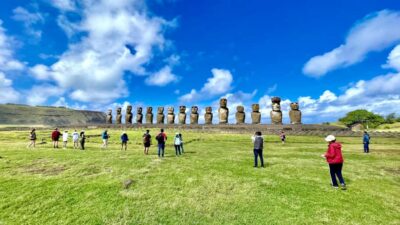
- Ahu Tongariki has 15 restored moai, including the heaviest statue ever erected on Rapa Nui.
- Rano Raraku explains how the statues were made, since most of the island’s moai were carved from its stone.
- Anakena adds a welcome change of pace, with one hour beside white sand, palms, and the sea.
- Guide Uca may lead the bilingual group, with guiding available in English and Spanish.
- The package includes airport reception, hotel transfers, and transport, but you must budget separately for the national park ticket and food.
Three outings that give Rapa Nui a sensible shape
The strongest feature here is its coverage. Rather than repeat the same type of archaeological site, the package divides Rapa Nui into three useful routes. One half-day heads south, another goes northwest, and the full-day follows the southeast and northeast coast.
That arrangement matters because Rapa Nui’s main sights are spread around the island. With hotel pickup and drop-off in Hanga Roa, you can focus on the sites instead of arranging separate rides. The package also includes reception at the airport with a flower necklace, a small but pleasant welcome after the journey.
The tours are guided in English or Spanish. A bilingual guide such as Uca may handle both languages in the same group. That can be a practical advantage for couples or families who do not all speak the same language, though explanations may take a little longer when they are repeated.
The price is $177 per person. That is a fair package price if you want all three routes, transport, a guide, and hotel transfers arranged together. It is less attractive if you plan to visit only a few sites or already have a rental vehicle. Remember to add the national park admission fee, lunch, snacks, and drinks.
One detail deserves attention before you pay: the activity information says it is valid for six hours from first activation, while the program describes two half-day outings and one full-day outing across two days. Ask the operator how the validity period applies to your selected dates. That small check can prevent confusion.
More moai and Rapa Nui sites:
- From Hanga Roa: Rapa Nui Culture Sightseeing Tour
★ 4.6 · 307 reviews - From Hanga Roa: Journey from Orongo to Ana Te Pahu
★ 4.3 · 75 reviews - Two days of Full Day Tour of Rapa Nui + Sunrise in Tongariki
★ 4.8 · 55 reviews
Orongo and Rano Kau: Rapa Nui at its most dramatic
The first southern outing begins with a hotel pickup and heads toward the peninsula. The main stop is Orongo Ceremonial Village, set beside Rano Kau. This is one of the island’s most striking combinations of place and purpose: a sacred settlement on the edge of a huge volcanic crater.
At Orongo, the view is part of the lesson. You look across the crater while learning about the site’s ceremonial role. The setting helps explain why this place mattered. It is not just a collection of old stone structures. The village was tied to the island’s birdman ceremony, and the cliff-top position gives the site a strong sense of separation from ordinary life.
Allow yourself time to look beyond the individual stones. The crater is the visual anchor, and weather can change the mood quickly. Bring a hat, sunscreen, water, and breathable clothing. Comfortable shoes are important, since outdoor archaeological sites can involve uneven ground.
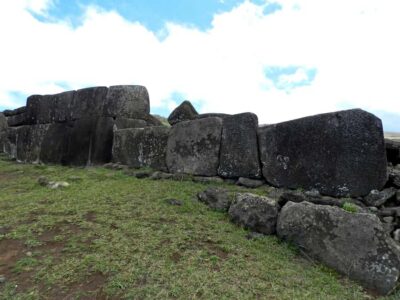
The route continues to Ahu Vinapu, a ceremonial platform with a very different feel from Orongo. Here you can compare two kinds of Rapa Nui stonework within the same half-day. The stop is useful for seeing how ceremonial platforms fit into the wider pattern of island life, even if it does not have the visual punch of Tongariki or the quarry.
This first excursion is probably the quieter of the three. If you want constant moai viewing, you may find it modest. I would treat it as a setting and context day: volcanic origin, sacred ceremony, and ceremonial architecture before the larger statue sites arrive.
Puna Pau, Ahu Akivi, and Tahai on the northwest route
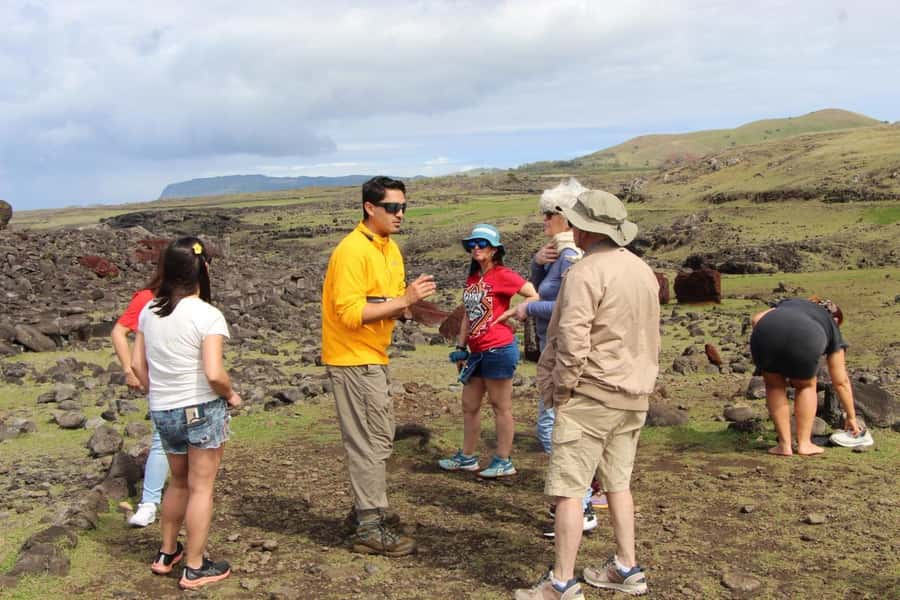
The second half-day goes northwest to Puna Pau Quarry. This is where the islanders obtained the red scoria used for the moai headdresses, often called pukao. The quarry adds an important piece to the story because the statues and their red topknots came from different materials and places.
Puna Pau is not the same kind of sight as Rano Raraku. Rano Raraku supplied most of the moai stone, while Puna Pau supplied the headdress material. Seeing both quarries in the same package helps you understand that statue production involved more than one source.
Next comes Ahu Akivi, known for its seven moai. These statues are especially useful for comparison because they are positioned inland, unlike many coastal platforms. You will want your camera here, but do not rush the guide’s explanation. The value of the stop is not simply counting seven figures. It is seeing another arrangement of moai and considering how ceremonial sites varied across the island.
The outing ends at Tahai Village, one of the important ceremonial areas near Hanga Roa. Tahai is a good place to bring together what you have seen earlier in the day: platforms, statues, and the relationship between community spaces and the wider island.
This route is compact and probably easier than the full-day circuit. It also gives you a second chance to see moai without repeating the biggest coastal sites. The limitation is time. Since it is a half-day outing, each stop may feel more like a guided introduction than a long, unhurried visit.
Akahanga and Vaihu: toppled moai and island memory
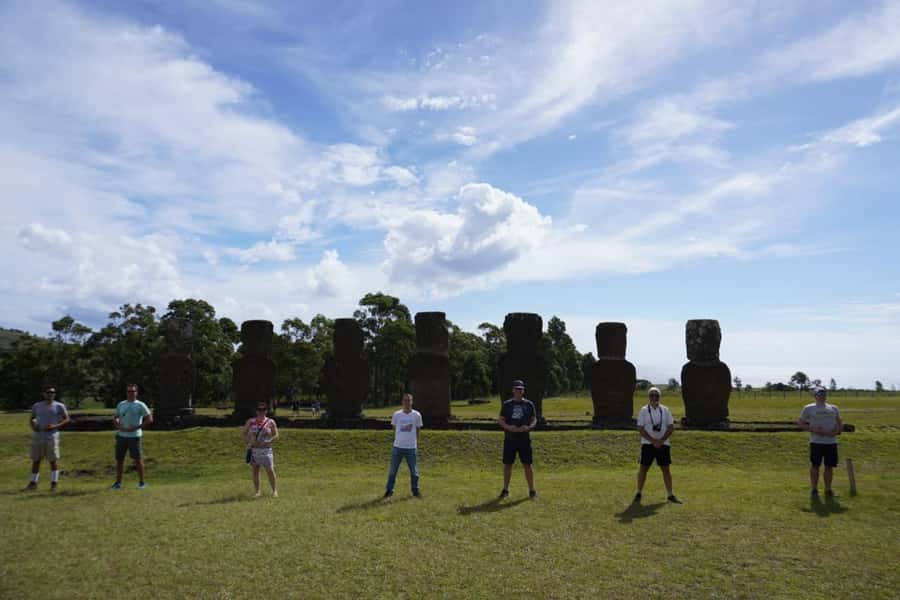
The full-day tour begins in the southeast and northeast parts of Rapa Nui. Its early stops at the Vaihu Complex and Akahanga Village show a less polished side of the archaeological record.
At Akahanga, you visit the place associated with the burial of the first king of Rapa Nui. The site is also known for fallen moai. This is important because not every statue you see on the island will be upright on a restored platform. Fallen figures and incomplete sites can tell you about periods of upheaval and change, even when the scene lacks the visual order of Ahu Tongariki.
Vaihu adds another ceremonial setting to the day. Taken together, these stops give you a broader picture than a route made only of famous, restored monuments. I like this part of the itinerary because it keeps the island from becoming a simple parade of standing statues.
The tradeoff is that these places may feel less immediately spectacular. If your priority is the most photogenic moai, the later stops will likely hold your attention longer. If you want to see how archaeological sites actually vary, Akahanga and Vaihu are worthwhile.
A few more Hanga Roa half-days to weigh up
- From Hanga Roa: Easter Island Highlights 2-Day Tour
★ 4.3 · 205 reviews - Sunrise Tongariki: Sunrise at Tongariki Park Private Tour
★ 4.5 · 47 reviews - Rapa Nui Dreams: Experiencie Pack 3 Days
★ 4.7 · 32 reviews - Easter Island: Full-Day Tour to Anakena
★ 4.7 · 27 reviews
Rano Raraku, the quarry that explains the moai
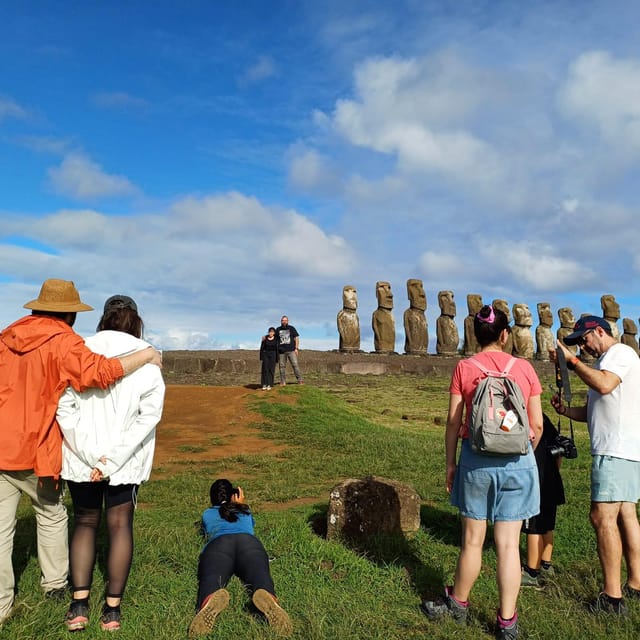
Rano Raraku is the central stop of the full-day outing. This volcanic quarry supplied the stone for most of the island’s moai, so it is the place where the scale of the work becomes easiest to grasp.
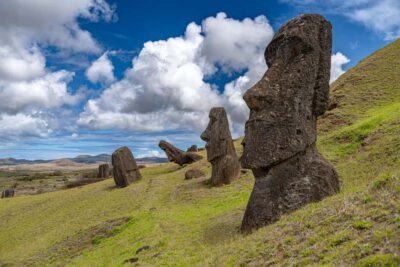
Here you can see moai at different stages of production, including figures that were not completed or moved. That unfinished quality is precisely what makes the quarry so useful. Instead of seeing only the final statue on a platform, you can consider the carving process and the sheer effort required to shape, transport, and erect these figures.
Give this stop your full attention. A quick photograph does not convey what makes it special. Look at the figures still connected to the quarry and compare them with the finished statues you see elsewhere. The guide’s explanation matters here, especially if you want to understand why Rapa Nui’s statue tradition was tied so closely to the volcanic terrain.
Lunch is scheduled at a restaurant directly in front of the quarry. Food is not included, so bring money and confirm what meal choices are available. The location is convenient because you do not lose time traveling far away from the day’s key site.
The full-day outing is strongest at Rano Raraku. If you could choose only one part of the package, this route would likely offer the greatest range and the clearest sense of how the moai tradition worked.
Ahu Tongariki and the island’s largest figures
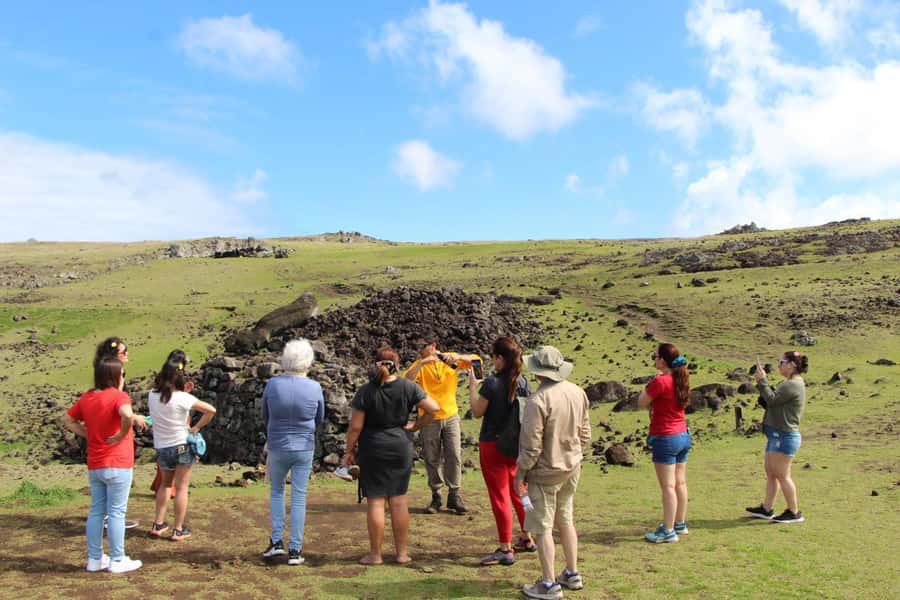
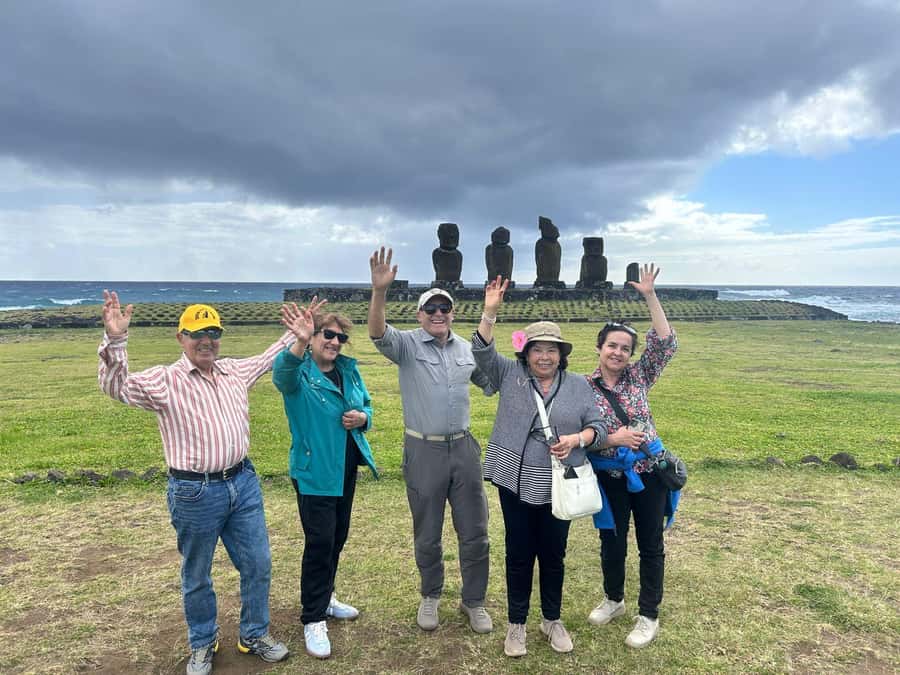
After lunch, the bus continues to Ahu Tongariki. Its 15 moai create one of Rapa Nui’s most memorable views. The line of statues gives the site a strong visual rhythm, and the number alone makes it different from Ahu Akivi’s seven figures or the single moai platforms you may see elsewhere.
Tongariki is also a good place to compare restoration and original context. The statues were returned to their platform, allowing you to see how a large ceremonial arrangement reads as a group. The heaviest statue ever erected on the island is included among them, adding another point of scale.
You may want a wide-angle photo, but the site deserves more than a quick stop for pictures. Stand back and look at the full row, then move closer to notice differences in size and shape. Your guide can add the details that turn a powerful view into a more useful understanding of the site.
The day’s schedule includes several major stops, so do not expect unlimited time at Tongariki. Still, its place in the route is well chosen. You arrive after seeing the quarry, which makes the finished statues more meaningful.
Te Pito Kura and the 10-meter moai
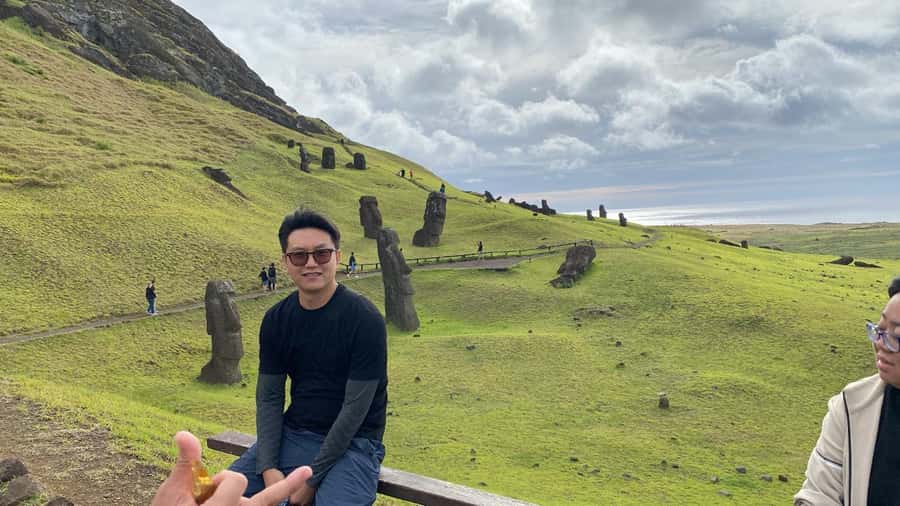
Te Pito Kura brings another superlative: the largest moai ever built, measuring 10 meters tall. The figure was never erected, which connects this stop back to the unfinished work at Rano Raraku.
This is a useful pairing. At the quarry, you see the production setting. At Te Pito Kura, you encounter the ambition of the finished design without the final lift into position. The stop helps you think about size not only as a visual feature, but as an engineering problem.
After several archaeological sites, the pace can feel full. That is normal on the full-day route. Wear comfortable shoes, carry water, and use sunscreen. The supplied packing advice also includes outdoor clothing, a hat, a camera, and beachwear, which tells you something about the day’s changing conditions.
Anakena Beach gives the long day a softer ending
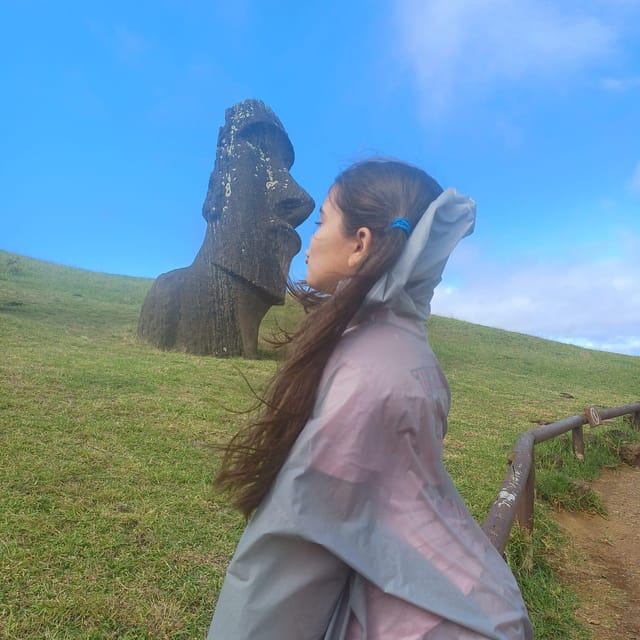
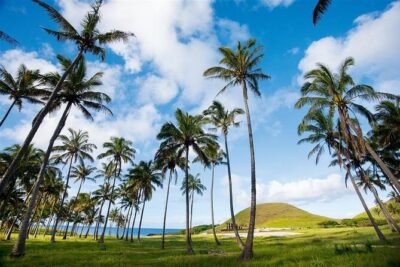
The final major stop is Anakena Beach, where you get one hour of free time. The beach has white sand and palm trees, offering a sharp contrast to the volcanic craters, quarry stone, and ceremonial platforms earlier in the day.
I like this pause because it gives you room to reset after a site-heavy itinerary. You can enjoy the view, take photographs, or simply sit beside the palms. Bring a towel, beachwear, sunscreen, and water. Food and drinks are not included, so plan accordingly.
One hour is enough for a break, not a full beach day. You should not book this package expecting a long swim or a relaxed resort afternoon. Anakena is a scenic finish to the archaeological circuit, not a separate beach excursion.
Transport, guide style, and practical comfort
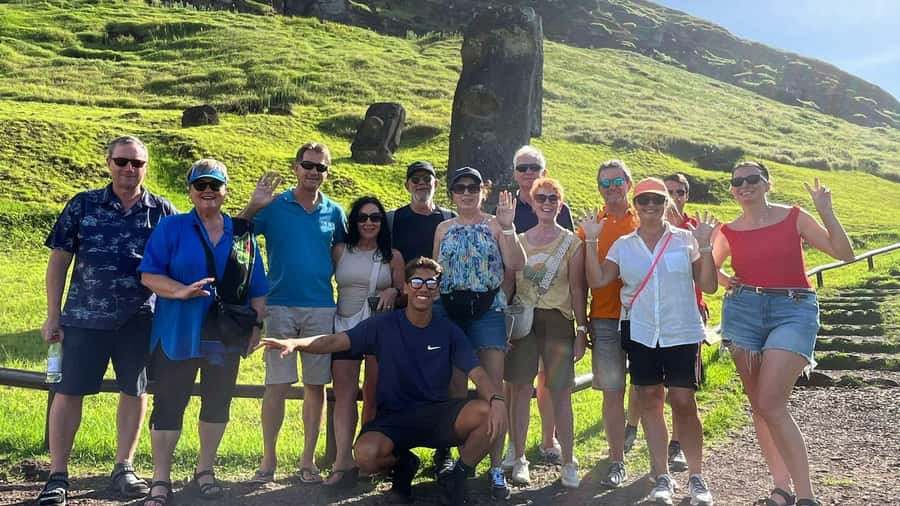
Hotel pickup and drop-off are included, with the bus boarding outside your hotel in Hanga Roa. That makes the package especially handy if you do not want to arrange transport for sites around the island.
The guide service operates in English and Spanish. Uca is one guide associated with the program, and the bilingual format can work well when a group includes both languages. A bilingual tour may move at a slightly slower pace because key points are explained twice, but it avoids splitting people into separate arrangements.
This is not suitable for wheelchair users. The program is built around outdoor sites, so comfortable shoes and breathable clothing are more useful than formal travel clothes. Smoking, alcohol, and drugs are not allowed.
You should also carry your passport, or a copy accepted by the operator, along with water and sun protection. These are simple items, but Rapa Nui sightseeing involves open-air stops where shade may be limited.
Free cancellation is available up to 24 hours before the activity for a full refund, and you can reserve now while paying later. Those terms give you some flexibility, but I would still confirm the dates and the six-hour validity wording before booking.
Who will get the most from this package?
I would recommend this experience to you if you are visiting Rapa Nui for a short stay and want the major sites organized in advance. It is also a good fit if you prefer a guide to connect the places, rather than visiting the moai as isolated photo stops.
You will get the most from it if you enjoy variety. The program includes crater views, sacred villages, quarries, ceremonial platforms, fallen statues, giant unfinished figures, and a beach. It is much more useful than a route focused only on the most famous moai.
You may want another plan if you dislike structured sightseeing or want long periods at each location. The full-day outing covers a lot of ground, and the half-day trips are designed as efficient introductions. Independent visitors with their own transport may prefer to set their own pace.
At $177 per person, the package earns its price through the number of excursions and the inclusion of transport, guiding, hotel transfers, and airport reception. The value drops once you add the park ticket and meals, but the arrangement still makes sense for a first visit when time and transport are limited.
Should you book these Rapa Nui excursions?
Book it if you want a well-rounded first look at Rapa Nui, especially the combination of Rano Raraku, Ahu Tongariki, and Anakena Beach. The full-day circuit is the highlight, while the two half-days add useful context and cover sites you might otherwise miss.
Skip it if you want a slow, independent visit or only care about the largest moai platforms. Before confirming, check the unusual six-hour validity wording, ask how the three outings are scheduled, and budget for the park ticket and food. For most short-stay visitors, the coverage and simple hotel transfers make this a practical choice.
FAQ
Where does the tour begin and end?
Pickup is in Hanga Roa, with hotel pickup and drop-off included. You board the bus outside your hotel, and the tour returns to Hanga Roa.
How many excursions are included?
The package includes two half-day tours and one full-day tour.
Which languages are available?
The live guide service is available in English and Spanish. Guide Uca may lead a group using both languages.
Is airport reception included?
Yes. Airport reception with a flower necklace is included.
Is the national park ticket included?
No. The national park ticket is not included in the price.
Are food and drinks included?
No. Food and drinks are not included. Lunch is scheduled at a restaurant in front of Rano Raraku Quarry during the full-day tour.
What should I bring?
Bring comfortable shoes, a hat, sunscreen, water, a camera, breathable clothing, outdoor clothing, beachwear, and a towel. You should also bring your passport, or a copy accepted by the operator.
Can wheelchair users join?
No. The activity is not suitable for wheelchair users.
Just added around Hanga Roa
- Easter Island: Customized recreational-tourist diving★ 5.0 · 3 reviews
- Ancestral fishing: Fishing with an experienced Rapa Nui★ 4.4 · 3 reviews
- Rapa Nui: Polynesian Massage★ 4.8 · 5 reviews
- Volcanic Refuges: Excursion to Underground Civilization★ 4.7 · 8 reviews
- Easter Island: The Moai Trail Private Archeological Tour★ 4.9 · 12 reviews
- Easter Island: Tropical Diving★ 4.8 · 13 reviews
- Rapa Nui Highlights Program: 3 incredible tours to discover!★ 4.8 · 18 reviews
- Easter Island: Half-Day Archaeology Tour★ 4.2 · 19 reviews
Easter Island Tours, compared.
Two days of Full Day Tour of Rapa Nui + Sunrise in Tongariki
Read our review →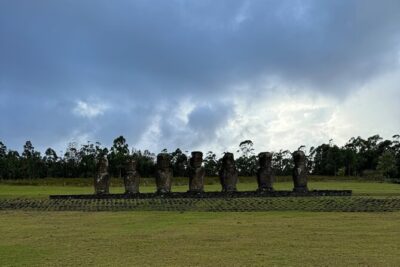
Browse the lists this tour appears in