
Reviewed · EASTER ISLAND TOURS
Easter Island: The Moai Trail Private Archeological Tour
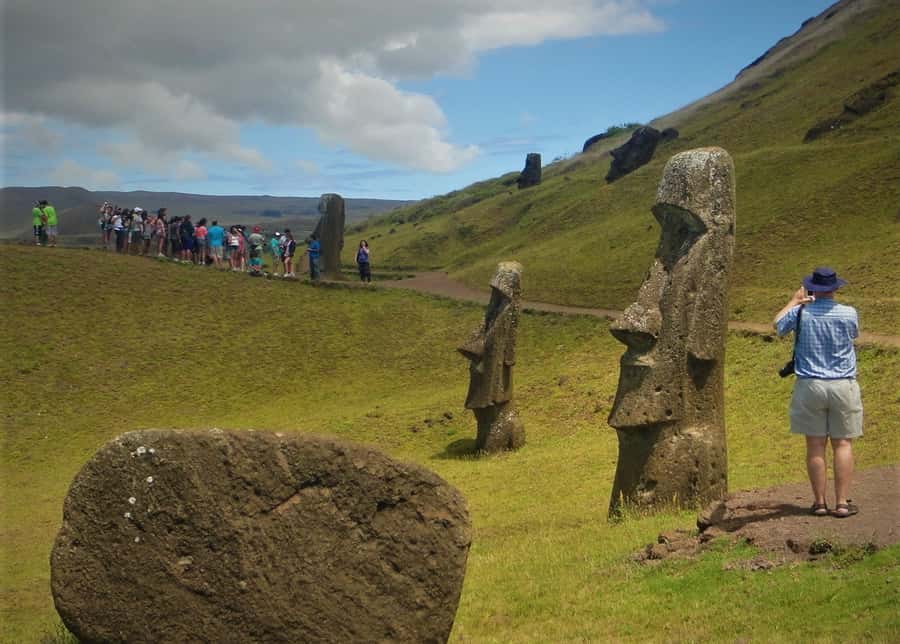
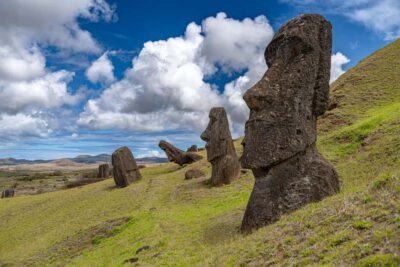
The most powerful part of this private Rapa Nui tour is Rano Raraku, the volcanic quarry where hundreds of moai remain in different stages of carving. You see the statues not as isolated monuments, but as unfinished work left in the stone, which makes the old carving process easier to picture.
I like the route for two clear reasons: it reaches Ahu Tongariki, the island’s biggest moai platform, and it pairs the major archaeological sites with Anakena Beach, a calm, beautiful place tied to the island’s founding traditions. I also like the private vehicle and hotel pickup, since you can focus on the guide instead of managing transport.
The main caution is practical: the tour is advertised as six hours, but the listed stop times add up to eight hours. The entrance fee is also extra at $80 per person, so confirm the exact schedule and total cost before booking.
Key points to know before you book
- Rano Raraku is the heart of the day: You walk among roughly 400 moai in various stages of carving.
- Ahu Tongariki delivers the big view: Fifteen moai line the most imposing platform on Rapa Nui.
- The private format has real value: Hotel pickup, private transport, and a guide in English or Spanish are included.
- Anakena adds a different side of the island: White sand, coastal scenery, and the Ahu Nau Nau archaeological site round out the day.
- The guide shapes the experience: Sol, Isa, Hugo, Miguel, and Yoyo are among the guides associated with especially warm, funny, and thoughtful tours.
- Budget for the entrance fee: The $200 price does not include the additional $80 per person admission charge or food and drinks.
Why this route works for a first day on Rapa Nui
Rapa Nui is not a place where the famous statues appear one after another beside a city street. The sites are spread across the island, and the meaning of each one becomes clearer when you see the quarry, ceremonial platforms, fallen statues, burial or settlement remains, and coast in one outing.
This route gives you that broad picture. You begin near Akahanga, continue to Tongariki and Rano Raraku, stop at Te Pito Kura, and finish at Anakena. That sequence moves from political and ceremonial history toward the island’s origin stories and beach culture.
A private group also changes the feel of the day. You are not sharing the vehicle with a large crowd, and you can ask questions as the story develops. Several guides associated with this tour, including Sol, Hugo, Miguel, and Yoyo, have been praised for clear storytelling, humor, punctuality, and the ability to connect ancient events with Rapa Nui life today.
That last point matters. A tour of Easter Island can become a parade of giant stone figures unless someone explains what an ahu was, why moai were made, how conflict affected the statues, and why the island protects these sites so carefully. A good guide helps you see people and ideas, not only stone.
More moai and Rapa Nui sites:
- From Hanga Roa: Rapa Nui Culture Sightseeing Tour
★ 4.6 · 307 reviews - From Hanga Roa: Journey from Orongo to Ana Te Pahu
★ 4.3 · 75 reviews - Two days of Full Day Tour of Rapa Nui + Sunrise in Tongariki
★ 4.8 · 55 reviews
Ahu Akahanga and the remains of an old ceremonial center
Your first stop is Ahu Akahanga, near the village of Akahanga. The site was an important ceremonial center, or ahu, and it gives you an early look at moai that are no longer upright on their platforms.
The fallen statues connect to the period of tribal conflict on the island. You will hear how many moai were knocked down during fighting. This is a useful corrective to the common image of every statue standing proudly in a neat row. At Akahanga, the broken and fallen remains show that Rapa Nui’s past included rivalry, upheaval, and change.
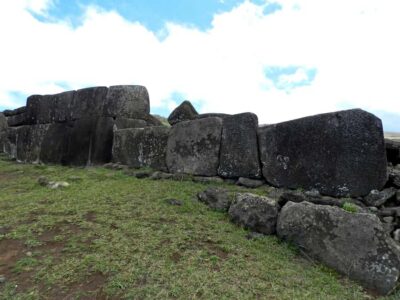
You also see the remains of hare paenga, boat-shaped stone houses used by the island’s ancient inhabitants. These foundations are easy to overlook beside the moai, but they help you picture the settlement that once surrounded the ceremonial center.
The scheduled visit is about 30 minutes. That is enough for an introduction and guided explanation, though not a long archaeological walk. Wear shoes with a good grip, since the experience involves walking over uneven ground and the tour is not suitable for people with mobility impairments or wheelchair users.
Rano Raraku, where the moai began as volcanic rock
Rano Raraku is the major stop, with about three and a half hours listed for a guided visit. This is where the tour earns much of its price and time.
The quarry supplied the volcanic rock used to carve the moai. Here, roughly 400 statues remain in different stages of work. Some appear almost complete, while others are still attached to the rock. That unfinished quality gives you a rare look at production rather than only the finished monument.
I find this more revealing than seeing a single completed statue. The quarry lets you ask practical questions. How were the figures shaped? At what point were they separated from the mountain? How did the people of Rapa Nui organize such demanding work? Your guide can place the visible stonework within the island’s wider traditions and explain what historians and cultural studies have tried to understand.
Three and a half hours is generous compared with the shorter visits at Akahanga and Te Pito Kura. It also means this part may feel tiring if you are not used to walking on rough ground. Bring comfortable shoes and warm clothing. The island can feel changeable, and one booking continued through pouring rain, so a little weather protection is sensible.
The long stop is a strength for anyone who wants more than a quick photograph. It may be less appealing if you prefer a fast highlights tour. You are paying for time with the quarry, so the value depends on your interest in archaeology and on how much detail your guide provides.
Ahu Tongariki and fifteen moai facing the coast
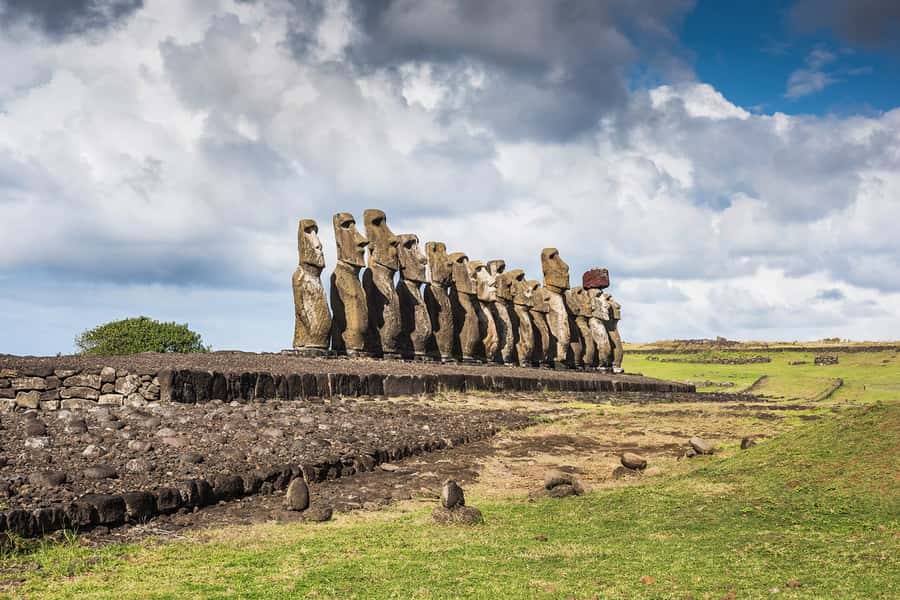
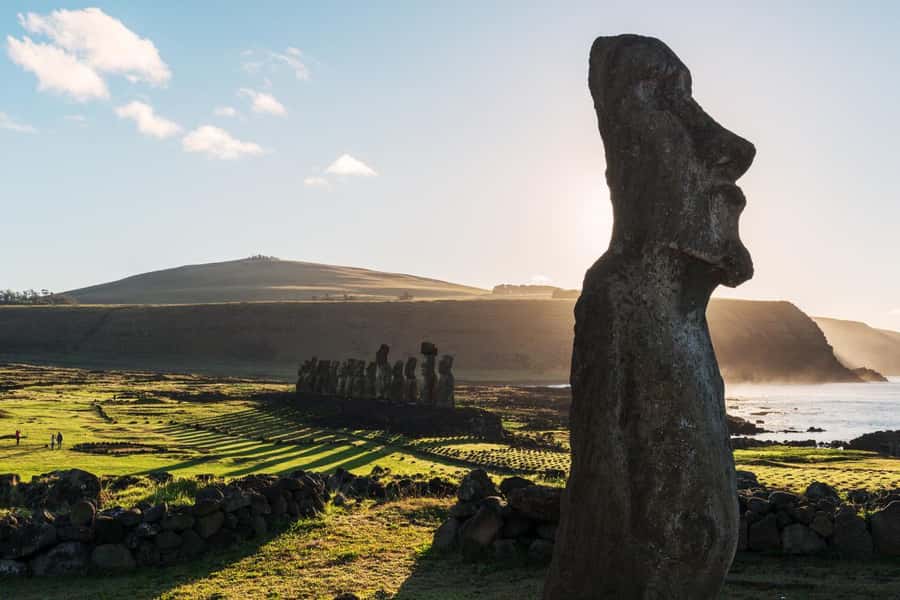
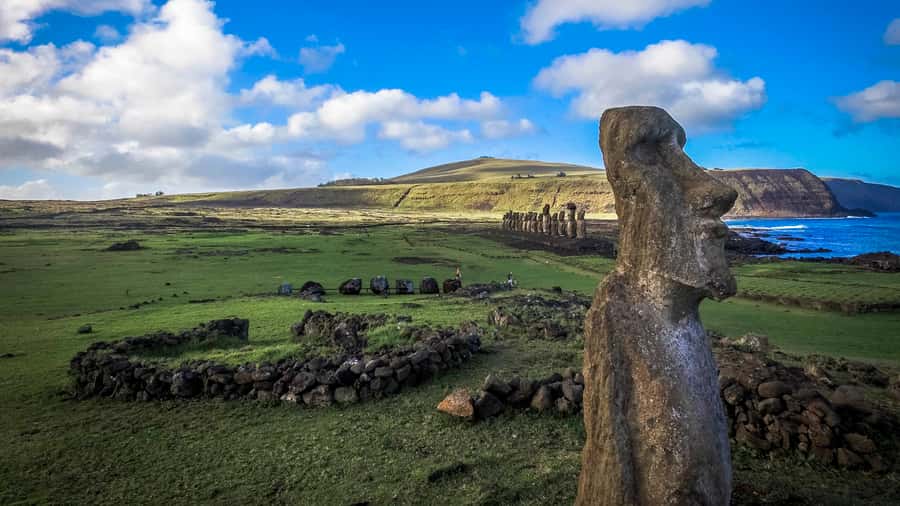
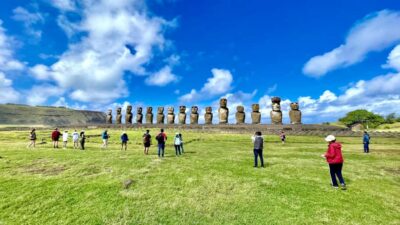
Ahu Tongariki is the visual centerpiece. Fifteen moai stand on the island’s largest ahu, creating the broad, formal view most people hope to see on Rapa Nui.
The scale is hard to grasp from photographs. The platform, the line of statues, and the open setting make this feel different from the scattered figures at Rano Raraku. Here, the moai are presented as a group, and the arrangement gives you a sense of ceremonial power.
The planned guided visit is two hours, which should allow time for explanation, photographs, and a slower look at the platform. The exact order may vary, especially since the stated stop durations are longer than the advertised six-hour tour. Ask your operator to clarify how much time you will actually have at Tongariki and Rano Raraku.
Your guide is especially useful here because the statues are visually striking but easy to misunderstand. You can learn about the role of the ahu, the communities connected to these places, and the damage caused by later conflict. The best guides do not simply identify the moai. They help you think about why these figures were made and what they meant to the people who placed them.
A few more Hanga Roa half-days to weigh up
- From Hanga Roa: Easter Island Highlights 2-Day Tour
★ 4.3 · 205 reviews - Sunrise Tongariki: Sunrise at Tongariki Park Private Tour
★ 4.5 · 47 reviews - Rapa Nui Dreams: Experiencie Pack 3 Days
★ 4.7 · 32 reviews - Easter Island: Full-Day Tour to Anakena
★ 4.7 · 27 reviews
Te Pito Kura and the navel of the world
Ahu Te Pito Kura is a shorter stop, listed at about 30 minutes, but it brings together two memorable features.
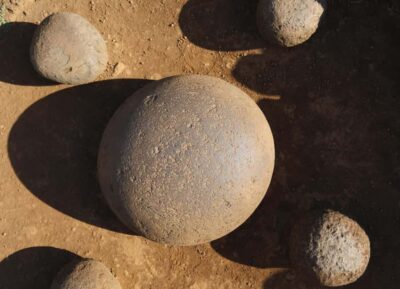
The site includes Paro, described as the island’s highest statue. Nearby is a large spherical stone associated with Te Pito or Te Henua, often translated as the navel of the world. According to Rapa Nui tradition, the stone was brought to the island on the boat of Hotu Matua.
This stop is less about a long walk and more about a focused explanation. The round stone looks simple, yet its story opens a door into the island’s spiritual geography. You get a reminder that Rapa Nui sites carry both archaeological evidence and living cultural meaning.
Because the visit is brief, listen closely to the guide and do not expect the same amount of time as at Rano Raraku. If you enjoy legends, symbolism, and the meeting point between oral tradition and archaeology, this small stop adds weight to the larger route.
Anakena Beach and Ahu Nau Nau
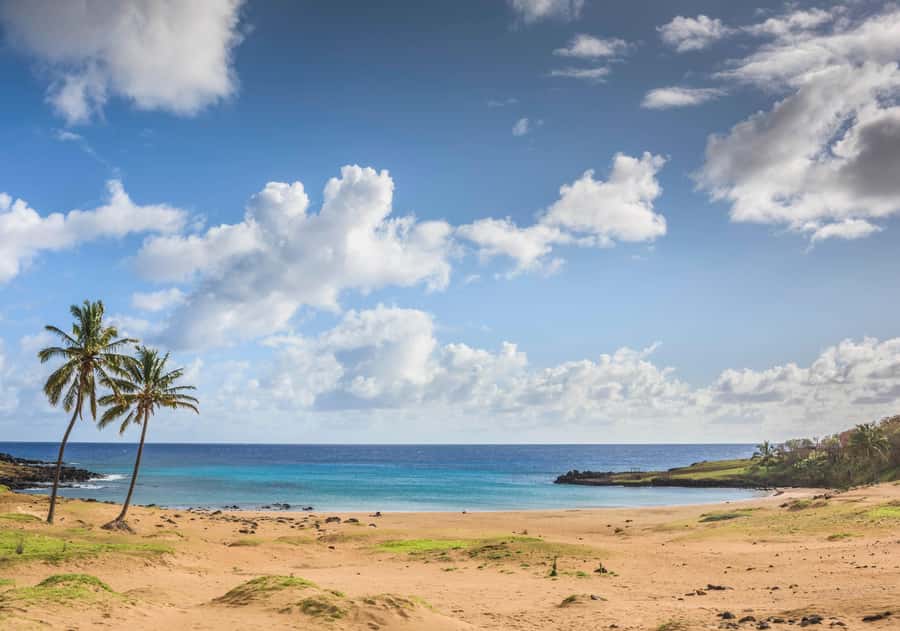
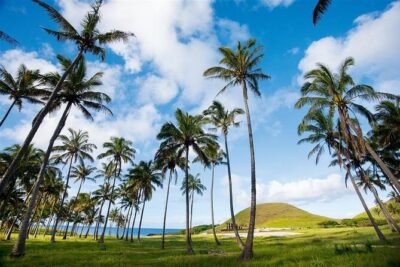
The final major stop is Anakena, a white sand beach linked to the arrival of Ariki Hotu Matua and his sister Avareipua. After hours among stone platforms and volcanic rock, the beach provides a welcome change of setting.
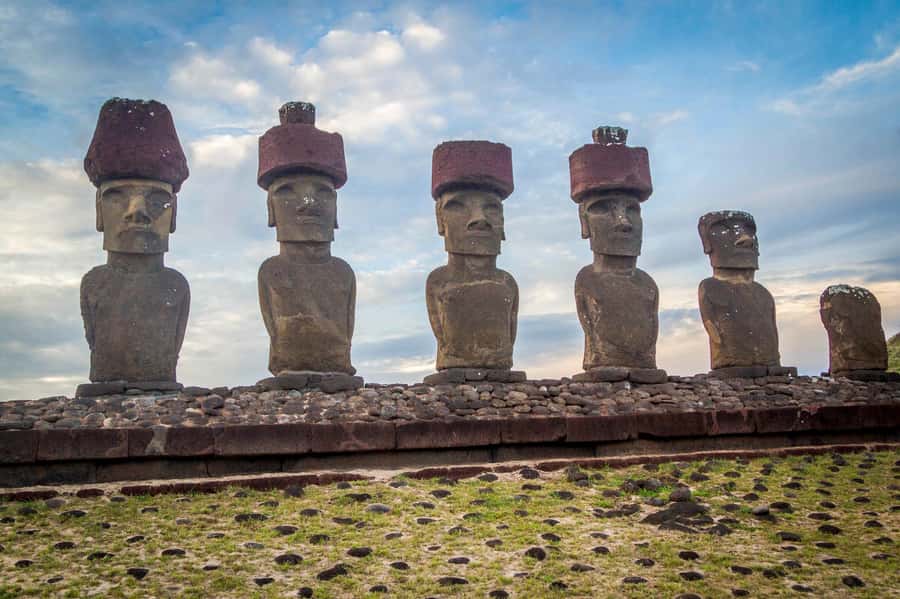
Anakena is not just a scenic finish. You also visit Ahu Nau Nau, an archaeological complex with five moai. Several have pukao, the red stone topknots placed on the heads of some statues. Petroglyphs appear on the backs of the figures, adding details that you might miss without a guide.
This is one of the strongest choices in the itinerary. It gives you a chance to see moai in a coastal setting and to connect the archaeological remains with stories of arrival and settlement. The contrast with Tongariki is useful: one site feels formal and monumental, while Anakena brings the statues closer to a beach and to the island’s origin traditions.
The listed visit is about an hour and a half. Food and drinks are not included, so plan around that when discussing the schedule. The supplied information does not specify a meal stop, so do not assume that lunch is part of the tour.
What the private vehicle and guide add
The private vehicle is not a minor convenience on Rapa Nui. The important sites lie across the island, and hotel pickup and drop-off at your Hanga Roa accommodation remove the need to arrange separate transport.
You also get a private group rather than a shared tour. That makes it easier to ask about details that catch your attention, pause for clarification, or explore the cultural meaning behind a site. It does not make the archaeological ground more even or the day less tiring, but it can make the six to eight hours feel more personal.
The strongest guide comments focus on teaching style. Sol is described as engaging and informative. Hugo is noted for detailed historical and cultural explanation, humor, and discussion of how Rapa Nui relates to Japan and to present-day life. Miguel is associated with organized visits and clear explanations, while Yoyo is described as friendly, funny, and generous with useful facts. Isa is also singled out for warmth and professionalism.
Your guide may be someone else, and the experience will depend heavily on that person. Still, the recurring pattern is encouraging: the tour is designed around conversation and interpretation, not simply transportation between viewpoints.
Price, entrance fee, and overall value
The tour costs $200 per person. Add the stated $80 entrance fee and the practical total becomes $280 per person before food and drinks.
That is a substantial price for a half-day or extended half-day outing. It can be good value if you want a private vehicle, hotel pickup, a dedicated English or Spanish-speaking guide, and the main archaeological sites in one outing. A private booking also suits people who value flexibility and direct questions more than the lowest possible fare.
The price is harder to justify if you only want quick photo stops or already have transport and a separate park admission arrangement. The tour does not include meals, and the timing needs clarification because the published duration conflicts with the individual stop lengths.
The free cancellation window is up to 24 hours before departure, and you can reserve now and pay later. Those terms help if your Rapa Nui plans are still moving, but they do not change the need to budget for the separate admission charge.
Who should book this tour
I would choose this for a first visit to Rapa Nui if you want the main sites explained in one private outing. It suits couples, families with older children, and small groups who want a personal guide rather than a large coach setting.
It is also a good match for history-minded people who want time at Rano Raraku. The quarry is not a quick stop, and the guide’s explanation can make the difference between seeing unfinished statues and understanding why they matter.
You should think twice if walking on uneven ground is difficult. The tour is not suitable for wheelchair users or people with mobility impairments. It is also not available to cruise ship passengers, so it is meant for people staying on the island, with pickup at a hotel in Hanga Roa.
The route includes Rano Raraku, but the supplied highlights also mention Rano Kau. Rano Kau is not listed among the scheduled stops, so ask about this before booking if that volcano is a priority. The same applies to the total duration. A six-hour outing cannot comfortably contain every listed stop at the stated lengths unless the schedule is adjusted.
Should you book the Moai Trail?
Book it if you want the island’s essential moai sites in one private day, with a guide who can explain conflict, carving, legends, and present-day cultural concerns. Rano Raraku and Tongariki are the main reasons to go, while Anakena gives the route a welcome coastal finish.
Before paying, confirm three things: the actual start and end time, the separate $80 entrance fee, and whether Rano Kau is included. If those details work for your schedule and you are comfortable walking over rough ground, this is a strong, information-focused way to see Rapa Nui.
FAQ
Where does the tour begin and end?
Pickup and drop-off are provided at your hotel in Hanga Roa.
How long does the tour last?
The activity is advertised as six hours. The listed stop times add up to longer than six hours, so confirm the exact schedule before booking.
What sites are included?
The route includes Ahu Akahanga, Rano Raraku, Ahu Tongariki, Ahu Te Pito Kura, Anakena Beach, and Ahu Nau Nau.
Is the Rano Kau volcano included?
Rano Kau appears among the highlights, but it is not listed as a scheduled stop. Ask the operator to confirm whether it is part of your departure.
Is the entrance fee included?
No. The entrance fee is listed as $80 per person and is paid separately. Food and drinks are also not included.
What languages are available?
The live guide is available in English or Spanish.
Can cruise ship passengers or wheelchair users join?
No. The tour is not available for cruise ship passengers and is not suitable for wheelchair users or people with mobility impairments.
Just added around Hanga Roa
- Easter Island: Customized recreational-tourist diving★ 5.0 · 3 reviews
- Ancestral fishing: Fishing with an experienced Rapa Nui★ 4.4 · 3 reviews
- Rapa Nui: Polynesian Massage★ 4.8 · 5 reviews
- Rapa Nui: 3 Excursions with Hotel Transfers★ 4.3 · 6 reviews
- Volcanic Refuges: Excursion to Underground Civilization★ 4.7 · 8 reviews
- Easter Island: Tropical Diving★ 4.8 · 13 reviews
- Rapa Nui Highlights Program: 3 incredible tours to discover!★ 4.8 · 18 reviews
- Easter Island: Half-Day Archaeology Tour★ 4.2 · 19 reviews
Easter Island Tours, compared.
Two days of Full Day Tour of Rapa Nui + Sunrise in Tongariki
Read our review →
Browse the lists this tour appears in