
Reviewed · EASTER ISLAND TOURS
Hanga Roa: Full Day Moai and Mistery
Easter Island’s Moai are most powerful when you see them in context, and this full-day route takes you from fallen statues and ancient quarry works to the famous fifteen figures at Tongariki. I like the broad sweep of the day, which covers the island’s main archaeological sights rather than stopping at just one or two.
I also like the focus on local guiding and the chance to hear the Rapa Nui story at the places where it unfolded. Past departures have featured Ene, an archaeologist praised for detailed explanations, and Zoe, who earned warm marks for her hospitality. The main caution is time: one seven-hour tour covers a lot of ground, and one unhappy customer felt major sites were rushed while quieter stops received too much attention.
Key points at a glance
- Six major stops in seven hours: The route links Vaihu, Akahanga, Rano Raraku, Tongariki, Pito Kura, and Anakena Beach.
- Rano Raraku is the historical centerpiece: You see Moai still attached to the volcanic rock, along with statues in different stages of work.
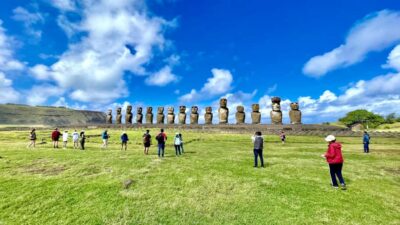
- Tongariki gives you the classic view: Fifteen restored Moai face inland with the Pacific behind them.
- A guide can change the experience: Ene, an archaeologist, has led past tours, while Zoe was praised for her friendly service.
- The National Park ticket costs extra: Add this expense to the $100 tour price before booking.
- Pickup is available in Hanga Roa: Transportation, a driver, and a local guide are included.
Why this seven-hour route works
I see this tour as a broad introduction to Rapa Nui rather than a slow, specialist archaeological walk. In one day, you visit ceremonial sites, a Moai quarry, a restored platform, a lesser-known village site, and a beach with a very different mood from the stone monuments.
That variety matters. If you have only a short stay on Easter Island, you want your limited sightseeing time to cover the island’s major chapters. This route does that well, moving from the mystery of fallen Moai to the craft of statue-making and then to the living cultural meaning of the island.
The $100 price is reasonable for seven hours of transportation, a driver, and a local guide, especially since Hanga Roa pickup is included. Still, the National Park ticket is not part of the price. You should treat the admission fee as an extra cost, not a small footnote.
The score of 4.4 from 22 ratings suggests a generally strong experience, but not a perfect one. The split in the feedback points to the key variable: the guide. Some departures have received high praise for hospitality and clear explanations, while one visitor found the guide unmotivated and said Tongariki received too little time.
More moai and Rapa Nui sites:
- From Hanga Roa: Rapa Nui Culture Sightseeing Tour
★ 4.6 · 307 reviews - From Hanga Roa: Journey from Orongo to Ana Te Pahu
★ 4.3 · 75 reviews - Two days of Full Day Tour of Rapa Nui + Sunrise in Tongariki
★ 4.8 · 55 reviews
Vaihu and the first look at fallen Moai
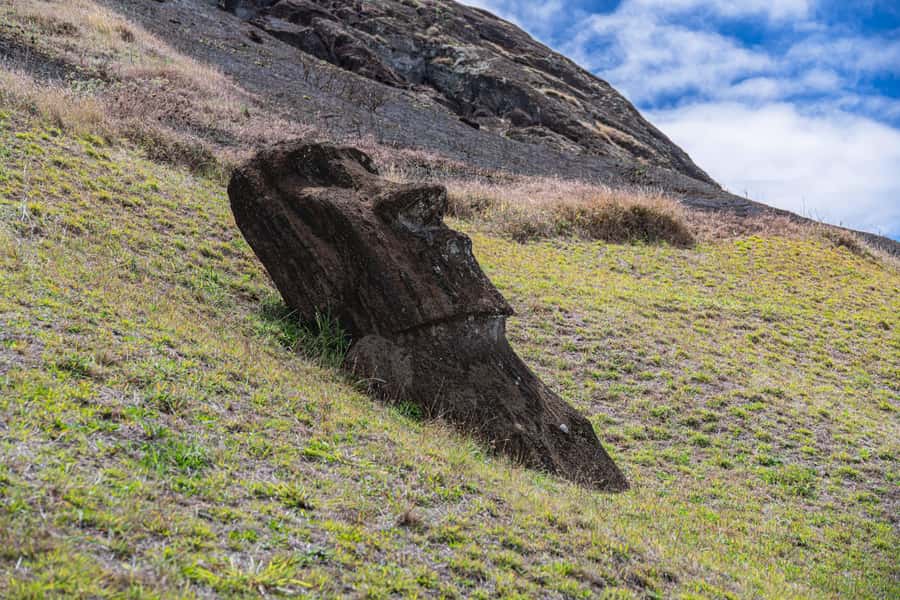
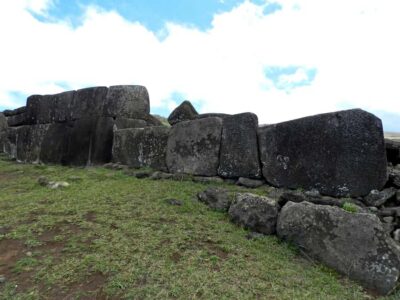
Vaihu introduces you to the island’s archaeological story without the polished drama of Tongariki. Ancient stone figures lie among the remains of a ceremonial site, giving you a direct look at the way many Moai were left after their platforms were overturned.
I like this stop because it helps you avoid a simple postcard view of Easter Island. The Moai are not all upright and perfect. At Vaihu, the fallen statues show the force of the island’s past conflicts and the long period of change that followed the great statue-building era.
This is also a good place to listen closely to the guide. The stones do not explain themselves. A local guide can connect the toppled figures, their placement, and their meaning to Rapa Nui culture in a way that a quick photo stop cannot.
The possible drawback is that Vaihu may feel less dramatic if you have already seen photographs of upright Moai. I would treat it as a context stop, not the main visual event of the day.
Akahanga and the evidence of a troubled past
At Akahanga, you continue among fallen Moai and the topknots that once crowned some of the statues. These large red stone cylinders are easy to miss if you only focus on the figures themselves, but they reveal another part of the island’s carving and transport work.
I find Akahanga valuable because it makes the archaeological sites feel less tidy and more human. The scattered remains hint at disruption, abandonment, and the difficult questions surrounding the island’s past. A good explanation here can turn a field of stones into a place with real meaning.
The stop also helps you understand that a Moai was not simply a statue placed on a platform. The figure, the topknot, the ceremonial platform, and the surrounding village all formed part of a larger social and spiritual setting.
As with Vaihu, Akahanga may not deliver the instant impact of Tongariki. You are paying for a route that includes the wider story, not only the most famous views. If your priority is photography at the grandest sites, pay attention to how much time the guide allows at each location.
Rano Raraku, where the Moai began
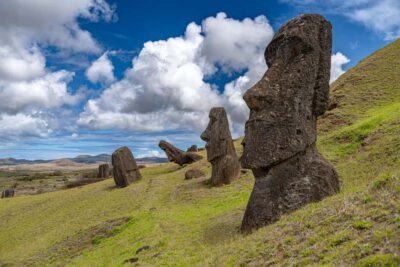
Rano Raraku is the heart of the day. This volcanic quarry is where the Rapa Nui people carved most of the Moai, and the unfinished figures remain in and around the rock. Here, you can see statues at different stages of completion, including some still attached to the stone from which they were shaped.
This is the stop that gives the statues their physical reality. At a platform, you see the finished product. At Rano Raraku, you see the work itself: a figure emerging from volcanic rock, the scale of the carving, and the sheer ambition behind the process.
I would give this part of the tour your full attention. Listen for the guide’s explanation of how the Moai were shaped and why the quarry matters to Rapa Nui beliefs. The significance is not only technical. These figures carried social and spiritual importance, and the quarry helps you understand that they were part of a much larger cultural system.
The setting is striking, but the site can also raise practical questions about pacing. There is a lot to see, and seven hours must cover the whole route. If the guide keeps the visit short, you may leave feeling that Rano Raraku deserved more time. That is the strongest reason to ask at the start how the day will be divided.
A few more Hanga Roa half-days to weigh up
- Easter Island: Full-Day Tour to Anakena
★ 4.7 · 27 reviews - Small-Group Cajón del Maipo Full-Day Tour and Picnic
★ 4.5 · 2,277 reviews - Piedras Rojas, Altiplanics Lagoons & Salar Full-Day Tour
★ 4.7 · 592 reviews - From El Calafate: Torres del Paine Full Day Tour
★ 4.6 · 434 reviews
Tongariki and fifteen Moai by the Pacific
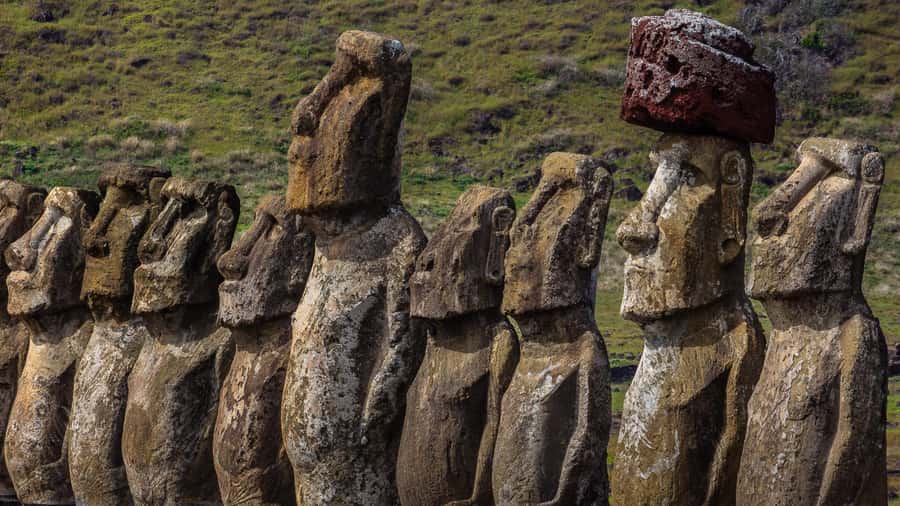
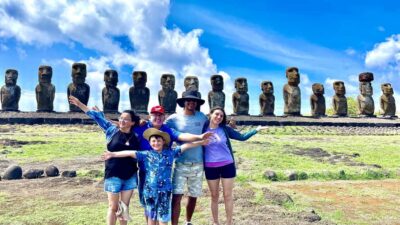
Tongariki is the visual high point for many people. Fifteen Moai line the ceremonial platform, their broad forms set against the Pacific. The scale and order of the group make this the place where the island’s ceremonial power comes through most clearly.
I like Tongariki not just for its appearance, but for the story of restoration behind it. The platform and figures reflect major efforts to repair and reassemble a site that had been damaged. Your guide can explain how restoration changed what you see today and why Tongariki carries such importance for Rapa Nui identity.
This is also the stop where time matters most. One negative account described moving through Tongariki too quickly, after spending too much time at less compelling places. I cannot promise how long your group will stay, so I recommend making your preference clear early: you want enough time for the fifteen Moai, the ocean view, and photographs without being hurried.
If you are choosing this tour mainly for Tongariki, that advice is important. The route includes many stops, so the overall value depends on how well the guide balances coverage with time at the major sites.
Pito Kura and a quieter ceremonial setting
Pito Kura offers a change of pace. It is described as a sacred ceremonial village with distinctive features, and the guide explains the rituals and ceremonies connected with the site.
I see this as a useful addition for people who want more than the famous Moai photographs. Pito Kura adds another layer to the island’s spiritual life and shows that Rapa Nui culture was not limited to the quarry or the monumental platforms.
It may not have the instant recognition of Rano Raraku or Tongariki. That is precisely why the guide matters here. Without context, a less famous archaeological site can seem like a brief stop among stones. With a clear explanation, it becomes part of the island’s wider story.
Anakena Beach closes the day on a different note
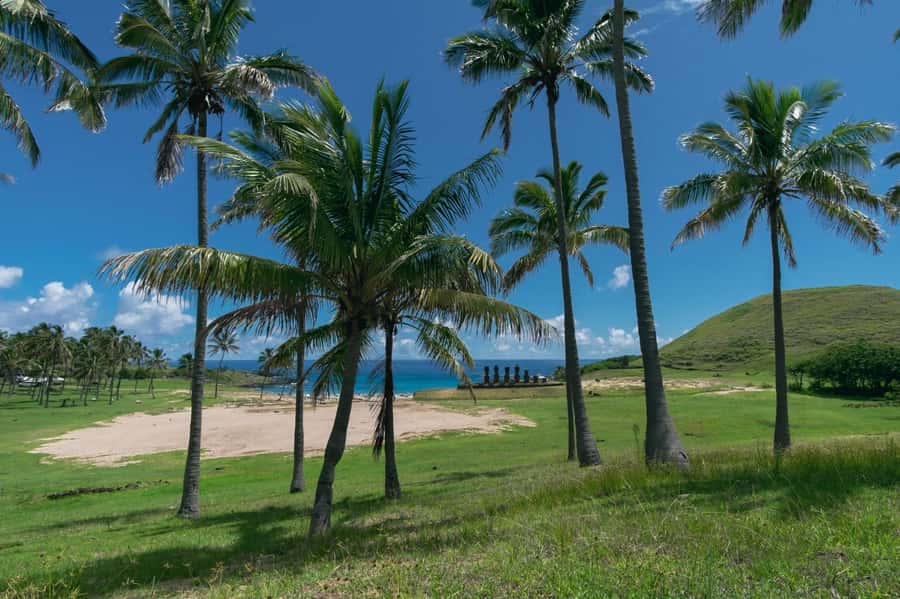
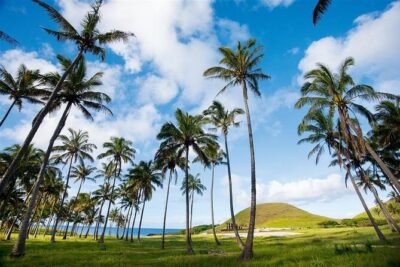
Anakena Beach is a welcome final stop after hours among volcanic stone and archaeological remains. Golden sand, turquoise water, and coconut palms create a softer ending, giving you time to reflect on the day beyond the ceremonial sites.
I like this finish because it reminds you that Easter Island is more than Moai. The island’s natural beauty is part of the experience, and Anakena gives you a chance to see a coastal setting that feels calm and open after the concentrated history of the earlier stops.
The beach also helps break up the day. A full route of archaeological sites can become mentally demanding, especially if you are listening to detailed explanations in a second language. The change in scenery gives you a natural pause.
Do not expect Anakena to turn this into a beach day. It is the final stop on an archaeological tour, and the stated duration is seven hours. The exact time available for relaxing or swimming is not specified, so plan to enjoy the setting without assuming a long beach stay.
The guide can make or break the experience
The strongest praise centers on the human side of the tour. Hospitality is one of the stated highlights, and past guests have singled out guides by name. Ene was described as an archaeologist with an impressive command of the subject, while Zoe received a direct thank-you for providing excellent service.
Those details matter because Easter Island’s sites need interpretation. The Moai are visually memorable, but the reasons behind their construction, placement, topknots, ceremonial platforms, and restoration are not obvious. A guide who explains the sites clearly can turn a packed day into a coherent story.
The tour offers live guiding in English and Spanish. That gives you a practical choice when booking, especially if you want to ask questions rather than simply listen to a fixed recording.
At the same time, guide quality appears to vary. One account describes a rude and disengaged guide who slept during the drive and hurried through Tongariki, while the driver was considered to have done a good job. I would not ignore that criticism, even though the overall score is positive.
When you meet the guide, ask two simple questions: how much time is planned at Tongariki and Rano Raraku, and when can you ask questions? A useful answer will give you a sense of the day’s pace.
Transport, access, and the true cost
Transportation, a driver, and a local guide are included. Pickup is available from Hanga Roa, which removes the need to arrange your own transport to the starting point.
The tour is listed as wheelchair accessible. That is useful information, but the individual conditions at each archaeological site are not described. If you use a wheelchair, confirm what accessibility means for the specific stops before paying, since access across ancient sites can differ.
The listed price is $100 per person. For a seven-hour outing that reaches six important locations, I consider that a fair starting price, provided the guide gives the major sites enough time and attention.
Remember to add the National Park ticket. No ticket price is provided here, so check the current cost before booking and include it in your total budget. This is the most important extra expense connected with the tour.
You can reserve now and pay later, and cancellation is free up to 24 hours before the activity for a full refund. Those terms help if your Easter Island plans may shift, but they do not change the need to budget for the park admission separately.
Who should book this tour
I would choose this tour if you want a single day that covers the essential Moai sites without organizing a car, driver, and guide yourself. It suits first-time visitors, people with limited time, and anyone who wants a broad introduction before deciding which places deserve a return visit.
It is also a good fit if you value cultural explanation over simply collecting photographs. The presence of a local guide, and the possibility of a guide with archaeological training such as Ene, adds much more to the quarry and ceremonial sites.
I would be more cautious if you want a slow, photography-focused day. Six stops in seven hours require a firm schedule, and the negative account raises a real concern about rushed time at Tongariki. Ask about pacing before departure and make your priorities clear.
The tour is less suitable for someone who wants a long beach visit, a small specialist group, or a highly personalized route. The information provided does not specify group size or private-tour arrangements, so do not assume either.
Should you book the Moai and Mystery day?
I would book it if you need an efficient introduction to Easter Island and want Rano Raraku, Tongariki, and Anakena on the same day. The route is strong, the price is reasonable before the separate park ticket, and the best guides can add meaning that the stones alone cannot provide.
I would book with one condition: confirm the day’s timing and ask for proper time at Tongariki and Rano Raraku. The experience appears capable of being excellent, but the guide’s energy and judgment shape the result. If you want broad coverage, local insight, and simple transport from Hanga Roa, this is a sensible choice. If your priority is lingering at every major site, look for a slower option.
FAQ
How long does the tour last?
The tour lasts seven hours.
What sites are included?
The route includes Vaihu, Akahanga, Rano Raraku, Tongariki, Pito Kura, and Anakena Beach.
Is transportation included?
Yes. Transportation, a driver, and a local guide are included.
Is pickup available in Hanga Roa?
Yes. Pickup transportation is available from Hanga Roa.
Is the National Park ticket included?
No. The National Park ticket is not included in the tour price.
What languages are available?
The live guide is available in English or Spanish.
Is the tour wheelchair accessible?
The activity is listed as wheelchair accessible.
How much does the tour cost?
The listed price is $100 per person. The National Park ticket costs extra.
Can I cancel for a full refund?
Yes. You can cancel up to 24 hours in advance for a full refund.
Just added around Hanga Roa
- Easter Island: Customized recreational-tourist diving★ 5.0 · 3 reviews
- Ancestral fishing: Fishing with an experienced Rapa Nui★ 4.4 · 3 reviews
- Rapa Nui: Polynesian Massage★ 4.8 · 5 reviews
- Rapa Nui: 3 Excursions with Hotel Transfers★ 4.3 · 6 reviews
- Volcanic Refuges: Excursion to Underground Civilization★ 4.7 · 8 reviews
- Easter Island: The Moai Trail Private Archeological Tour★ 4.9 · 12 reviews
- Easter Island: Tropical Diving★ 4.8 · 13 reviews
- Rapa Nui Highlights Program: 3 incredible tours to discover!★ 4.8 · 18 reviews
Easter Island Tours, compared.
Two days of Full Day Tour of Rapa Nui + Sunrise in Tongariki
Read our review →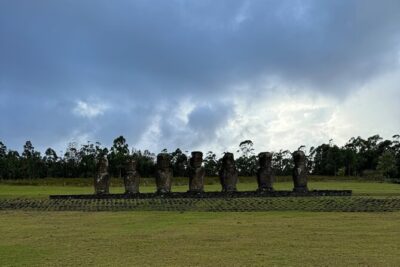
Browse the lists this tour appears in