
Reviewed · EASTER ISLAND TOURS
From Hanga Roa: Easter Island Highlights 2-Day Tour
Rapa Nui is far too important to see as a quick drive-by, and this two-day tour gives you a solid sweep of the island’s major moai sites. Native guides explain not only how the statues were made, but also how Rapa Nui people lived and how local traditions still shape the island.
I like the small groups of up to 14 and the pickup from your accommodation. I also like the practical extras: a minibus, lanterns for the caves, and rain capes for sudden showers. The main catch is that the second day can feel rushed, especially when English and Spanish commentary are combined.
- Rano Raraku and Tongariki: See the volcanic quarry where moai were carved, followed by the island’s famous platform with 15 statues.
- Native island guides: Guides including Jeremías, Zoe, Enerike Hey, Roberto, Simon, and Franko have brought local stories, songs, and family traditions into the tour.
- Anakena beach stop: End the first day beside palm trees, sand, and ancient moai, with time to pause after a busy day.
- Ana Te Pahu caves: Use the provided lanterns to explore underground chambers and petroglyphs.
- Lunch is your responsibility: Bring substantial snacks, especially for day two, and remember that site entrance fees are separate.
- Good value for first-time visitors: The $170 price covers two full touring days, transport, and guiding across the island’s key archaeological areas.
Why two days works well on Rapa Nui
Rapa Nui, also called Easter Island, is small enough to cross by road but packed with archaeological sites. A self-guided drive can show you the broad shape of the island, yet it cannot always explain why a fallen moai matters, how a quarry operated, or why the statues at Ahu Akivi face inland rather than toward the sea.
This tour spreads the main sights across two days. That matters because the island’s monuments are not clustered in one convenient park. You move from volcanic craters and coastal platforms to caves, quarries, and ceremonial villages.
The tour costs $170 per person. That is a fair price if you want transport, a local guide, and a structured route through the principal sites. It also saves you from arranging a separate vehicle and guide for places where guided access is important.
You should still think of the price as only part of your budget. Lunch is not included, and entrance fees to the sites are extra. Bring Chilean pesos or another accepted payment method only if you have confirmed what each stop accepts, since the tour information does not specify payment arrangements.
Day one: moai along the southern coast
The first day covers the island’s most famous chain of archaeological sites. Pickup is provided at your accommodation, and transport takes place in a spacious minibus. That is a comfortable setup for a full day of moving between sites, though pickup can take time when the group is large.
The route begins at Vaihu, where toppled moai lie near the coast. This is a useful first stop because it introduces one of the central facts of Rapa Nui archaeology: many statues no longer stand on their original platforms. The broken or fallen figures create a quiet, serious atmosphere, quite different from the heroic rows you will see later.
At Ahu Akahanga, you get another view of the island’s ceremonial past. Fallen moai rest among the remains of an important platform, and your guide can place the site within the larger story of statue building, ceremony, and later change.
This is where a local guide adds real value. Guides such as Jeremías and Enerike Hey have been praised for explaining daily life, local customs, and the many theories surrounding the moai in clear language. You are not simply looking at large stone figures. You are learning how they fit into Rapa Nui society.
A few more Hanga Roa half-days to weigh up
- Two days of Full Day Tour of Rapa Nui + Sunrise in Tongariki
★ 4.8 · 55 reviews - Santiago: 2-Day Hop-On Hop-Off Bus Ticket and Cable Car
★ 4.3 · 162 reviews - 2 Days in Patagonia. Torres del Paine and Balmaceda and Serrano Glacier.
★ 4.1 · 4 reviews
Rano Raraku: the quarry that explains the moai
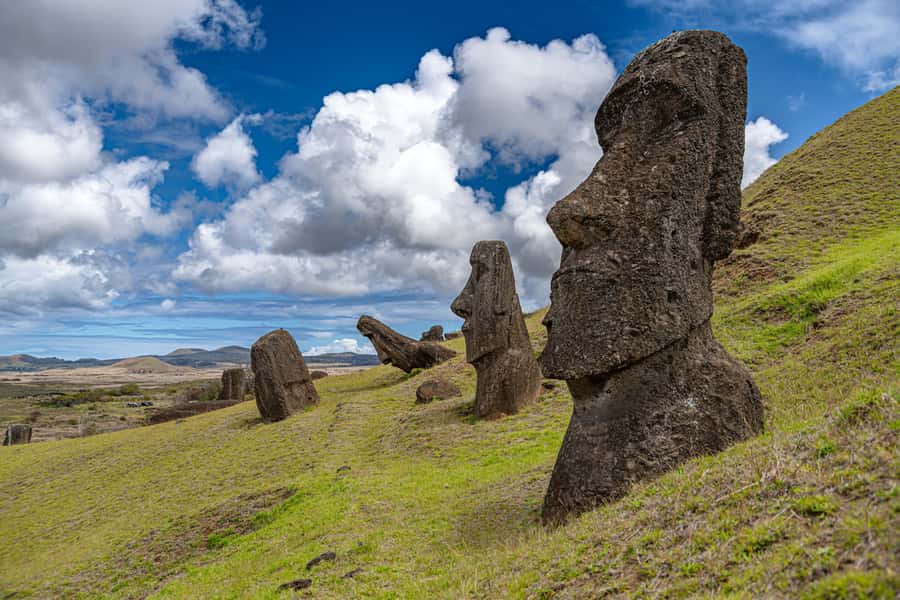
Rano Raraku is the day’s major stop. This volcanic quarry is where many of the island’s moai were carved from soft volcanic tuff. Some statues remain partly attached to the rock, while others sit around the slopes in different stages of completion.
The quarry helps you understand the scale of the work. At other sites, the moai can seem to have appeared by magic. Here, you see the unfinished forms and the stone from which they came. The unfinished statues also raise useful questions about why production stopped and how the island’s ceremonial system changed.
Expect open ground and direct sun. One practical tip is to carry water, snacks, and strong sun protection. A guide can explain the site, but no guide can shade you from the midday sun.
Lunch arrangements deserve attention here. There may be a stop near the quarry, but the café can be busy. On one full-day outing, continuing to Anakena rather than waiting for food made better use of the schedule, with the meal taken much later in the afternoon. I would not rely on an immediate restaurant stop. Pack food you can eat easily in the minibus or at a scenic pause.
Tongariki, Te Pito Kura, and Anakena
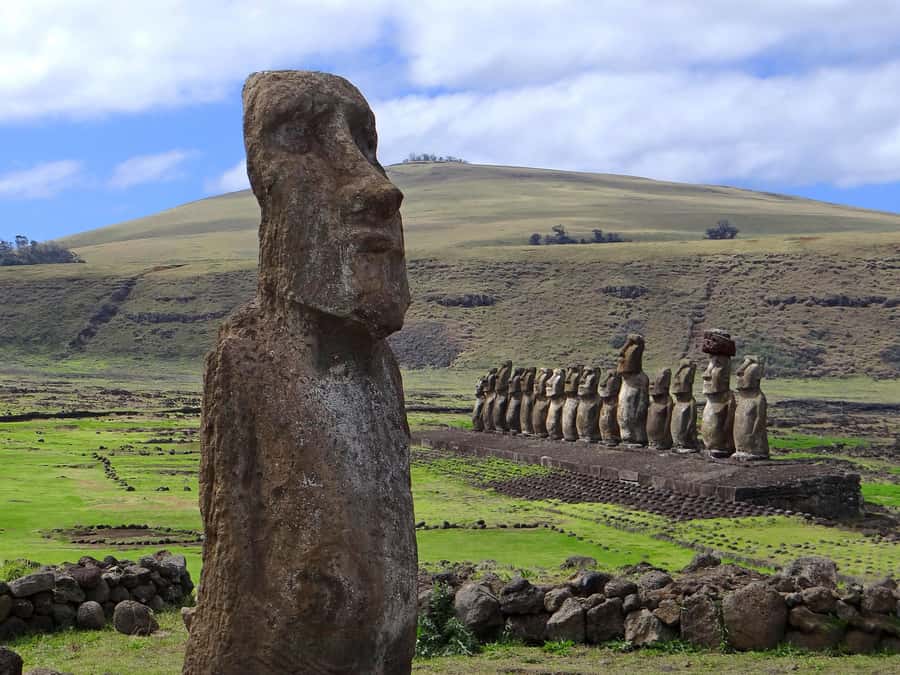
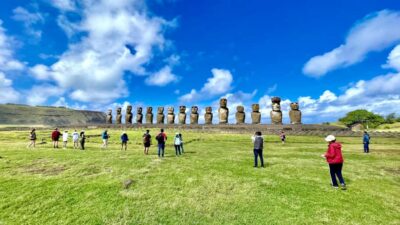
After Rano Raraku, the route continues to Ahu Tongariki, the famous platform with 15 moai. This is one of the most memorable views on Rapa Nui. The statues form a powerful line against the open Pacific, and their scale becomes clearer when you see people standing at the base.
Tongariki is also a good place to listen carefully to your guide. The visual impact is instant, but the explanation gives the monument meaning. Ask about the platform, the statue arrangement, and the restoration of the site if time allows. The supplied information does not promise a fixed amount of time at every stop, so the pace may depend on the group and the guide.
At Te Pito Kura, the emphasis shifts from sheer size to sacred tradition and legend. The site is connected with the island’s spiritual world, and your guide can help separate established archaeological information from stories passed through generations.
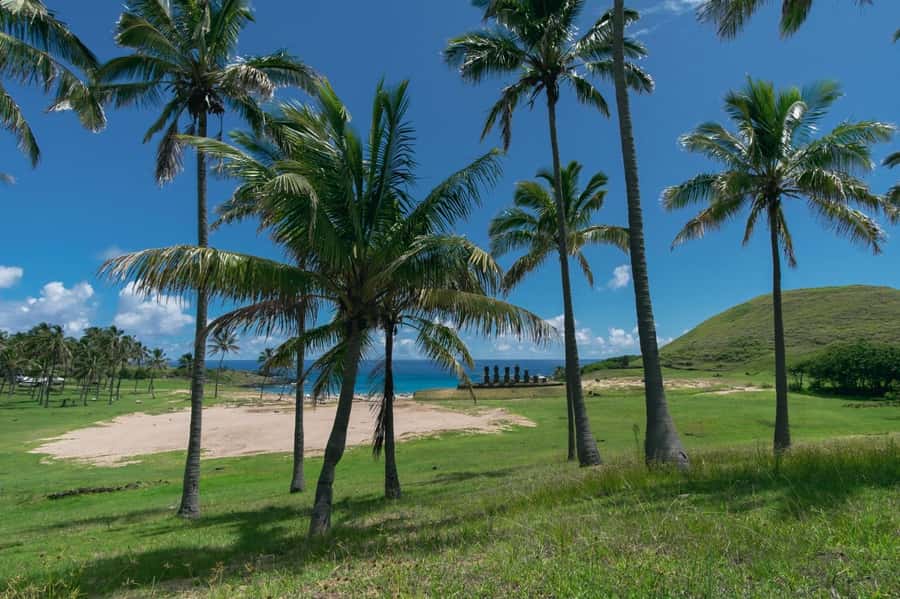
The day ends at Anakena, a sandy beach bordered by palm trees and ancient moai. After several hours among quarries and fallen statues, Anakena offers a welcome change of mood. You get sea, sand, and a chance to slow down.
The stop can also be late. One account places the meal break at Anakena at about 4:30 pm after the group chose not to wait at the quarry café. Bring a substantial snack if you do not want to spend the afternoon hungry.
Anakena is also a strong reason to choose this tour over a route that focuses only on moai. It shows that Rapa Nui is not just an archaeological destination. The coast and beach are part of the experience, too.
Day two: crater views, stonework, and caves
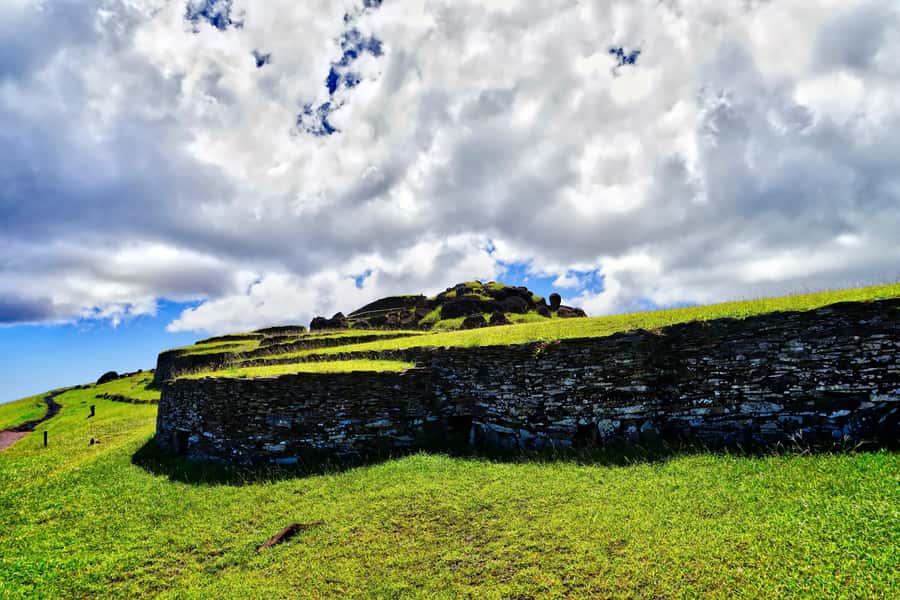
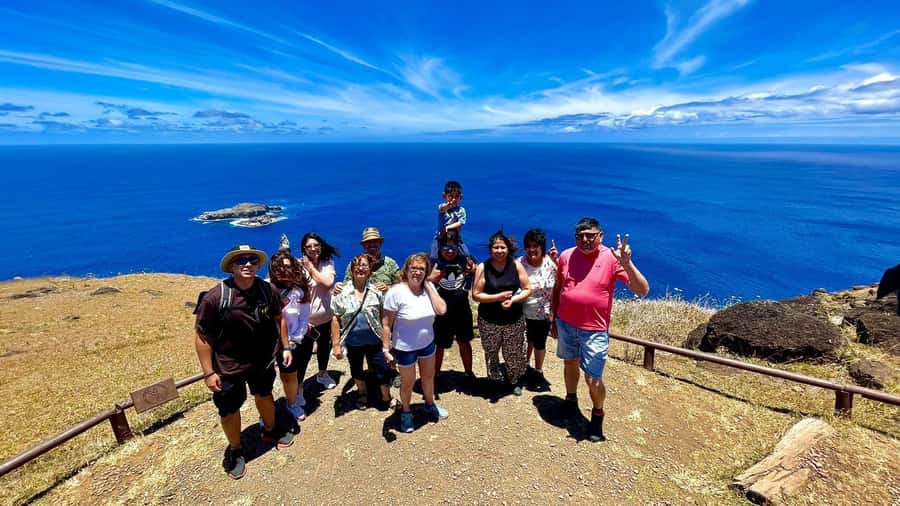
The second day visits several sites that feel more varied than the first day. It begins at Orongo, a historic ceremonial village on the rim of Rano Kau.
The setting is dramatic. From the cliffs, you can look across the broad volcanic crater and out toward the sea. Orongo is closely tied to Rapa Nui ceremony and belief, so this is one of the places where a good guide can turn a scenic viewpoint into a meaningful visit.
Orongo has received especially warm praise from people who found the rest of the second day less engaging. That is useful to know. If you like volcanic scenery and ceremonial sites, you may find this the strongest stop of the day. If your main goal is rows of moai, the second day may feel quieter than the first.
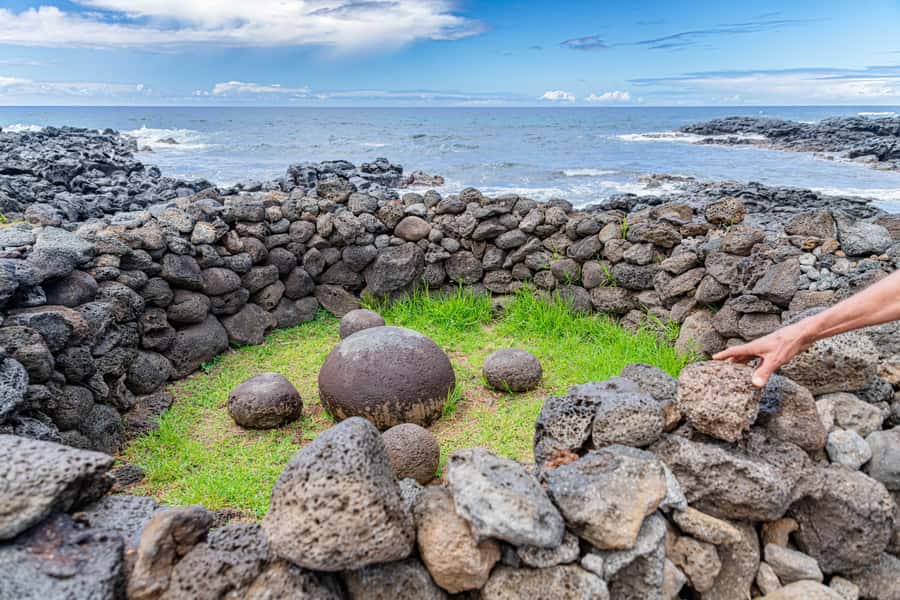
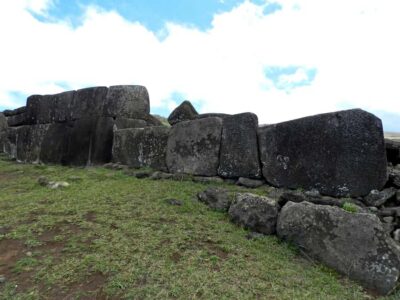
At Vinapu, ancient stonework takes center stage. The carefully fitted walls have drawn comparisons with masonry in South America. Your guide should explain what is known, what remains debated, and why the construction is important without turning speculation into fact.
This stop rewards close looking. Notice the fit of the stones rather than rushing straight to photographs. The site does not have the instant visual drama of Tongariki, but it offers a different lesson about engineering and ceremony.
Same base, a completely different landscape:
- From Hanga Roa: Rapa Nui Culture Sightseeing Tour
★ 4.6 · 307 reviews - From Hanga Roa: Journey from Orongo to Ana Te Pahu
★ 4.3 · 75 reviews - Sunrise Tongariki: Sunrise at Tongariki Park Private Tour
★ 4.5 · 47 reviews - Rapa Nui Dreams: Experiencie Pack 3 Days
★ 4.7 · 32 reviews
Puna Pau and Ahu Akivi
Puna Pau is a red scoria quarry. It supplied the red stone used for the topknots, or pukao, placed on some moai. Seeing this source helps complete the picture begun at Rano Raraku. The main bodies of many statues came from one quarry, while their red headpieces came from another.
Puna Pau can feel like a shorter technical stop, but it adds an important detail. The moai were not single blocks made in one place. Different materials, stages of work, and transport problems were part of the process.
The final major stop is Ahu Akivi, where seven moai face toward the ocean. Their placement is unusual because many other statues are associated with inland-facing ceremonial positions. That difference gives your guide a chance to discuss the theories and traditions surrounding the site.
Ahu Akivi is a fitting finish because it leaves you with a question rather than a simple final photograph. The statues are visually elegant, but their exact purpose and orientation still invite discussion.
Ana Te Pahu and the value of the lanterns
Ana Te Pahu brings you underground into a network of caves. The provided lanterns are a small but useful part of the tour. They make it easier to see hidden chambers and details that would otherwise be lost in the dark.
The caves add a human scale to a trip dominated by monumental stone. You can think about how people used enclosed spaces, how the island’s volcanic rock shaped daily life, and how caves became part of Rapa Nui’s spiritual world.
Conditions underground can differ from the open sites. Wear practical shoes and be ready for uneven ground, though the tour is advertised as wheelchair accessible. The available information does not describe the exact cave route or the level of assistance provided, so anyone with mobility concerns should confirm whether Ana Te Pahu can be visited comfortably in their situation.
Rain can also change the order of the day. One guide, Zoe, was able to rearrange the route during wet weather and use caves as shelter while keeping the tour moving. That sort of flexibility is valuable on an island where a sudden shower can affect outdoor stops.
Guides, languages, and group size
The strongest part of this experience is the guiding. The tour uses live guides in English and Spanish, and the guides may change between the two days. That can be a benefit because you get different personalities and different ways of explaining Rapa Nui culture.
Guides named in feedback include Jeremías, Javier’s Hucke, Enerike Hey, Zoe, Roberto, Simon, and Franko. Their styles vary. Some focus on archaeology and the moai, while others add songs, local language, family tradition, and modern island life.
The local perspective matters here. A guide who speaks about ancestors and daily life can give you more than a standard museum explanation. Roberto was particularly appreciated for songs and ukulele at different sites, while Zoe was praised for combining historical facts with tradition and personal experience.
The bilingual format is the main point to weigh. If your group includes English and Spanish speakers, the guide may repeat the explanation in both languages. That can double the speaking time and leave less time for wandering or questions. One English-speaking participant found that much of the second day was in Spanish, while another described a mixed-language group as simply something to consider.
If you want a purely English tour, ask before booking. The listed languages are English and Spanish, but the precise balance depends on the group.
Groups are limited to 14 people. That is small enough for questions and a more personal feel, though a full group can make pickup slow. One account described nearly 90 minutes spent collecting people on the second day. A smaller group or private departure can feel much more efficient.
Timing, food, and what to pack
The first day is generally the fuller day, with coastal sites, Rano Raraku, Tongariki, Te Pito Kura, and Anakena. Pickup and drop-off times can vary, but one full day ran from roughly 9:30 in the morning to 6 in the evening.
The second day may finish earlier, around 3 to 3:30 pm, yet it can feel rushed because it includes several stops and bilingual explanations. Ask for the day’s outline at pickup so you know when food and restroom opportunities are likely to appear.
I would pack:
- Water and strong sun protection
- A substantial lunch or snacks
- Comfortable walking shoes
- A light rain layer
- A phone or camera with enough battery
- Patience for changing weather and group pickup times
Rain capes are supplied, and lanterns are supplied for the caves. Drones are not allowed.
The tour includes pickup at your accommodation and minibus transport, so you do not need to arrange a vehicle for the two days. That is especially helpful if you want to focus on the guide rather than roads, parking, and site rules.
Is $170 a good value?
At $170 per person, this is good value for a first visit if you want the main sites explained in context. Two days of transport and live guiding would be expensive to arrange separately, and the route covers nearly every major stop listed for a short stay.
The value is strongest for you if this is your only visit to Rapa Nui, if you do not want to drive, or if you want a native guide to explain the island’s culture. It is also useful because many archaeological sites require a guide, as one participant noted after spending a separate day exploring by motorcycle.
The value is less clear if you already have a private guide, speak only English and dislike bilingual tours, or prefer to linger at one site for hours. The second day may not satisfy someone who wants a slow, deeply focused visit.
A smart plan is to use this tour for structure and context, then spend a separate day exploring independently if you have time. One person combined the tour with a motorcycle day and found that each approach offered something different.
Who should book this Rapa Nui tour?
Book it if you want a broad, practical introduction to Rapa Nui in two days. You will see the quarries, platforms, beach, crater, caves, stone walls, and unusual moai arrangements without having to plan the route yourself.
It suits first-time visitors, history fans, people staying briefly in Hanga Roa, and anyone who values local stories over a simple sightseeing shuttle. Families and mixed-age groups may also appreciate the minibus and organized pickup, though the walking conditions at individual sites should be checked if mobility is a concern.
Think twice if you need a strict English-only experience or dislike early starts, long drives, late food stops, and changing group sizes. The 4.3 rating from 205 reviews reflects a very good experience overall, but the recurring weaknesses are clear: bilingual repetition, an occasionally rushed second day, and uneven communication about lunch and the itinerary.
FAQ
How much does the tour cost?
The tour costs $170 per person.
How long does the experience last?
The experience lasts two days.
Where does the tour begin?
Pickup is provided directly from your accommodation in Hanga Roa.
What languages are available?
Live guiding is available in English and Spanish.
How large is the group?
The tour is offered as a small-group experience with up to 14 participants.
Is transportation included?
Yes. Transport is provided in a spacious minibus, with pickup from your accommodation.
Are lunch and entrance fees included?
No. Lunch and site entrance fees are not included. You can choose where to eat or bring your own food.
What equipment is provided for the caves?
You receive a personal lantern for exploring the caves.
Is rain protection provided?
Yes. Rain capes are provided for sudden showers.
Can I cancel the booking?
You can cancel up to 24 hours in advance for a full refund.
Can I reserve now and pay later?
Yes. You can reserve your place and pay later, according to the flexible booking option.
Are drones allowed?
No. Drones are not allowed on the tour.
Should you book it?
I would book this tour if you are visiting Rapa Nui for the first time and want the island’s major sites explained by local guides. The first day is the clear highlight, with Rano Raraku, Tongariki, and Anakena providing a memorable sweep of moai, quarry, coast, and beach.
The second day is worthwhile for Orongo, Vinapu, the caves, Puna Pau, and Ahu Akivi, but pack food and expect bilingual commentary if the group is mixed. For the best experience, bring sun protection, ask about the day’s schedule at pickup, and treat the $170 fee as payment for context and access, not just transportation.
Just added around Hanga Roa
- Easter Island: Customized recreational-tourist diving★ 5.0 · 3 reviews
- Ancestral fishing: Fishing with an experienced Rapa Nui★ 4.4 · 3 reviews
- Rapa Nui: Polynesian Massage★ 4.8 · 5 reviews
- Rapa Nui: 3 Excursions with Hotel Transfers★ 4.3 · 6 reviews
- Volcanic Refuges: Excursion to Underground Civilization★ 4.7 · 8 reviews
- Easter Island: The Moai Trail Private Archeological Tour★ 4.9 · 12 reviews
- Easter Island: Tropical Diving★ 4.8 · 13 reviews
- Rapa Nui Highlights Program: 3 incredible tours to discover!★ 4.8 · 18 reviews
Easter Island Tours, compared.

Two days of Full Day Tour of Rapa Nui + Sunrise in Tongariki
Read our review →

Browse the lists this tour appears in