
Reviewed · EASTER ISLAND TOURS
Private tour: where the history of the Moai was born
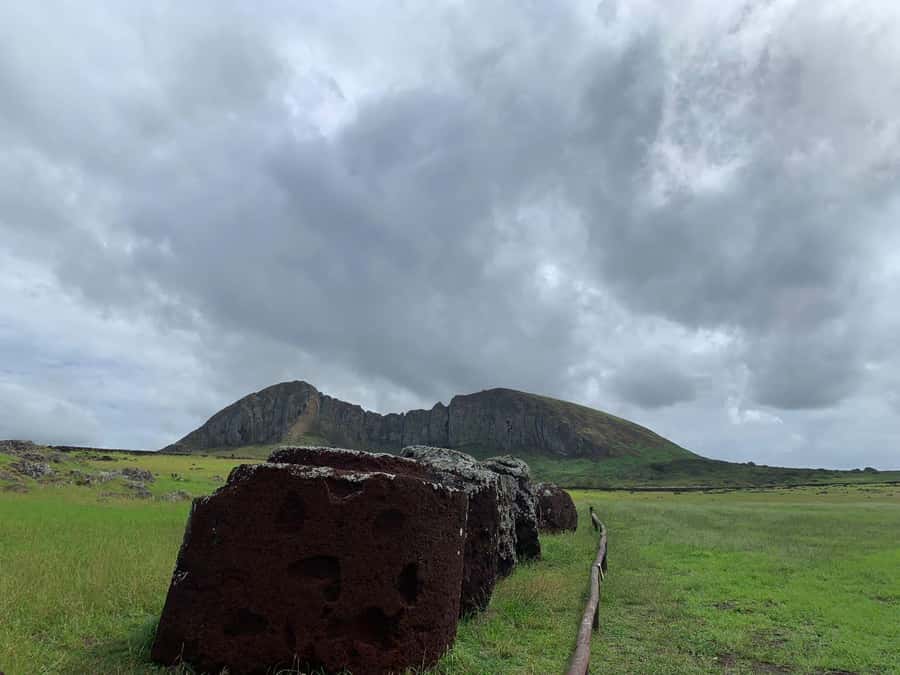
Rano Raraku is the heart of this tour. At this volcanic quarry, you can see moai at different stages of carving, from rough stone forms to nearly finished figures. It gives you a rare look at how these famous statues were made, not just how they look once placed on a platform.
I like the small group of up to four, which gives the guide room to answer questions and adjust the pace. I also like the native guiding, especially when it includes present-day life on Rapa Nui, as Sophia did for one guest. The main caution is timing: most of the day should be well paced, but one booking ended far earlier than the advertised seven hours, so confirm the schedule at pickup.
Key points to know before booking
- Rano Raraku reveals the moai workshop: See statues left in the quarry at several stages of construction.
- Six major sites fit into seven hours: The route covers Vaihu, Akahanga, Rano Raraku, Tongariki, Te Pito Kura, and Anakena.
- The group is limited to four people: This is more personal than a large coach tour and can allow for questions or small adjustments.
- Native guides add local perspective: Guides such as Tete and Sophia have been praised for humor, warmth, language skills, and stories about modern Rapa Nui life.
- Anakena gives the day a softer finish: After moai and archaeological sites, you get white sand, palms, and time by the Pacific.
- The national park ticket costs extra: Add that admission charge to the $150 per-person tour price.
Why this route matters on Rapa Nui
Rapa Nui is not a place where one scenic overlook tells the whole story. The moai are spread across the island, and each site shows a different part of their story: quarrying, transport, ceremonial platforms, collapse, restoration, and continued cultural meaning.
This private tour works because it links those pieces in one long circuit. You begin among toppled statues and old settlement remains, then reach the quarry where the statues were shaped. Later, you see a grand restored row at Tongariki, an unusual stone and fallen moai at Te Pito Kura, and a beach setting at Anakena.
I would choose this route if you have one full day for the main moai sites and want a guide to connect them. You will spend much of the day in transport and at archaeological sites, so this is not a relaxed beach outing with a few monuments added. It is a concentrated introduction to Rapa Nui.
The advertised duration is seven hours. Since the starting time depends on availability, check the exact departure when you book. The route has enough stops that a rushed schedule would reduce its value, particularly at Rano Raraku and Tongariki.
More moai and Rapa Nui sites:
- From Hanga Roa: Rapa Nui Culture Sightseeing Tour
★ 4.6 · 307 reviews - From Hanga Roa: Journey from Orongo to Ana Te Pahu
★ 4.3 · 75 reviews - Rapa Nui Stargazing
★ 4.5 · 62 reviews
Vaihu begins with moai in the grass
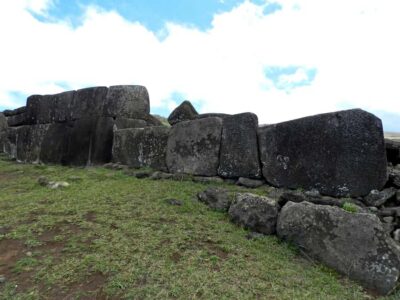
Vaihu is a useful first stop because it immediately shows that Rapa Nui is more than a line of upright statues. Here, moai lie scattered around an ancient ceremonial area, giving you a sense of the island’s unsettled past.
Your guide can explain the figures, the platform, and the way the site relates to the wider story of Rapa Nui. Look closely at the scale of the statues and the contrast between their careful carving and their present position on the ground.
This stop is also a good test of the guide’s style. A strong guide will help you picture the work involved in shaping, moving, and raising a moai rather than offering only dates and names. Tete, praised for his funny and entertaining storytelling, is the sort of guide who can make an archaeological stop easier to understand.
I would not expect Vaihu to provide the single biggest visual moment of the day. Its value is context. It prepares you to notice how different the later sites are.
Akahanga shows the island before restoration
At Akahanga, you see ancient settlement remains and moai toppled in different positions. Unlike Tongariki, where the statues form a powerful restored row, Akahanga feels more like an archaeological record left in place.
That difference matters. The fallen figures raise difficult questions about conflict, social change, abandonment, and the long passage of time. Your guide can explain what is known, what remains uncertain, and how the old platforms fit into island life.
I like this stop because it keeps the tour from becoming a parade of perfect monuments. The toppled statues are part of the story too. They show that Rapa Nui’s past was not frozen in the finished form you see in postcards.
You may find Akahanga less immediately dramatic than Tongariki. Give it time, and listen closely. The stop is strongest when your guide supplies the human context behind the stones.
Rano Raraku is the essential stop
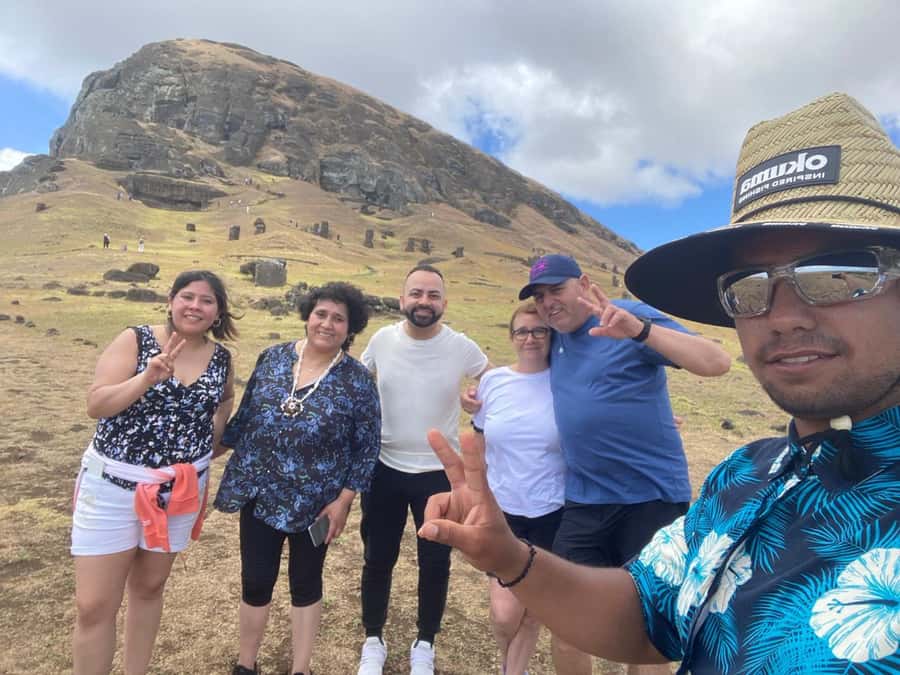
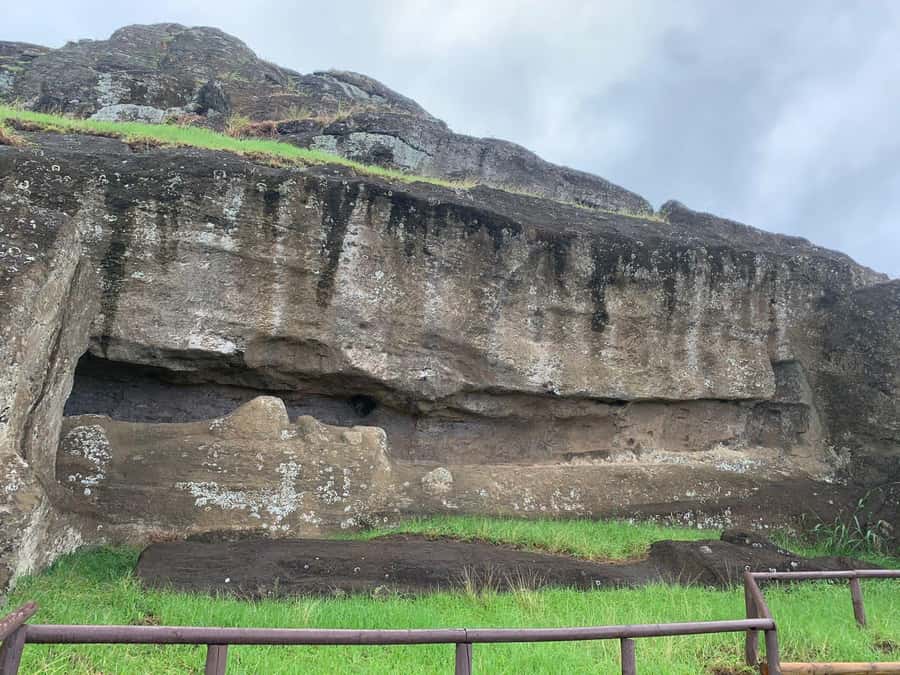
Rano Raraku is where this tour earns its keep. The volcanic quarry is widely known as the birthplace of the moai, and the slopes hold statues in several stages of production.
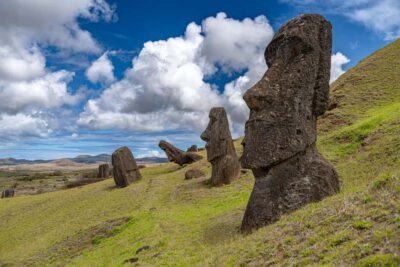
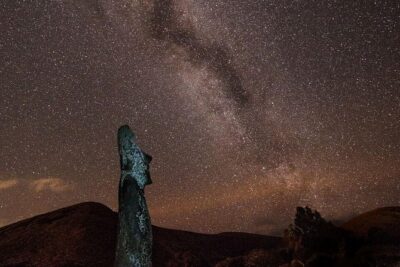
Here you can see rough-hewn figures that still appear connected to the rock, along with statues that look close to completion. The unfinished forms make the carving process easier to imagine. Instead of treating the moai as mysterious objects that simply appeared around the island, you see the quarry as a working place.
The scale is the key. These are not small carvings made for easy transport. The quarry helps you understand the immense effort behind each figure and the skill required to shape volcanic stone into recognizable human forms.
Plan to spend proper time here. One person who joined the tour found the day too rushed and said the sites were handled quickly. That criticism is especially important at Rano Raraku, where a fast walk-through would miss the range of unfinished and completed statues.
Your guide’s explanation also matters here. The tour description promises stories about the moai and their creation, but one guest wanted more background about where the Rapa Nui people came from, how they settled the island, and how society changed. If those questions matter to you, ask them directly at the quarry. A private or very small group makes that easier.
More Historical Tours in Easter Island:
- Easter Island: Private Full Day History Of The Moai
★ 4.6 · 12 reviews - Santiago: Guided Walking Tour of the Historical Old Town
★ 4.8 · 459 reviews - Walking Tour Valparaiso, History & Art – Private Optional
★ 4.5 · 59 reviews - Essence of Santiago : History, Flavors and Panoramic Views
★ 5.0 · 45 reviews
Tongariki delivers the great postcard view
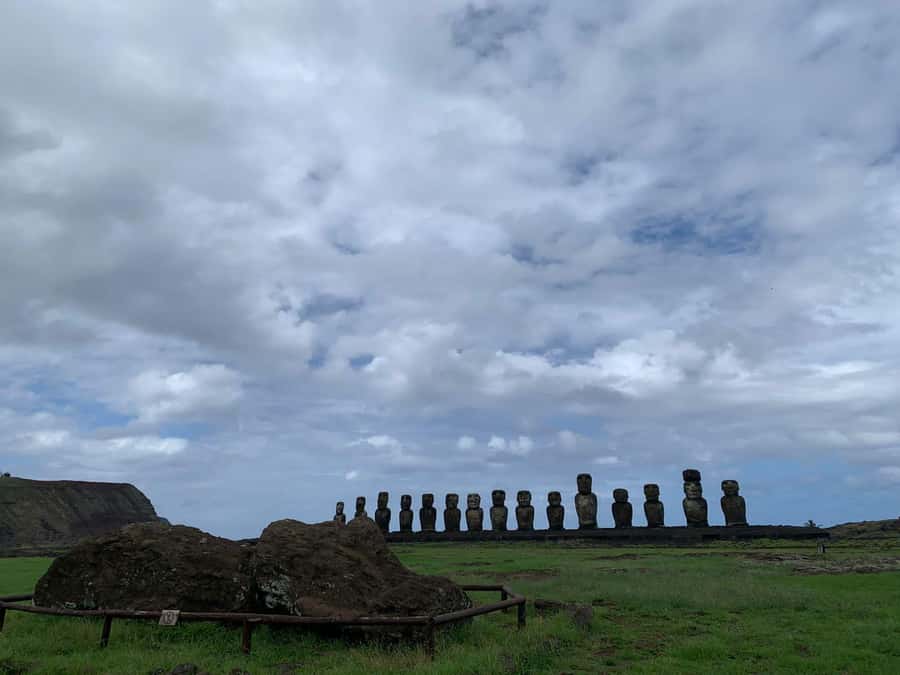
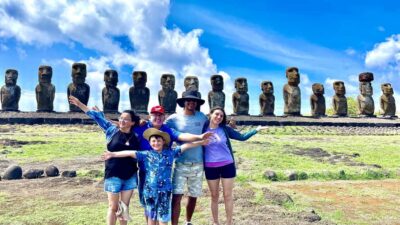
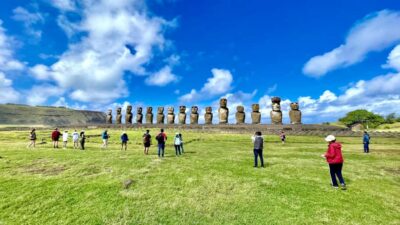
Tongariki is the grand visual centerpiece. Fifteen moai are arranged in a long row on a ceremonial platform, facing inland, with the Pacific behind you. The sight is especially powerful when sunlight catches the statues and brings out the changes in their faces and stone surfaces.
This is the place for photographs, but do not spend the whole stop looking through your phone. First take in the full platform. Then look at the individual statues, which vary in size, shape, and condition.
The setting also gives your guide a chance to explain restoration and the importance of the platform. Tongariki was not simply left as you see it today. Its present arrangement reflects major restoration work, something worth understanding when you compare it with the toppled moai at Vaihu and Akahanga.
The schedule matters here. The description refers to the morning light, but the exact start time is not fixed in the information provided. If seeing Tongariki in early light is a priority, ask the operator whether your departure matches that goal. Do not assume every available start time will produce the same lighting.
Te Pito Kura adds legend and scale
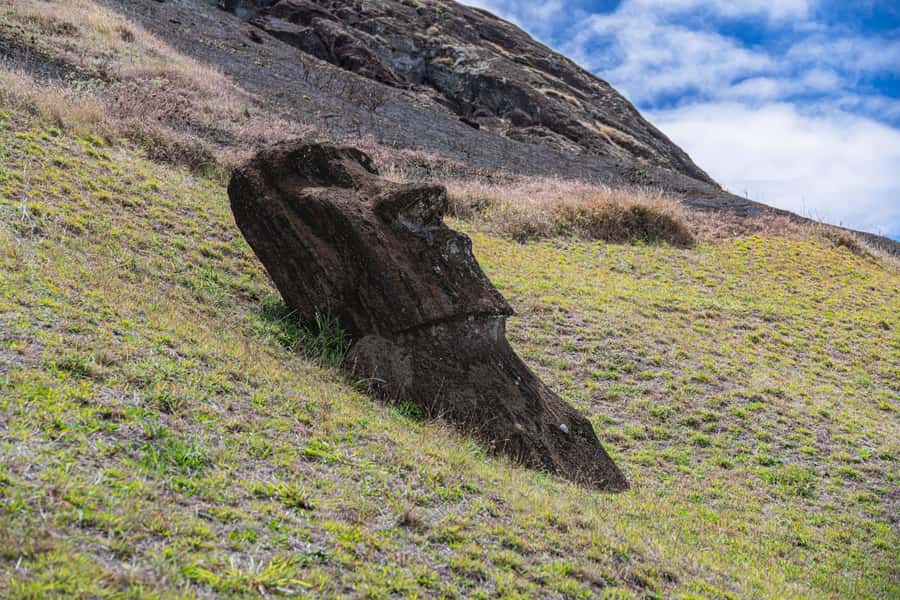
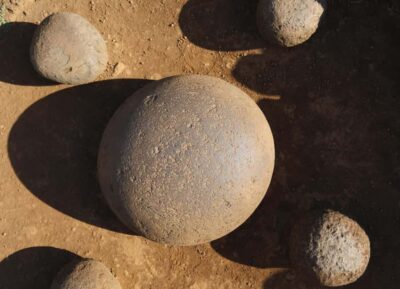
Te Pito Kura offers another view of the moai tradition, with a large fallen statue and a distinctive spherical stone associated with local legend. The stone has a special place in the site’s stories, and a guide can explain the meaning attached to it.
This is a good stop for visitors who enjoy the line between archaeology and oral tradition. You will hear about what can be observed in the stones and what belongs to the island’s legends. Those are not the same thing, and a careful guide should make the difference clear while still respecting the cultural meaning of the stories.
The enormous moai gives you another chance to compare scale. After seeing unfinished figures at Rano Raraku and a restored line at Tongariki, Te Pito Kura helps complete the picture of statues that were made, moved, placed, and eventually toppled.
I would treat this as a shorter interpretive stop rather than the main event. Its value comes from the unusual stone, the legend, and the comparison with the other sites.
Anakena ends the route by the sea
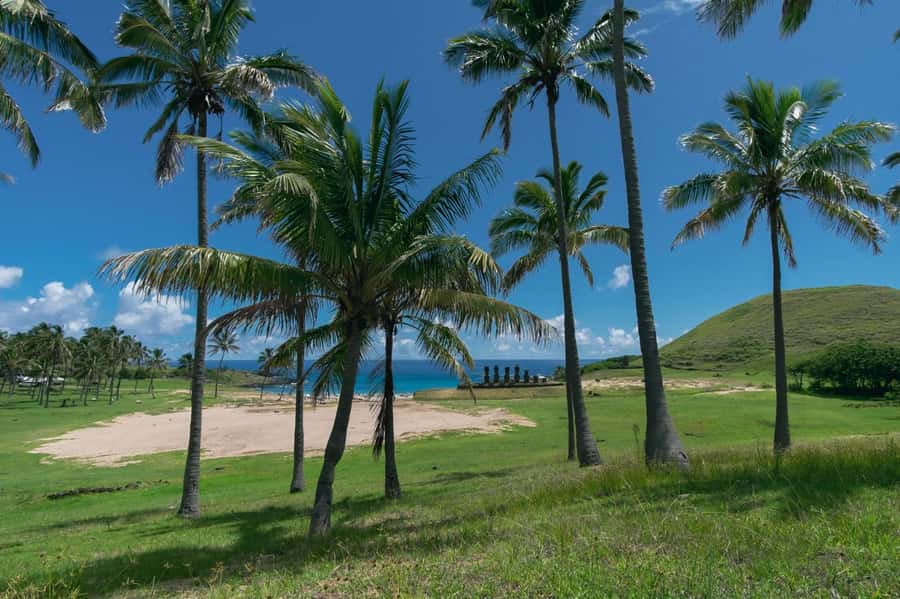
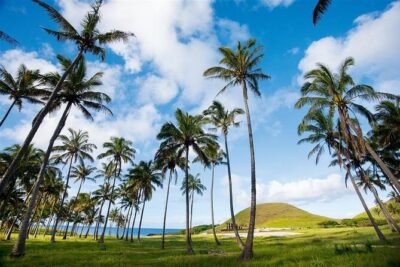
Anakena changes the mood completely. White sand, palm trees, and the Pacific replace the dark volcanic quarry and toppled platforms.
Moai stand near the beach, making Anakena a striking reminder that ceremonial places on Rapa Nui were part of a lived environment. This is not just a photo stop. You can relax, swim in the clear water, and think about the day’s sites without another monument immediately in front of you.
The beach finish is one of the route’s best choices. After several hours of archaeological stops, you may appreciate a place where you can slow down. Hella’s tour included time to finish at a beach and even eat lobster there, but that meal is not included in the tour and should not be assumed as part of every departure.
Bring a practical beach mindset. The tour includes transport and guiding, but food is not listed among the inclusions. If you hope to swim or eat at Anakena, ask what time will be available and plan accordingly.
How the native guide affects the day
The guide may be the most important part of this tour. The sites are impressive on their own, but the right explanation turns a row of statues into a story about labor, ceremony, power, belief, and change.
The advertised languages are English and Spanish. Sophia guided one solo guest in Spanish while also speaking perfect English, and she added details about current life on Rapa Nui as well as history and culture. That kind of exchange is valuable because it connects the ancient sites with the island as a living home.
Tete was praised for being friendly, kind, and funny, and for allowing plenty of time at the sites. Hella was praised for punctual pickup and a well-judged agenda. These examples suggest that guide quality can make the day feel either personal or merely procedural.
There is some variation. One guide was described as reserved at first, becoming more relaxed later. Another guest received less historical context than expected and encountered a dirty vehicle because the guide had been sent as an emergency replacement.
I would set clear expectations at the start. Tell your guide if you want more archaeology, more cultural history, more time for photographs, or a slower pace. Also ask for the planned finish time. That simple conversation can help prevent the day from feeling hurried.
Is $150 per person good value?
At $150 per person, the price is reasonable if you value transport, a native guide, and access to six major sites in one day. Rapa Nui’s sites are spread across the island, and arranging transport independently may be difficult. The small group limit also gives this more personal attention than a large group outing.
The value is strongest for solo visitors, couples, and small parties who want one organized day without having to plan every stop. A private-feeling experience can also make it easier to ask questions or request modest changes, as happened when Sophia adapted the day for a solo guest.
The national park ticket is not included. That is the main extra cost identified in the tour details, so add it to your budget before comparing this with other options.
The value drops if the schedule is shortened or if you expect a long, detailed lecture at every site. The tour covers a lot of ground in seven hours. You should confirm that the advertised duration will be honored and ask how long the group normally spends at Rano Raraku and Tongariki.
The tour includes pickup, drop-off, transportation, and a live guide. It does not include meals or the national park ticket. Those inclusions make the price easier to justify, but they do not guarantee the same guide or vehicle on every departure.
Who will appreciate this tour most?
I would recommend it most strongly to you if:
- You have one day to see the main moai sites.
- You prefer a group of no more than four people.
- You want an English or Spanish-speaking native guide.
- You care about seeing Rano Raraku, not just the famous standing moai.
- You like a mix of archaeological sites and time at the beach.
- You want pickup and drop-off included.
It may be less suitable if you want a slow day with long periods at one site. It may also disappoint you if your main goal is a highly detailed academic account of Rapa Nui settlement and social history. The guiding can be warm and entertaining, but the amount of historical explanation may depend on the individual guide.
Solo visitors can get especially good value from the small-group format. One guest received a more flexible itinerary when traveling alone. Still, that flexibility is not guaranteed, so ask what can be adjusted before you book.
Booking and timing advice
You can cancel up to 24 hours before the activity for a full refund, and the reserve-now, pay-later option keeps your plans flexible. The starting time depends on availability, so check it rather than assuming a morning departure.
The most useful question to ask the operator is simple: what is the exact pickup time and planned return time? A seven-hour tour should give you time to appreciate each major stop. One booking that began at 10:00 and finished at 13:10 shows why it is worth confirming the schedule.
I would also ask which guide is assigned, especially if you need a particular language or want more cultural background. Guides can shape the day more than the route does.
Wear practical clothing for outdoor archaeological sites and bring what you need for the beach if you plan to swim. Food is not included, and the national park ticket is extra.
Should you book this Rapa Nui tour?
Book it if you want the island’s major moai sites in one well-planned day, with transport and a native guide in a group of up to four. The combination of Rano Raraku, Tongariki, Akahanga, Vaihu, Te Pito Kura, and Anakena gives you both the big sights and the less polished places that explain the wider story.
I would book with two conditions: confirm the full seven-hour schedule and ask for the guide’s approach to history and culture. If the operator can provide a thoughtful guide and enough time at Rano Raraku, $150 per person is a fair price for the coverage and personal format.
If you want a slower, more scholarly visit, consider splitting the sites across more than one day. If your time is limited, though, this route gives you a strong first look at where the moai were made, how they were displayed, and why Rapa Nui remains so compelling.
FAQ
How long does the tour last?
The stated duration is seven hours. Starting times depend on availability, so confirm the schedule when booking and ask for the planned return time.
How many people can join the tour?
The group is limited to four participants, making it a small-group experience with more room for questions and conversation.
Which sites are included?
The route visits Vaihu, Akahanga, Rano Raraku, Tongariki, Te Pito Kura, and Anakena Beach.
Is the national park ticket included?
No. The national park ticket is not included in the $150 per-person price.
Which languages are available?
The live guide is available in English and Spanish.
What does the tour include?
The tour includes a native guide, transportation, pickup, and drop-off. Meals and the national park ticket are not listed as included.
Just added around Easter Island
- Easter Island: 2 Full Days Private Tour★ 3.9 · 3 reviews
- Easter Island: Full Day Ancestral Caves and Orongo Village★ 5.0 · 3 reviews
- Easter Island: Customized recreational-tourist diving★ 5.0 · 3 reviews
- Ancestral fishing: Fishing with an experienced Rapa Nui★ 4.4 · 3 reviews
- Birdman Cult and Caves★ 4.0 · 5 reviews
- Rapa Nui: Polynesian Massage★ 4.8 · 5 reviews
- Easter Island: Moai Full Day Private Tour★ 4.8 · 5 reviews
- Rapa Nui: 3 Excursions with Hotel Transfers★ 4.3 · 6 reviews
Easter Island Tours, compared.
Two days of Full Day Tour of Rapa Nui + Sunrise in Tongariki
Read our review →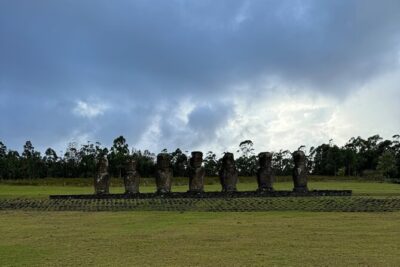
Browse the lists this tour appears in