
Reviewed · EASTER ISLAND TOURS
Half Day Tour in Rapa Nui
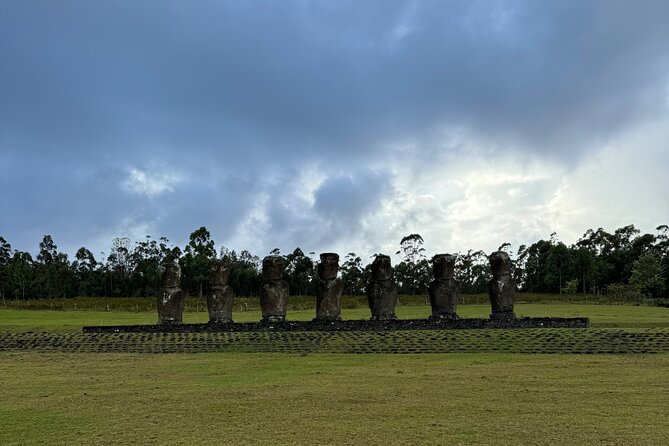
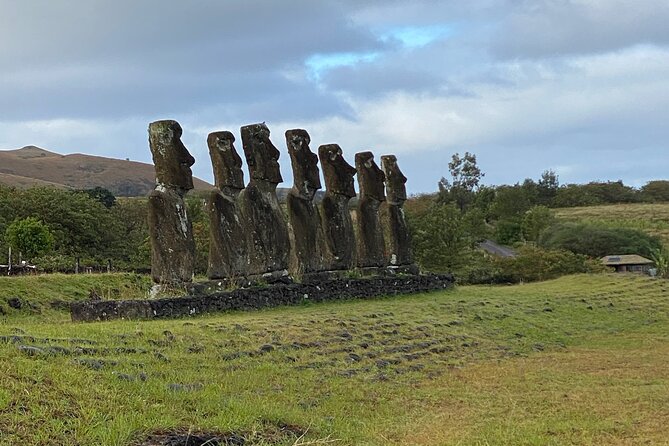
Ahu Akivi is the star of this culture-focused Rapa Nui tour, not simply a photo stop. Here, seven moai face inland toward the island, with the sea behind them, and your guide connects the site to oral tradition, migration stories, and the origins of Rapa Nui society. The route then reaches Puna Pau, Rano Kau, and Orongo, giving you a strong look at both human achievement and volcanic terrain.
I like two things right away. First, the tour reaches places that many visitors see only as quick stops, then gives them proper explanation. Second, the group limit of six and private vehicle make it easier to ask questions and adjust the pace. Guides Nico and Nicolas are repeatedly associated with patient, personal storytelling, and Nicolas is from Rapa Nui.
The main caution is the price: $1,500 per person is a serious outlay for a tour lasting about two to four hours. The listed stop times suggest the full route can run longer, so confirm the exact schedule, currency, entrance arrangements, and final duration before paying.
Key Points About This Rapa Nui Half-Day Tour
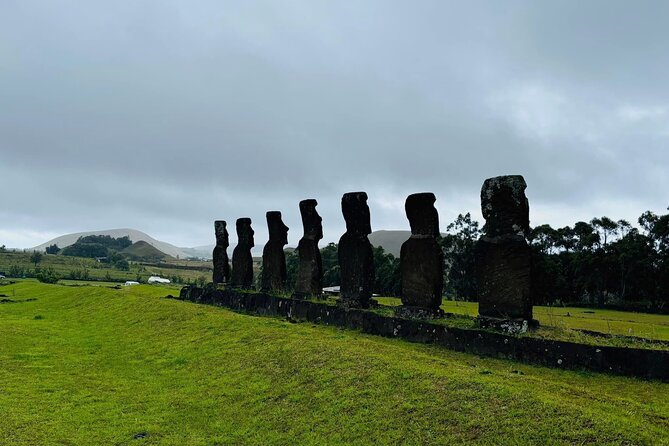
- Ahu Akivi’s seven moai: See the unusual platform where the statues face inland toward the island.
- Puna Pau’s red pukao quarry: Learn how the large red stone cylinders were made and moved for the moai.
- Rano Kau and Orongo together: Pair a huge volcanic crater with the ceremonial village tied to the Birdman competition.
- Small maximum group: The vehicle holds no more than six people, which suits visitors who want conversation rather than a large coach.
- Local storytelling: Nicolas and Nico are the guide names linked with patient explanations of language, customs, traditions, and island history.
- Simple provisions: Pickup, private transport, air conditioning, snacks, and soda are included, while lunch and bottled water are not.
Why This Route Adds More Than the Usual Moai Photo
Rapa Nui can be reduced to a parade of stone statues if you move too quickly. This half-day route takes a different approach. It links moai, quarry work, volcanoes, ceremonies, and oral tradition in one compact circuit.
That connection matters. Ahu Akivi shows the finished monument. Puna Pau helps explain one part of its design. Rano Kau and Orongo shift the story toward ritual and leadership. You are not just collecting four famous names. You are following a broad outline of how the island’s people understood place, power, ancestors, and the natural world.
The tour is aimed at visitors who want more than the standard introduction. It focuses on the northern and central parts of the island and places tied to the origin of Rapa Nui culture. That makes it a useful first tour if you want a strong cultural base, or a good second outing if you have already visited the major sites and want more context.
The format is also personal. Transportation is private, the vehicle is air-conditioned, and the maximum group size is six. On an isolated island where weather can shift quickly, a small vehicle and a guide who stays in touch can make the day feel less rigid.
More moai and Rapa Nui sites:
- From Hanga Roa: Rapa Nui Culture Sightseeing Tour
★ 4.6 · 307 reviews - From Hanga Roa: Journey from Orongo to Ana Te Pahu
★ 4.3 · 75 reviews - Rapa Nui Stargazing
★ 4.5 · 62 reviews
Ahu Akivi and the Seven Moai
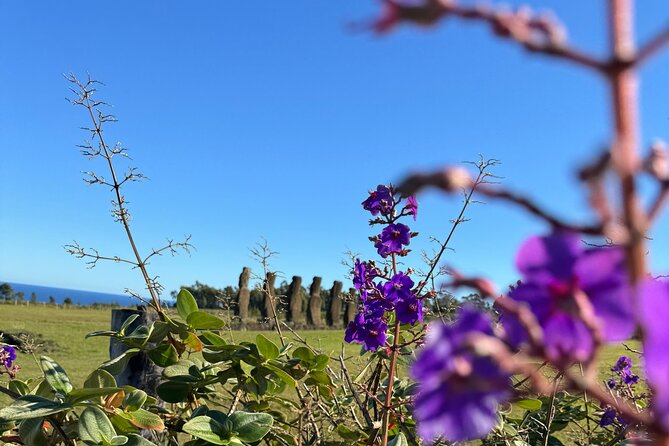
The tour begins with pickup at your accommodation, followed by about 30 minutes of driving to Ahu Akivi. Once there, allow roughly an hour for the site and the guide’s explanation.
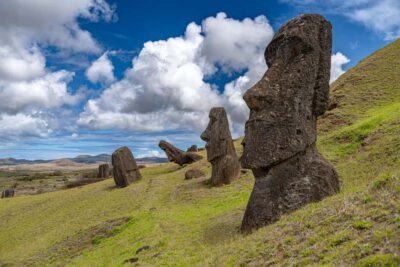
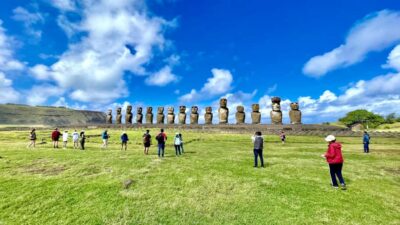
Ahu Akivi is unusual because its seven moai face inland rather than directly toward the ocean. That detail gives the place an immediate sense of mystery, but the value comes from hearing the different interpretations and oral traditions connected to it. The guide explains stories about the statues, their setting, and the island’s origins.
This is where a local guide can add real value. A sign can tell you the name of the platform and the number of statues. It cannot easily explain how a place fits into Rapa Nui identity, or how oral tradition and historical accounts may sit beside each other.
Give yourself time to look beyond the statues. Notice the alignment of the figures, the open space around the platform, and the way the site sits within the island’s interior. The setting is part of the experience, not just a backdrop for photographs.
Ahu Akivi is also a good test of the tour’s pace. The advertised visit is about an hour, which should allow time for photos and questions without turning the stop into a rushed glance from the vehicle. If you prefer a quick checklist, the explanation may feel long. If you want to understand what you are seeing, this is one of the strongest parts of the route.
Puna Pau, Where the Red Pukao Were Made
From Ahu Akivi, the route continues to Puna Pau, the quarry associated with the red pukao placed on the heads of some moai. The listed visit is about 30 minutes, although the itinerary also describes an hour at the quarry, so ask the operator how much time is planned on the day.
The red cylinders are easy to overlook when you focus only on the statues themselves. Puna Pau corrects that. It shows that moai design involved more than carving the main body from stone. The pukao added another stage of work, using a different material and a distinctive color.
The site also offers broad views across the island. The tour description highlights a 180-degree panorama, making Puna Pau useful for getting your bearings. After spending time among individual archaeological sites, you can see how the interior and coastal areas relate to one another.
This stop is short, so use your time well. Listen closely to the explanation of the quarry and the pukao, then pause for the view. The site may not require a long walk, but the surface can be uneven at archaeological areas, so sensible shoes are a good idea. That is practical advice rather than a claim about a specific trail condition on this tour.
Puna Pau makes the route feel more complete. Ahu Akivi gives you the monumental platform. Puna Pau gives you a look at one element that helped create the final image of a moai.
Rano Kau, a Crater With a Story
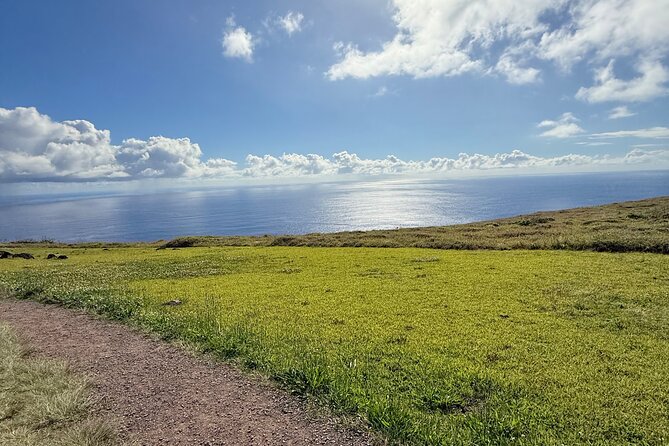
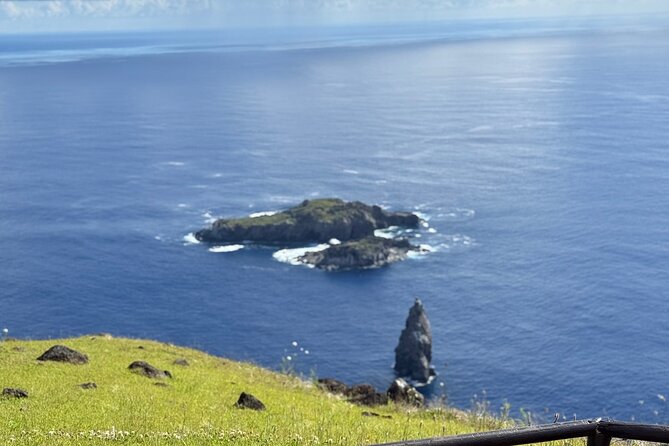
The next section turns from carved stone to volcanic ground. Rano Kau is described as the island’s largest crater and one of its most striking natural sites. The tour allows about 30 minutes for the volcano area before continuing to Orongo.
The crater is presented not only as a scenic viewpoint but also as a natural greenhouse. That gives the stop a different mood from Ahu Akivi and Puna Pau. Instead of focusing on human construction, you look into a broad volcanic bowl and consider how the island’s natural features shaped life and tradition.
The guide also connects Rano Kau with the oral tradition surrounding Haumaka. This is an important part of the tour’s stated purpose: you hear both stories passed down through the culture and the historical framework used to understand Rapa Nui’s past.
The main practical issue is admission. Entry to Rano Kau is not included in the listed tour inclusions, and the same applies to Orongo. The information provided does not state the separate fee or explain how entrance is handled, so confirm this before departure. Do not assume that the $1,500 price covers every site.
The short time allocation may suit you if the tour is one part of a longer island stay. If you want to linger at viewpoints, study the crater, or take many photographs, you may find the schedule tight. Ask if the actual tour will run closer to two hours or four hours, since both figures appear in the advertised duration.
A few more Easter Island half-days to weigh up
- From Hanga Roa: Easter Island Highlights 2-Day Tour
★ 4.3 · 205 reviews - From Hanga Roa: Easter Island Sightseeing Full Day Tour
★ 4.5 · 189 reviews - Full day tour – DREAM
★ 5.0 · 86 reviews - Two days of Full Day Tour of Rapa Nui + Sunrise in Tongariki
★ 4.8 · 55 reviews
Orongo and the Birdman Competition

The final major stop is Orongo, the ceremonial village near Rano Kau. The route includes a climb up the volcano for panoramic views and a visit to the village. The listed timing again varies, with one section allowing an hour for the climb and another describing a 30-minute visit, so clear timing is worth checking.
Orongo is tied to the famous Birdman competition. The explanation centers on the warriors who risked their lives in a contest to gain the position of Supreme Leader. That story gives the site a sharp sense of danger and ambition, and it helps explain why this is more than another scenic viewpoint.
The village’s position above the ocean adds force to the story. You can see why the setting mattered to ceremony and competition. The guide’s job here is especially important because the ruins alone do not explain the rules, the stakes, or the way the event fit into Rapa Nui society.
This stop may be the most physically demanding part of the half-day route because it includes a climb. The tour states that most people can participate, but it does not provide a detailed accessibility assessment. If you have mobility concerns, ask about the walking surface, the climb, and how close the vehicle can get.
Orongo also brings the itinerary to a satisfying finish. You begin with ancestors represented in stone and end with living ritual traditions tied to leadership. The route covers a lot in a small area, but it does not feel random.
What the Guide Adds to the Experience
The strongest reason to book a guided version of this route is the interpretation. The guide names most closely connected with the experience are Nicolas and Nico. Descriptions of the service emphasize patience, clear explanations, local customs, the Rapa Nui language, traditions, and a personal connection to the island.
That personal approach matters at sites where the basic facts are easy to find online. You can learn the names Ahu Akivi, Puna Pau, Rano Kau, and Orongo before arriving. The harder part is understanding why these places matter together.
A good guide also helps you handle changing conditions. The tour company has adjusted plans when rain affected outings and has helped coordinate other activities on the island. That does not guarantee a weather change or a particular alternative, but it suggests a useful level of communication.
One unusual detail appears in the service information: a family described having Wi-Fi on board, including Starlink. Treat this as a reported feature rather than a guaranteed standard for every departure, since the formal inclusions list does not promise onboard Wi-Fi.
The guide’s ability to explain without rushing seems central to the experience. That is good news if you want a conversation and questions. It may be less appealing if you prefer to explore silently or move at your own speed.
Transport, Group Size, and Timing
Pickup is offered, and the tour uses private transportation in an air-conditioned vehicle. A maximum of six people keeps the group small enough for direct questions and easier conversation with the guide.
The total duration is listed as approximately two to four hours. The itinerary itself includes driving, a one-hour visit at Ahu Akivi, Puna Pau, Rano Kau, and Orongo, plus the climb near the crater. Those pieces can add up to more than the shorter estimate, especially if the guide allows time for questions and photographs.
The meeting window is shown as 9:30 to 10:00 in the operating period from August 1, 2024, through June 18, 2026. Since the information gives a window rather than one firm departure time, confirm your pickup time after booking.
The small group is particularly useful for families. The service has accommodated older adults and worked around variable weather, though you should still ask about the climb at Orongo if anyone in your party has difficulty walking.
Snacks and soda are included. Lunch is not, but the tour can leave you at a place to eat at the end of the excursion. Bottled water is also not included. The operator recommends bringing your own specific water, while noting that excursions carry local bottled rainwater. I would bring enough water for the outing rather than rely on a snack and soda to carry you through a warm day.
Is $1,500 Per Person Good Value?
At $1,500 per person, this is not a budget tour. The value depends heavily on how that price is calculated, whether it refers to Chilean pesos or another currency, and whether the quote is truly per person rather than a private group rate displayed in an unusual format. Confirm the currency and total before booking.
The price includes private transport, an air-conditioned vehicle, snacks, and soda. It also buys a small group and a guide focused on cultural explanation rather than simple transfers. For a group of up to six, the private format may make sense if you place a high value on flexibility and one-on-one questions.
The price is harder to justify if you only want transportation to four sites. You could feel that the route is brief for the amount charged, especially if the day finishes near the two-hour end of the stated range. The separate admission situation at Rano Kau and Orongo also needs clarification.
I would ask these questions before committing:
- Is $1,500 quoted in Chilean pesos, US dollars, or another currency?
- Is the price truly per person for the whole group?
- What is the confirmed start and end time?
- Are entrance fees for Rano Kau and Orongo separate?
- How much walking and climbing is expected?
- Is onboard Wi-Fi available for this departure?
The tour is most valuable when the guide’s cultural knowledge is your main reason for visiting. If you simply want a ride and quick photographs, the cost may feel out of balance.
Who Will Like This Tour Most
I would recommend this experience to you if you want a small-group cultural introduction to Rapa Nui and have limited time. It covers four important places without trying to pack in every famous site on the island.
Families may appreciate the private vehicle, pickup, snacks, and ability to ask for help with planning other activities. The guide team’s warm, personal service also suits people who prefer a human introduction rather than a recorded narration.
This is a strong choice for first-time visitors who want to understand the island’s origins, the moai tradition, the pukao, volcanic sites, and the Birdman ceremony in one outing. It also works for repeat visitors who have seen the main monuments but want more attention to oral tradition and local culture.
I would be more cautious if you need a fully accessible outing, since the route includes a climb and the information does not give detailed mobility guidance. I would also hesitate if you dislike uncertain schedules or need exact entrance costs in advance.
The weather point deserves attention too. Rapa Nui conditions can change, and the company has adjusted plans when rain affected tours. That flexibility helps, but bring practical clothing and do not build a tightly timed connection immediately after the outing.
Should You Book the Cultural Beginning Tour?
Book it if you want the meaning behind the monuments, not just a collection of photographs. A local guide such as Nicolas or Nico can connect Ahu Akivi, Puna Pau, Rano Kau, and Orongo in a way that a self-guided visit may not.
Before booking, verify the currency, exact duration, meeting time, and fees for Rano Kau and Orongo. Bring water, plan for a climb, and allow some flexibility for weather.
For a group of up to six that values private transport and patient cultural storytelling, this can be a worthwhile introduction to Rapa Nui. For a quick, low-cost sightseeing loop, the $1,500 price and variable timing make it a weaker fit.
FAQ
Where does this half-day tour take place?
The tour takes place on Easter Island, also called Rapa Nui, in Chile. It visits Ahu Akivi, Puna Pau, Rano Kau, and Orongo.
How long does the tour last?
The advertised duration is approximately two to four hours. The individual timing details vary, so confirm the expected schedule with the provider.
Is pickup included?
Yes. Pickup at your accommodation is offered.
How many people can join the tour?
The activity has a maximum of six travelers.
What transportation is provided?
Private transportation is provided in an air-conditioned vehicle.
Is lunch included?
No. Lunch is not included, but you can be left at a place to eat at the end of the excursion.
Is bottled water included?
No. Bottled water is not included. You are advised to bring your own water. The excursions carry local bottled water described as rainwater.
Are snacks and drinks included?
Yes. Snacks and soda or pop are included.
Are admission tickets included at every stop?
Admission is included at Ahu Akivi and Puna Pau. Admission is not included at Rano Kau and Orongo.
What is the cancellation policy?
You can cancel for a full refund up to 24 hours before the experience starts. Changes or cancellations made less than 24 hours before the start time are not accepted for a refund. Cutoff times use local time.
Just added around Easter Island
- Easter Island: 2 Full Days Private Tour★ 3.9 · 3 reviews
- Easter Island: Full Day Ancestral Caves and Orongo Village★ 5.0 · 3 reviews
- Easter Island: Customized recreational-tourist diving★ 5.0 · 3 reviews
- Ancestral fishing: Fishing with an experienced Rapa Nui★ 4.4 · 3 reviews
- Birdman Cult and Caves★ 4.0 · 5 reviews
- Rapa Nui: Polynesian Massage★ 4.8 · 5 reviews
- Easter Island: Moai Full Day Private Tour★ 4.8 · 5 reviews
- Rapa Nui: 3 Excursions with Hotel Transfers★ 4.3 · 6 reviews
Easter Island Tours, compared.
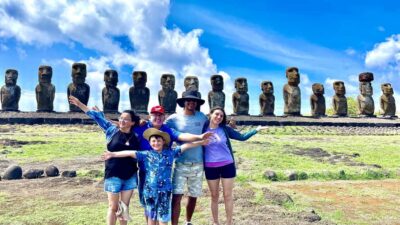

Two days of Full Day Tour of Rapa Nui + Sunrise in Tongariki
Read our review →
Browse the lists this tour appears in