
Reviewed · EASTER ISLAND TOURS
Birdman Cult and Caves
Rapa Nui’s most striking story is not only the moai. It is the way sacred places, volcanoes, caves, and ocean views fit together. This six-hour outing links Ahu Akivi, Rano Kau, and Orongo with several lesser-known sites, giving you a broad look at the island in one day.
I like the mix of culture and geology, especially the chance to see Puna Pau’s red scoria quarry and the ceremonial village at Orongo. I also like that transport, pickup, drop-off, and a local guide are included, which makes a full day of scattered sites easier to manage.
The weak point is the guide service. The available rating is 3 out of 5, with one blunt complaint that the guide was bad. Since much of this tour depends on explanation, not just scenery, I would confirm the language and guiding arrangements before paying.
Key points to know before booking
- Six major stops in six hours: Ahu Akivi, Ana Te Pahu, Puna Pau, Vinapu, Rano Kau, and Orongo.
- The birdman cult is the finale: Orongo combines petroglyphs, ceremonial structures, and wide Pacific views.
- A local guide is included: Tours are offered in English or Spanish, but guide quality may vary.
- Park admission costs extra: The National Park ticket is not included and is not sold by the operator.
- A practical island overview: Included transportation helps connect sites that would otherwise take more planning.
- Flexible booking: You can cancel up to 24 hours before the tour for a full refund and reserve without paying immediately.
A full day of Rapa Nui culture and volcanic scenery
This is a sightseeing circuit rather than a slow visit to one site. You move from moai culture to caves, stonework, volcanoes, and the birdman religion, with transportation between the stops.
That range is the main reason to consider it. Rapa Nui can seem small on a map, but its important sites are spread across the island. A vehicle and pickup service save you from arranging separate rides or trying to fit every location into your own plan.
The six-hour schedule is also useful if you have limited time. You will not get a long, quiet stay at every stop, but you will see several of the island’s key cultural places in a single outing. I would treat this as an orientation to Rapa Nui rather than a slow archaeological study.
The quality of the day will depend heavily on the guide. At Orongo and Vinapu, a good explanation gives meaning to what can otherwise look like piles of stone or a few carved symbols. The 3 out of 5 rating and the specific complaint about a poor guide make this the main issue to weigh.
A few more Easter Island half-days to weigh up
- From Hanga Roa: Rapa Nui Culture Sightseeing Tour
★ 4.6 · 307 reviews - From Hanga Roa: Easter Island Highlights 2-Day Tour
★ 4.3 · 205 reviews - From Hanga Roa: Easter Island Sightseeing Full Day Tour
★ 4.5 · 189 reviews
Ahu Akivi and the seven moai
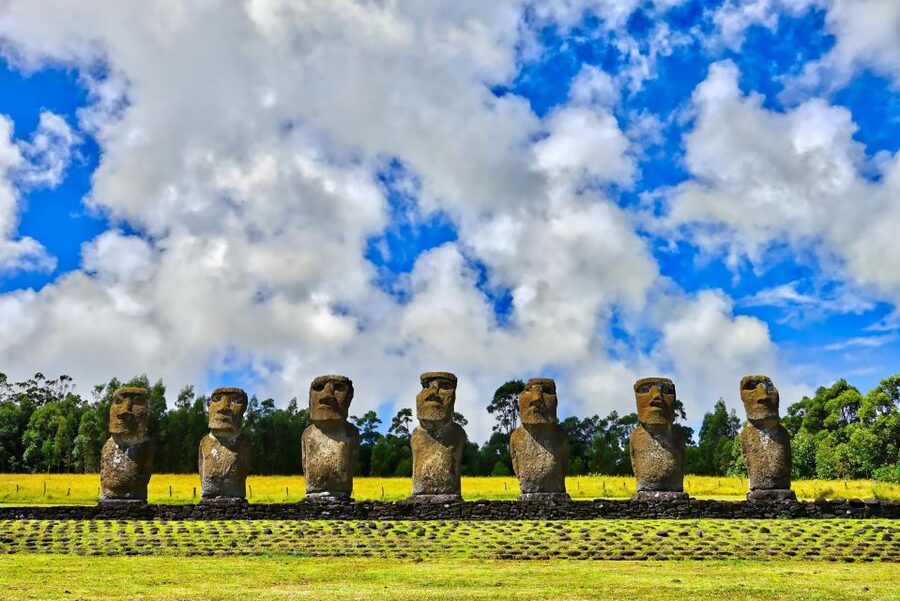
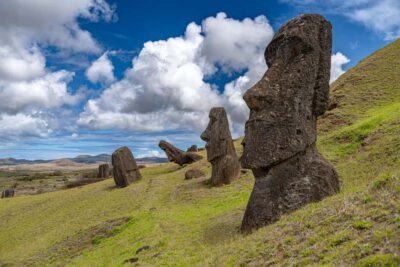
Ahu Akivi begins the cultural side of the tour with a platform carrying seven moai. The stop introduces you to the island’s statue tradition and the questions surrounding how the figures were built, moved, and placed.
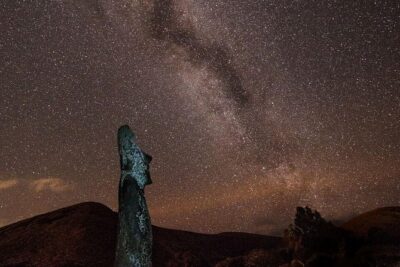
The supplied description also points to the celestial orientation of the moai. That gives your guide an important subject to explain. Rather than viewing the figures only as monumental stone faces, you can consider how the site relates to the sky and to Rapa Nui’s ceremonial world.
I like starting here because it gives the rest of the day a clear theme. Once you have seen the moai on their platform, Puna Pau and Vinapu make more sense as parts of a larger system of quarrying, carving, and ceremonial construction.
Do not expect Ahu Akivi to explain every question about the moai in one stop. The value comes from the interpretation you receive and from seeing the figures in their setting. Ask your guide to clarify the orientation and the role of the platform if those points are not covered clearly.
Ana Te Pahu and the island’s cave tradition
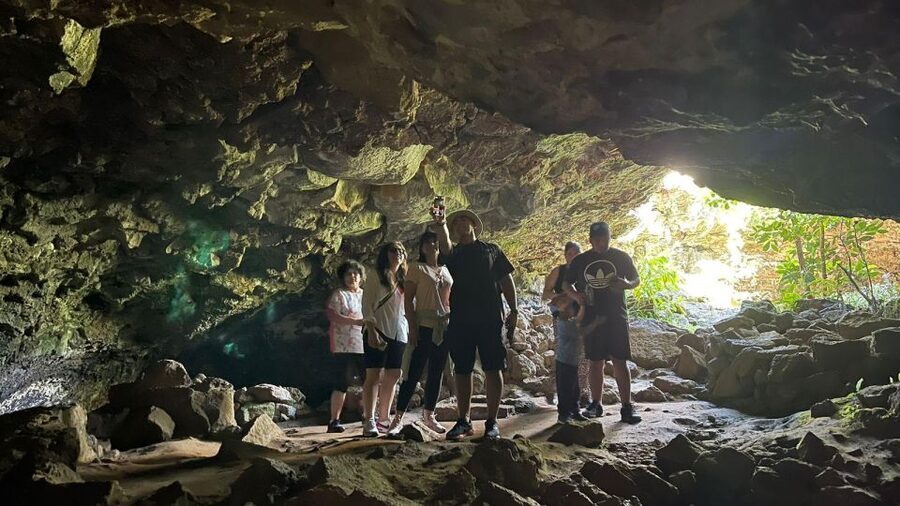
Ana Te Pahu is described as a ceremonial cave on the slopes of Rano Kau, with petroglyphs and paintings connected to island traditions. This changes the pace of the day. After standing among large outdoor monuments, you enter a place shaped by rock, shadow, and enclosed space.
The cave matters because it shows that Rapa Nui’s sacred places were not limited to ahu platforms and moai. The island’s volcanic geology created spaces that could also carry ceremonial meaning.
I would pay close attention to the ground and to the guide’s instructions here. The information provided does not give details about the walking surface, lighting, or the amount of time inside, so you should ask before the tour if you need specific mobility information. The activity is listed as wheelchair accessible, but the cave itself may be the part to clarify directly.
The cave’s petroglyphs and paintings are another reason guide quality matters. These marks can be easy to miss or misunderstand without context. A guide who points out the imagery and explains its connection to Rapa Nui traditions adds real value. A weak guide leaves you looking at dark stone without much help.
Puna Pau, where the red topknots were made
At Puna Pau, you visit the quarry that supplied the red scoria topknots placed on some moai. These cylindrical stones are often mistaken for hats, but their material and production tell a more useful story about the island’s craft traditions.
The stop helps you notice that the moai were not all made from one material or completed in one place. The red stone was quarried separately, shaped, and then used to finish selected statues. That makes Puna Pau an important piece of the island’s construction story.
I like this stop because it moves the focus from the finished monuments to the work behind them. You can think about the skill involved in cutting and shaping the topknots, as well as the effort needed to bring them to their final locations.
The description emphasizes the symbolic meaning of the topknots, but it does not spell out which individual moai you will connect them with during the day. Ask your guide to make that link. Without it, Puna Pau may feel like another quarry stop rather than a key part of the moai story.
Same base, a completely different landscape:
- Full day tour – DREAM
★ 5.0 · 86 reviews - From Hanga Roa: Journey from Orongo to Ana Te Pahu
★ 4.3 · 75 reviews - Rapa Nui Stargazing
★ 4.5 · 62 reviews - Two days of Full Day Tour of Rapa Nui + Sunrise in Tongariki
★ 4.8 · 55 reviews
Vinapu and the questions raised by its stonework
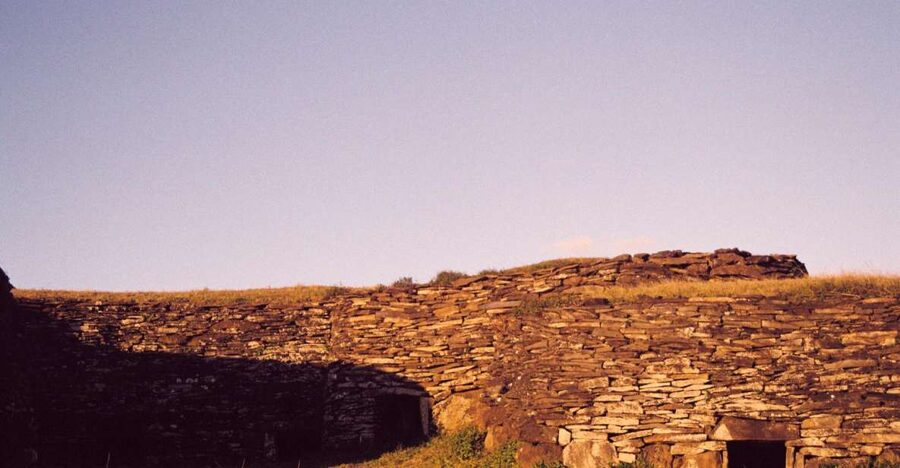
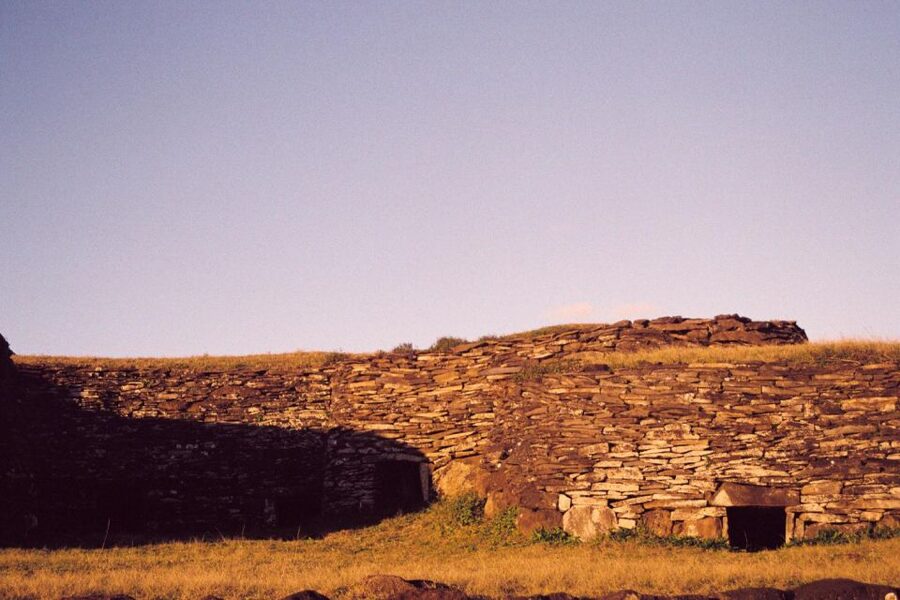
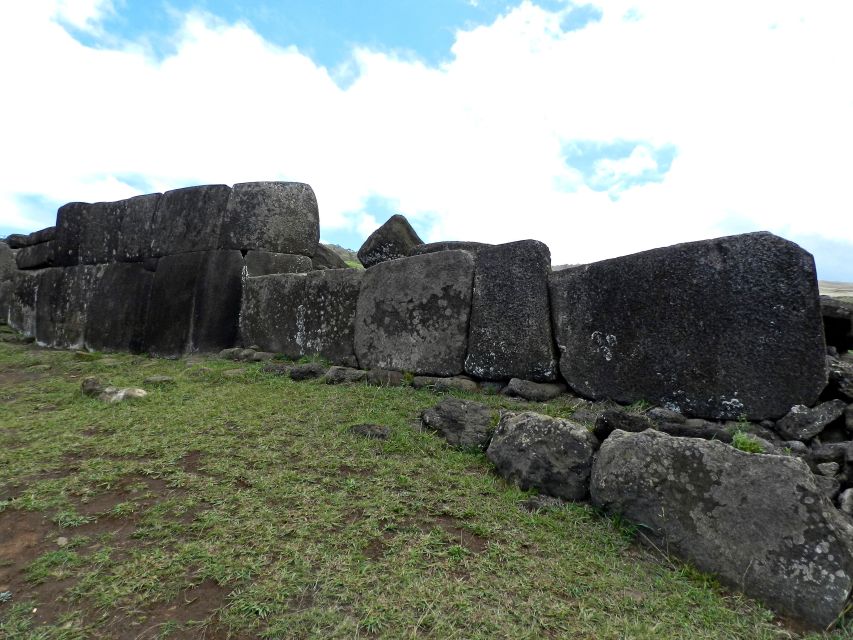
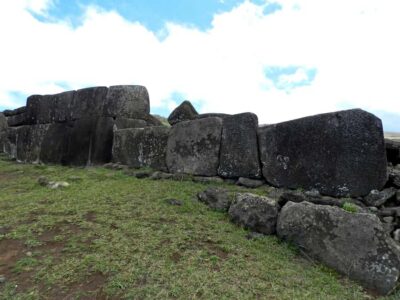
Vinapu is the tour’s stop for precision masonry. The large stones are presented as an example of careful construction, with similarities to structures associated with South American cultures such as those in Cuzco.
This comparison is interesting, but it needs careful handling. Similar-looking stonework can lead to large claims about contact and influence. I would listen for what your guide can support, rather than treating the resemblance alone as proof of a direct connection.
That uncertainty is part of what makes Vinapu worthwhile. You are not just looking at an old wall. You are considering how people shaped, fitted, and organized heavy stone, and how later observers interpret those techniques.
Vinapu may be one of the places where a weak guide hurts the experience most. The physical remains need explanation to become meaningful. If your guide gives only a quick stop and a few general comments, you may leave with more questions than answers. If the subject interests you, ask about the construction methods and the South American comparison.
Rano Kau, a huge volcanic crater
Rano Kau brings a dramatic natural setting into the tour. The crater offers broad views and a distinctive internal ecosystem, while also showing the volcanic forces that shaped Rapa Nui.
I like having this stop before Orongo because the crater gives the birdman cult a physical setting. You begin to see why the rim mattered. The geography is not background decoration here. It is part of the story.
The tour description does not promise a specific walking route or length of time at the crater. You should expect a viewpoint and an explanation of the volcano, but ask about the exact stop if you want a longer walk or have mobility concerns.
Rano Kau is also a useful pause after the more detailed cultural stops. You can take in the scale of the crater and the Pacific views while your guide explains the island’s geological development. The experience works best when the guide connects the natural features to Orongo, rather than treating the crater as a separate photo stop.
Orongo and the birdman cult
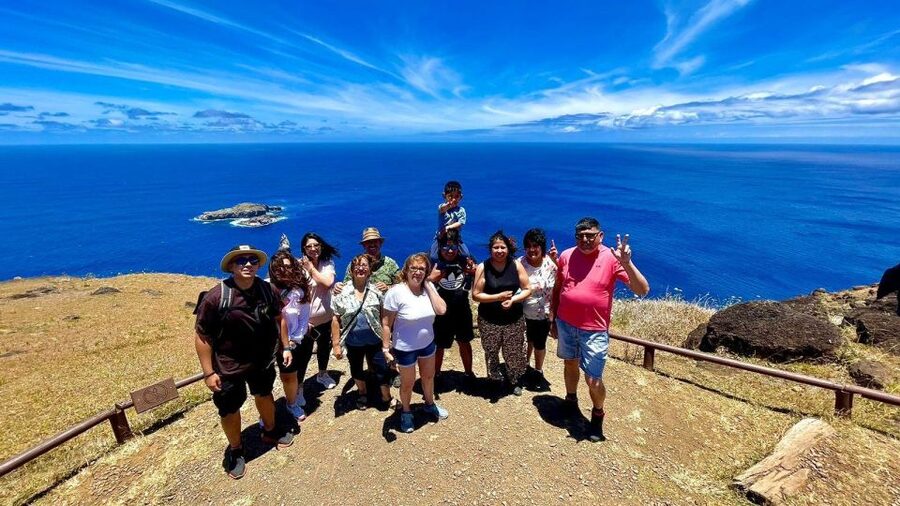
Orongo is the climax of the route. The ceremonial village sits on the rim of Rano Kau, with petroglyphs and views across the Pacific. Here, the tour turns from the moai period toward the birdman cult and its rituals.
The setting gives Orongo unusual power. The village is positioned between the crater and the sea, so the site’s location is inseparable from its meaning. You are not only seeing stone houses and carved symbols. You are seeing how belief was tied to a particular place.
The birdman cult is one of the most memorable subjects on Rapa Nui, and this is the stop where your guide should explain it clearly. The supplied details do not describe the exact ritual sequence, so I would ask your guide to explain how the village, the petroglyphs, and the surrounding cliffs relate to the cult.
The Pacific views are a major reward, but do not let them replace the cultural side of the visit. Take time to look at the ceremonial structures and petroglyphs. If the guide rushes through the explanation, you may miss the connection between the site’s setting and its religious importance.
What the $90 price really covers
At $90 per person, the tour is priced as a practical, guided island circuit. Your payment covers transportation, a local guide, pickup, and drop-off. It does not cover the National Park ticket, which you must arrange separately because the operator does not sell it.
That extra ticket is important when calculating the real cost. The advertised price is not the complete admission cost for the day, so check the current park fee before booking and carry that expense in your budget.
I see the best value here for someone who wants the major themes covered without arranging separate transportation. Six stops in six hours is a lot of ground, and the included vehicle service can make the price reasonable if you have limited time or do not want to navigate the island on your own.
The value is less certain if you already have transport and prefer long visits at fewer locations. A private or slower arrangement might suit you better, though no such option is specified here. This tour is built around breadth and convenience.
Guide language, pacing, and the main risk
You can book the activity with a live guide in English or Spanish. That is useful, but language availability does not guarantee the same level of explanation in every departure.
I would confirm three points before booking: the tour language, the pickup details, and how much time is planned at each stop. The published duration is six hours, but the exact starting times depend on availability.
The one available review gives the tour a 3 out of 5 rating and describes the guide as bad. I would not ignore that. At Ahu Akivi, Ana Te Pahu, Vinapu, and Orongo, interpretation is a large part of what you are paying for.
At the same time, one poor guide report does not prove every departure will be disappointing. The provider is Hotumatur Rapa Nui, and the activity includes native local guides as a listed highlight. The sensible approach is to book only if you can confirm the guide arrangements and are comfortable with some uncertainty.
Who should book this six-hour route?
I would recommend it most strongly to you if this is your first visit to Rapa Nui, your time is short, or you want the island’s main cultural themes explained in one outing. The route gives you moai, caves, topknots, stone masonry, a volcano, and the birdman cult without requiring several separate bookings.
It also suits you if you value local guiding and included transport more than a slow pace. Pickup and drop-off remove some of the day’s practical work, and the English and Spanish options make the tour accessible to a wider range of visitors.
I would be more cautious if your top priority is expert archaeological interpretation. The guide complaint matters, and the six-hour schedule may leave limited time for detailed discussion at each stop.
The activity is listed as wheelchair accessible, but I would still ask specifically about Ana Te Pahu and the walking surfaces at every site. Accessibility can vary between the vehicle, viewpoints, paths, and cave areas.
Booking advice and final verdict
I think this is a sensible overview tour with a strong route and an important warning. The combination of Orongo, Rano Kau, Ahu Akivi, Puna Pau, Vinapu, and Ana Te Pahu gives you a clear sense of how Rapa Nui joins ceremony, stonework, volcanoes, and the sea.
The tour is worth considering at $90 if transport and a local guide solve real problems for you. It is less attractive if you want unhurried visits or if you cannot confirm the quality and language of the guide.
I would book it when I had one free day, wanted broad coverage, and could verify the park ticket and guide details in advance. I would skip it when a poor explanation would ruin the day for me. The sites are compelling, but on this route the guide is not a minor detail. The guide is the difference between seeing stones and understanding why they matter.
FAQ
Where does the Birdman Cult and Caves tour take place?
The tour takes place on Rapa Nui, also known as Easter Island, in Chile. The supplied location is listed as the Valparaiso Region.
How long does the tour last?
The activity lasts six hours. Starting times depend on availability.
What sites are included?
The route includes Ahu Akivi, Ana Te Pahu, Puna Pau, Vinapu, Rano Kau, and Orongo.
Is transportation included?
Yes. Transportation, pickup, and drop-off are included.
Is a guide included?
Yes. A live local guide is included.
Which languages are available?
Guiding is available in English and Spanish.
Is the National Park ticket included?
No. The National Park ticket is not included, and the operator does not sell it.
How much does the tour cost?
The listed price is $90 per person. The National Park ticket is an additional cost.
Can I cancel the booking?
Yes. You can cancel up to 24 hours in advance for a full refund.
Do I have to pay when I book?
No. The reserve-now, pay-later option lets you book without paying immediately.
Is the tour wheelchair accessible?
The activity is listed as wheelchair accessible. For specific questions about the cave and site surfaces, confirm the details before booking.
Just added around Easter Island
- Easter Island: 2 Full Days Private Tour★ 3.9 · 3 reviews
- Easter Island: Full Day Ancestral Caves and Orongo Village★ 5.0 · 3 reviews
- Easter Island: Customized recreational-tourist diving★ 5.0 · 3 reviews
- Ancestral fishing: Fishing with an experienced Rapa Nui★ 4.4 · 3 reviews
- Rapa Nui: Polynesian Massage★ 4.8 · 5 reviews
- Easter Island: Moai Full Day Private Tour★ 4.8 · 5 reviews
- Rapa Nui: 3 Excursions with Hotel Transfers★ 4.3 · 6 reviews
- Volcanic Refuges: Excursion to Underground Civilization★ 4.7 · 8 reviews
Easter Island Tours, compared.

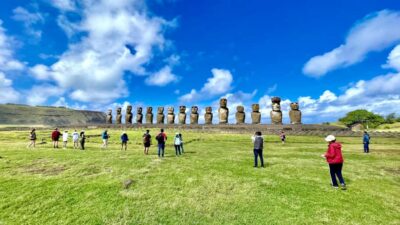
Two days of Full Day Tour of Rapa Nui + Sunrise in Tongariki
Read our review →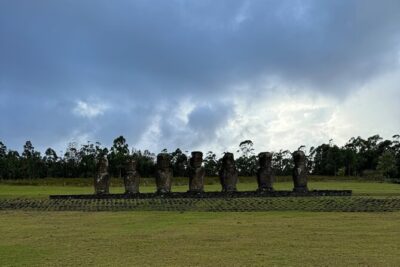
Browse the lists this tour appears in