
Reviewed · EASTER ISLAND TOURS
Easter Island: Moai Full Day Private Tour
The most striking part of this private Easter Island tour is the way it links the island’s great moai sites into one long story. You move from carefully fitted stonework at Ahu Vinapu to fallen and standing statues, the quarry at Rano Raraku, and the broad ceremonial platform at Tongariki. The unfinished moai are the real shock, since you can see where the statues were carved from the volcanic rock.
I like two things right away: the private format gives your own group more room to ask questions and set the pace, and the route mixes famous places with less familiar stops such as One Makihi and Ahu Ahahanga. Enrique, one named guide associated with the experience, is also able to tailor the day to your needs.
The main consideration is cost. At $219 per person, this is not a budget outing, and you still pay separately for park admission and food. Seven hours also makes for a full day, though hotel pickup, a bottle of water, and a carefully packed route help keep it practical.
Key points
- Ahu Vinapu begins with finely fitted stonework that invites comparisons with Inca building methods.
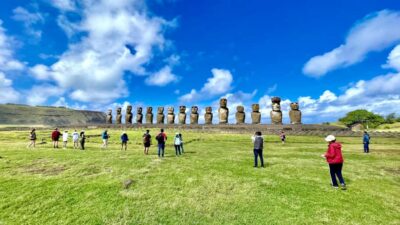
- Ahu Tongariki presents 15 moai together, the largest group on the island.
- Rano Raraku lets you walk among unfinished statues at the volcanic quarry where many moai were made.
- One Makihi and Ahu Ahahanga add quieter, less familiar sites to the usual Easter Island circuit.
- Ovahe and Anakena change the mood, bringing pink sand, clear water, and time by the beach.
- Private guiding and hotel pickup make the $219 price easier to assess for couples, families, or small groups.
A seven-hour route through Rapa Nui’s great mysteries
This tour is built for the person who wants the big Easter Island sights but also wants some context between them. It does not treat the moai as a string of giant stone faces. Instead, the route shows you ceremonial platforms, fallen statues, an active-looking carving site, and two beaches that reveal another side of Rapa Nui.
You spend about seven hours on the island’s roads and at its archaeological sites. The day begins with pickup at your hotel, and you should wait in the lobby 10 minutes before the scheduled time. The schedule varies, so you need to check available starting times when booking.
Because this is a private group, the day should feel more personal than a large coach excursion. You can ask for clarification when the story gets complicated, and a guide can adjust the presentation to your interests. The exact amount of flexibility is not specified, so I would confirm any special timing request in advance.
More moai and Rapa Nui sites:
- From Hanga Roa: Rapa Nui Culture Sightseeing Tour
★ 4.6 · 307 reviews - From Hanga Roa: Journey from Orongo to Ana Te Pahu
★ 4.3 · 75 reviews - Rapa Nui Stargazing
★ 4.5 · 62 reviews
Ahu Vinapu and the question of precision
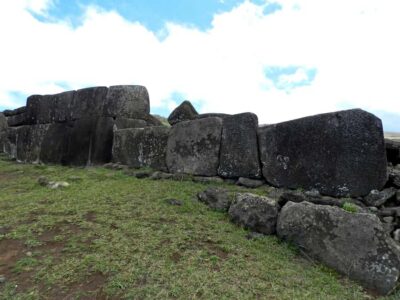
Ahu Vinapu is a strong opening stop because its stonework raises an immediate question. One wall is made from large blocks fitted closely together, a style often compared with Inca construction. The resemblance is one of the site’s most intriguing features, but your guide’s explanation matters here. You will want to hear what is known, what is debated, and what remains uncertain.
This is not simply a place to take a quick photo beside a moai. Look closely at the joints between the stones and at the scale of the platform. The stop sets up one of the tour’s central themes: Rapa Nui culture produced impressive engineering and ceremonial works in a remote setting.
If you prefer a day made only of polished viewpoints, Vinapu may feel less immediately dramatic than Tongariki. I think that is part of its value. It gives you a puzzle at the start, rather than handing you a ready-made answer.
Ahu Ahahanga and moai in their original setting
At Ahu Ahahanga, you can see moai in their original position, raised and placed on a ceremonial platform. That detail changes how you read the statues. A moai is not just a carved body standing alone. Its position on an ahu, or ceremonial platform, was tied to the way the Rapa Nui people arranged and understood these figures.
The stop also helps balance the scale of the better-known sites. Tongariki can feel grand and formal, while Ahahanga offers a closer look at how a ceremonial setting works. Your guide explains the importance of the statues to Rapa Nui culture, giving you a way to connect the physical remains with the people who made and placed them.
The information provided does not give a separate time allowance for each stop. That means the precise pace can vary, but the private setup may be useful if your group wants to spend more time discussing the moai rather than rushing from one photo point to the next.
Te Pito Kura and the size of a fallen moai
Te Pito Kura brings you to a sacred place associated with one of the largest moai on the island. The scale is difficult to grasp from a distance. A very large moai can seem almost abstract in a photograph, but seeing it in relation to the ground and the surrounding site gives you a better sense of the labor involved.
This is another place where the guide’s explanation adds value. The tour focuses on why these statues mattered to Rapa Nui culture, not only on their size. That distinction is important. A visit based only on measurements can make the moai feel like oversized curiosities. Context helps you understand them as part of a ceremonial tradition.
Expect a more reflective stop than an activity-heavy one. The attraction here is the site itself and the story around the statue, not a scheduled performance or hands-on demonstration.
A few more Easter Island half-days to weigh up
- From Hanga Roa: Easter Island Sightseeing Full Day Tour
★ 4.5 · 189 reviews - Full day tour – DREAM
★ 5.0 · 86 reviews - Two days of Full Day Tour of Rapa Nui + Sunrise in Tongariki
★ 4.8 · 55 reviews - Easter Island: Full-Day Tour to Anakena
★ 4.7 · 27 reviews
One Makihi, a quiet stop before Tongariki
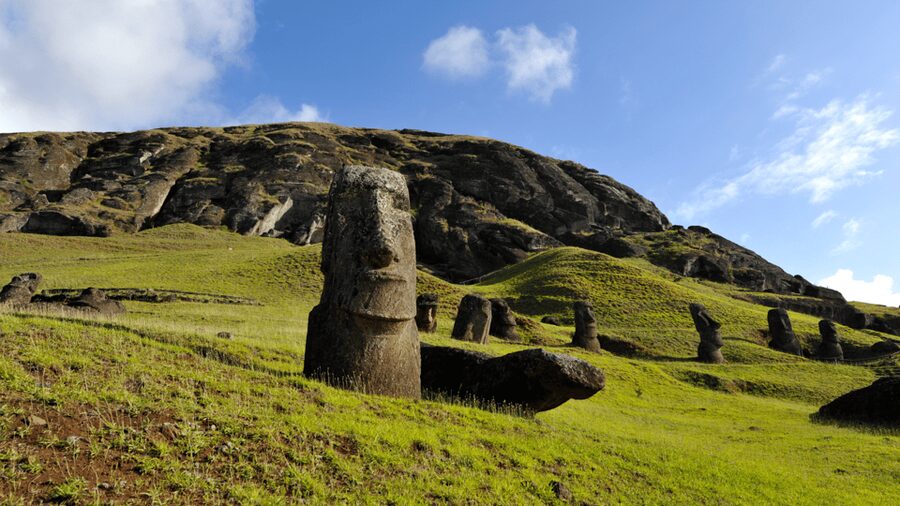
Before Ahu Tongariki, the route pauses at One Makihi. Here you see an old ahu and a supine, or lying-down, finely chiselled moai. It is a small but useful addition to the day because it shows the moai in a different condition from the upright figures that dominate most photographs of Easter Island.
I like this kind of stop. It gives you a break from the headline sites and makes the route feel less like a checklist. You can compare the carefully finished form of the statue with its current position and think about how much of the original ceremonial setting has changed.
The available details do not specify whether One Makihi has a long visit or a brief roadside look. Treat it as a short, unusual pause within the larger Tongariki section of the day.
Ahu Tongariki and 15 moai on one platform
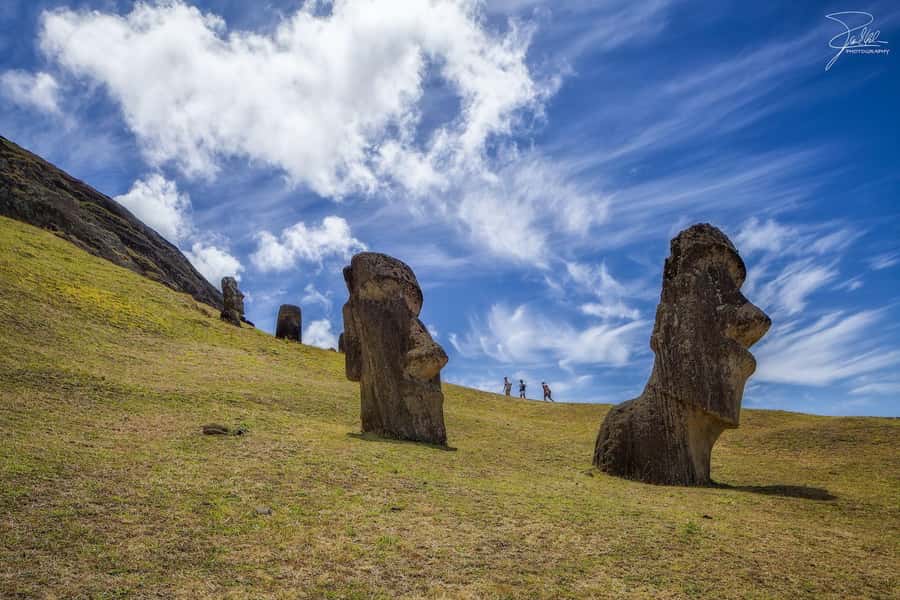
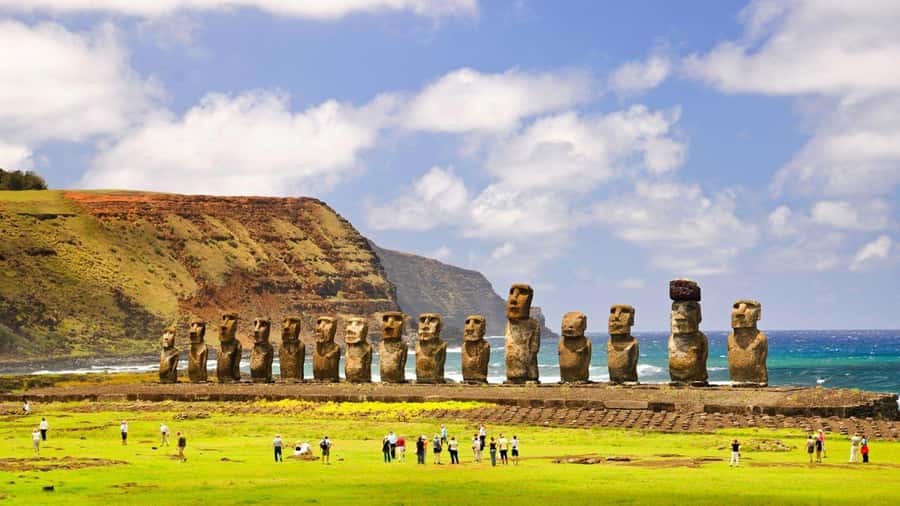
Ahu Tongariki is the visual centerpiece. Fifteen imposing moai stand together on the island’s largest group of statues, arranged on a broad ceremonial platform. This is the place where the scale of Rapa Nui’s building projects becomes easiest to read.
Give yourself time to take in the whole row before focusing on individual statues. The group arrangement matters. One moai is impressive, but 15 together create a much stronger sense of ceremony, order, and collective effort.
Your guide provides detailed information about the history and meaning of the statues. In a private group, you can ask about the platform, the arrangement, and the differences between the figures without competing with a large crowd for attention.
Tongariki is also likely to be one of the busiest and most photographed places on the route, although no crowd conditions are promised. If you care about quiet photographs, ask about the day’s timing when you arrange the tour. The operator provides starting-time availability rather than one fixed departure for everyone.
Rano Raraku, the moai quarry
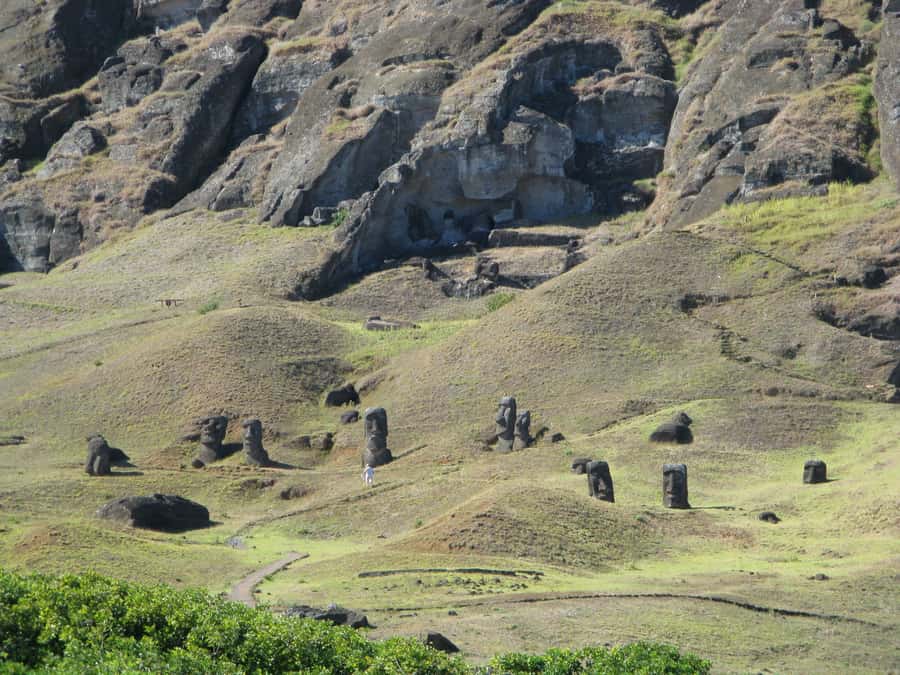
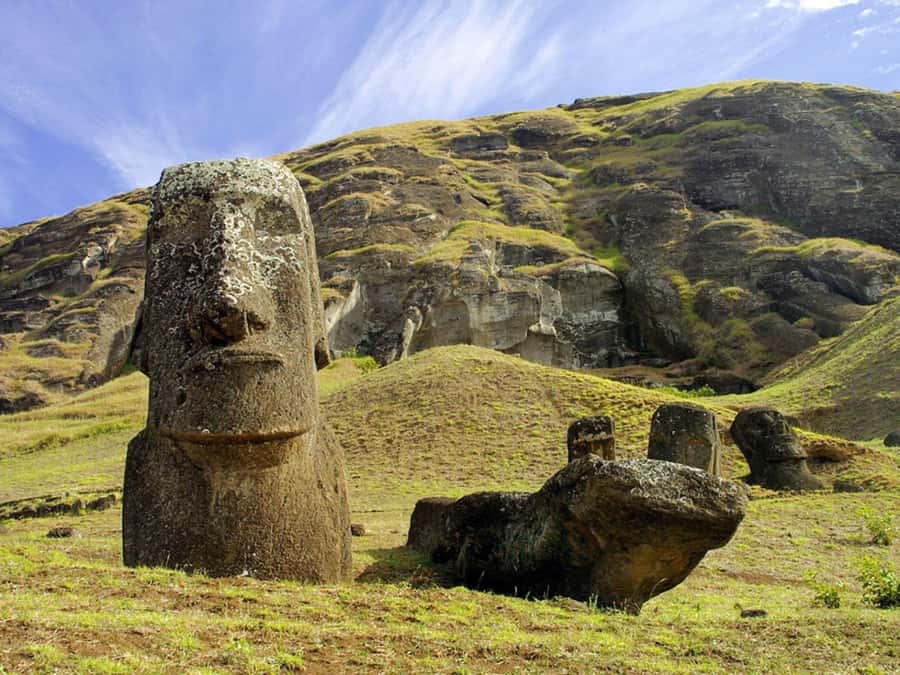
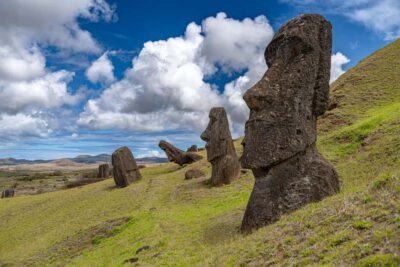
Rano Raraku is where the tour becomes especially memorable. Known as the moai factory, this volcanic site contains statues still in the process of being made. You can walk among unfinished figures and see how the rock was shaped before the statues were moved to their ceremonial platforms.
This stop answers a question that often hangs over the island: where did all these enormous statues come from? At Rano Raraku, the answer is visible in the stone itself. The unfinished moai show that carving was a long process, and the site lets you see statues at different stages rather than only as completed monuments.
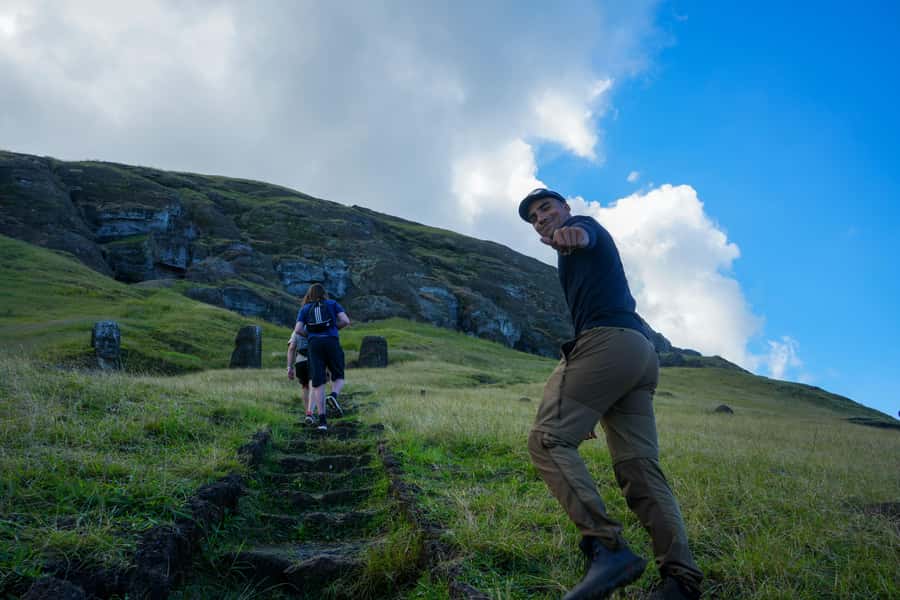
Wear practical footwear and expect some walking, though the supplied information does not give a trail length or difficulty rating. Food is not included, so plan your day with that in mind, especially if your visit to Rano Raraku comes after several earlier stops.
The guide’s role is important here. Without explanation, a half-carved moai can look like a curious rock. With context, it becomes evidence of how the statues were made and why this volcanic site is central to Rapa Nui culture.
Ovahe’s pink sand and Anakena’s clear water
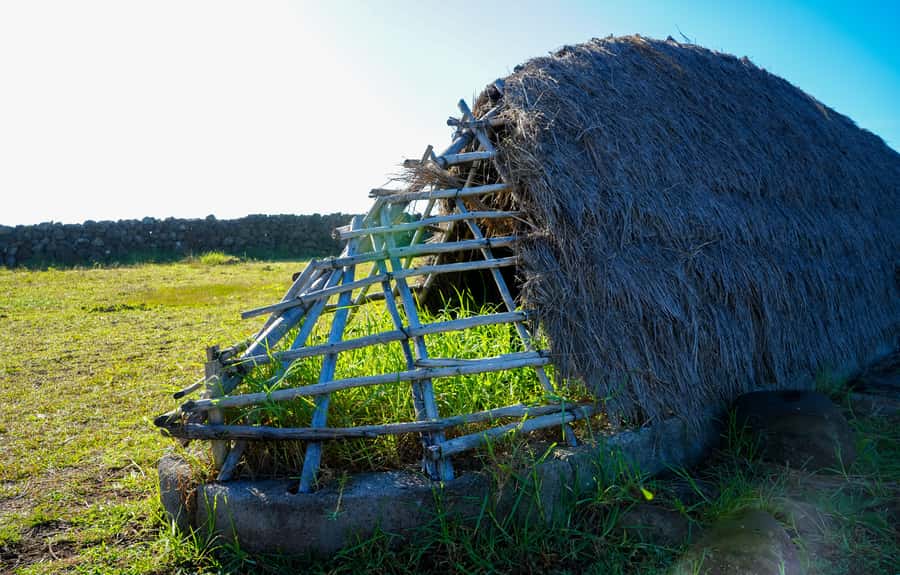
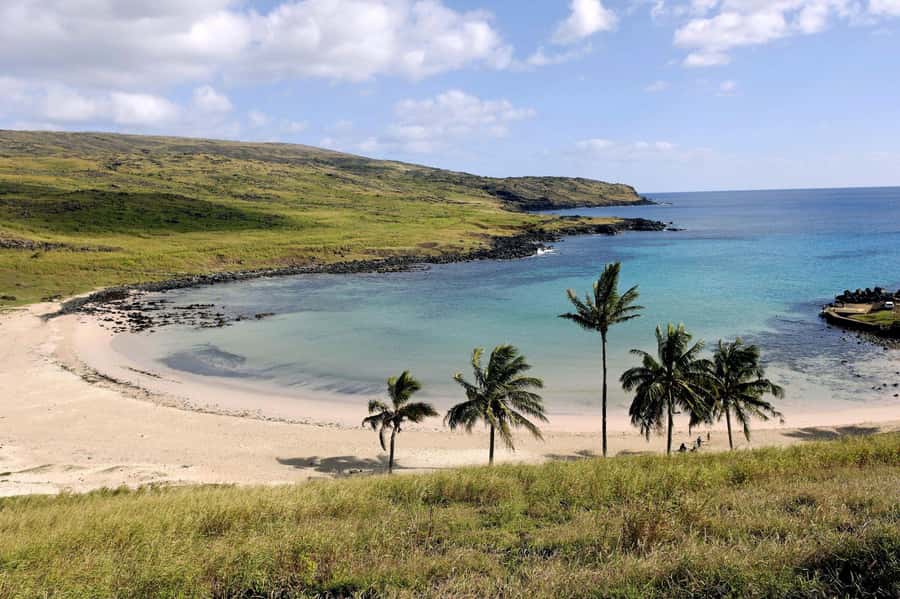
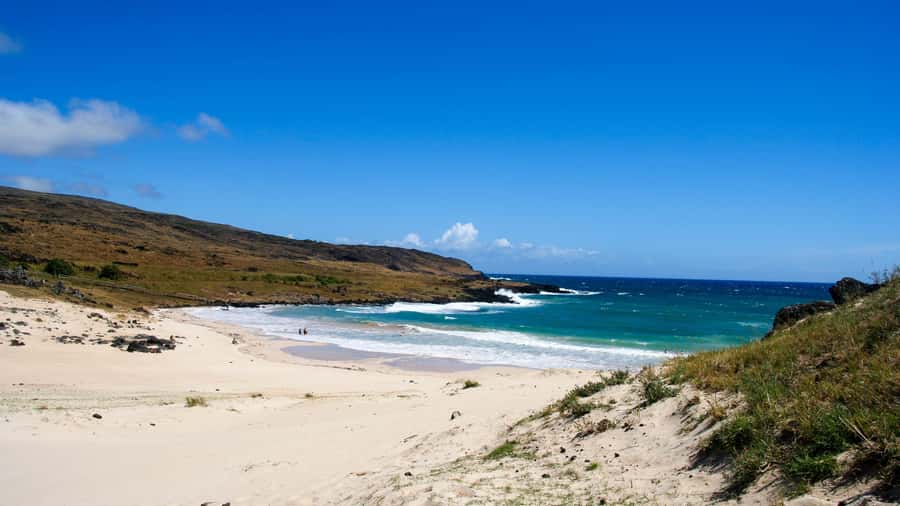
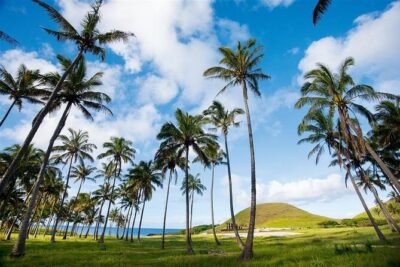
The final section shifts from archaeology to the coast. Ovahe Beach is known here for its rose-colored sand, a striking contrast after hours among stone platforms and volcano rock. The stop offers a different kind of visual interest, so the day does not end with one more ceremonial site.
The tour then continues to Anakena Beach, a beautiful stretch with clear water and options such as snorkeling. You can also relax outdoors and enjoy a picnic, but remember that food is not included. Bring or arrange your own meal rather than assuming lunch comes with the booking.
Anakena is a good ending because it gives you time to slow down. After the dense history of Vinapu, Ahahanga, Te Pito Kura, Tongariki, and Rano Raraku, the beach offers a simpler pleasure: open views, water, and a chance to sit with what you have seen.
Water activities are mentioned, but the tour does not promise equipment, instruction, or a set amount of beach time. If snorkeling is a priority, ask what you need to bring and how long the stop normally lasts. The clear water may tempt you, but the archaeological portion remains the main purpose of the day.
What the private format is worth at $219
The price is $219 per person. That is a substantial amount for a seven-hour outing, especially because park admission and food are not included. You should calculate the full day’s cost before booking rather than treating the advertised price as the final total.
Still, the price can make sense if you value a private group and a guide who can shape the explanation around your interests. Easter Island’s most important sites are spread across a broad route, and hotel pickup removes the need to arrange your own transport between them.
The private format is especially useful for a couple, family, or small group that wants to ask questions freely. It may be less attractive if you are traveling alone on a tight budget, since the per-person rate does not benefit from a larger shared group.
Enrique is specifically associated with this experience, and his approach includes tailoring the tour to your needs. Since guide assignment may depend on availability, check whether Enrique will lead your date if that matters to you. English, French, and Spanish guiding are available.
A bottle of water is included. Hotel pickup and return are included as well. Meals, park entrance fees, and any beach activity costs are not listed as included, so budget for those separately.
Who will get the most from this tour
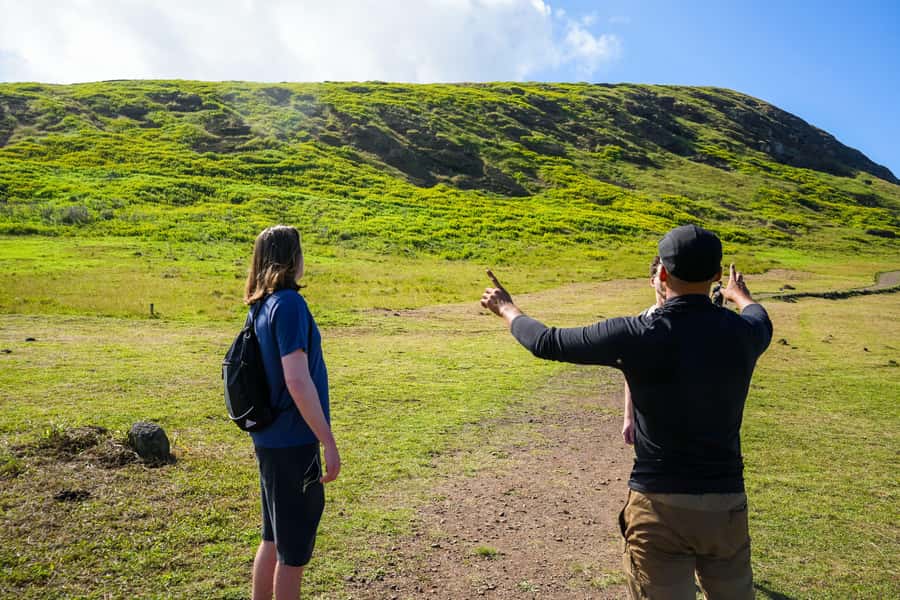
I would choose this tour if you want the island’s major moai sites in one day and prefer explanations over simply being dropped at viewpoints. The route is a good fit for first-time visitors who want a strong introduction to Rapa Nui’s ceremonial platforms, carving sites, and coastal areas.
It also suits anyone who prefers a private setting. Families may appreciate the ability to ask questions and adjust the conversation, while couples may like combining the major archaeological stops with Ovahe and Anakena.
You may want a different plan if your priority is a very slow visit to only one or two sites, or if you need a low-cost shared excursion. Seven hours is a full schedule, and the route covers many different places. It gives you breadth, but not unlimited time at every stop.
The tour is also less suitable if you expect lunch, park tickets, snorkeling gear, or a tightly defined timetable to be included. Those items are outside the stated package.
Booking details worth checking before you go
You can cancel up to 24 hours before the tour for a full refund. The reserve-now, pay-later option lets you hold a place without paying immediately, which is useful when your island schedule is still taking shape.
The tour includes hotel pickup and return. Wait in your hotel lobby 10 minutes before pickup. The exact departure time depends on availability, so check the available starting times before confirming.
The provider is Kapua Tours & Experience. The group type is private, and guiding is offered in English, French, or Spanish. If you have a strong preference for a particular guide, language, or amount of time at Anakena, raise it before booking.
Should you book this Easter Island tour?
Book it if you want a full archaeological overview with the benefit of private guiding and hotel transport. The combination of Vinapu’s unusual stonework, Ahahanga, Te Pito Kura, One Makihi, Tongariki’s 15 moai, and Rano Raraku gives you a much fuller picture than a short visit to Tongariki alone.
The beach stops improve the rhythm, but they do not turn this into a beach day. You are paying for the route, the guide, and the convenience of private transport, while still paying separately for food and park admission.
For a first visit, I think the tour offers strong value if the $219 price fits your budget and you want to understand what you are seeing. If you are cost-conscious, compare the total price after entrance fees and meals. If you want a personal guide and the island’s major sites in one organized day, this is a sensible choice.
FAQ
How long does the Easter Island Moai Full Day Private Tour last?
The tour lasts seven hours.
How much does the tour cost?
The listed price is $219 per person.
Is the tour private?
Yes. It is offered as a private group experience.
Which languages are available?
Live guiding is available in English, French, and Spanish.
Is hotel pickup included?
Yes. Hotel pickup and return are included. You should wait in the hotel lobby 10 minutes before the scheduled pickup.
Is food included?
No. Food is not included. You may enjoy a picnic at Anakena Beach, but you need to arrange the food yourself.
Are park entrance fees included?
No. Entrance to the parks is not included in the tour price.
What places does the tour visit?
The route includes Ahu Vinapu, Ahu Ahahanga, Te Pito Kura, One Makihi, Ahu Tongariki, Rano Raraku, Ovahe Beach, and Anakena Beach.
Can I cancel for a full refund?
Yes. You can cancel up to 24 hours in advance for a full refund.
Just added around Easter Island
- Easter Island: 2 Full Days Private Tour★ 3.9 · 3 reviews
- Easter Island: Full Day Ancestral Caves and Orongo Village★ 5.0 · 3 reviews
- Easter Island: Customized recreational-tourist diving★ 5.0 · 3 reviews
- Ancestral fishing: Fishing with an experienced Rapa Nui★ 4.4 · 3 reviews
- Birdman Cult and Caves★ 4.0 · 5 reviews
- Rapa Nui: Polynesian Massage★ 4.8 · 5 reviews
- Rapa Nui: 3 Excursions with Hotel Transfers★ 4.3 · 6 reviews
- Volcanic Refuges: Excursion to Underground Civilization★ 4.7 · 8 reviews
Easter Island Tours, compared.
Two days of Full Day Tour of Rapa Nui + Sunrise in Tongariki
Read our review →
Browse the lists this tour appears in