
Reviewed · PUCÓN TOURS
Villarrica Volcano Ascent – Zenit
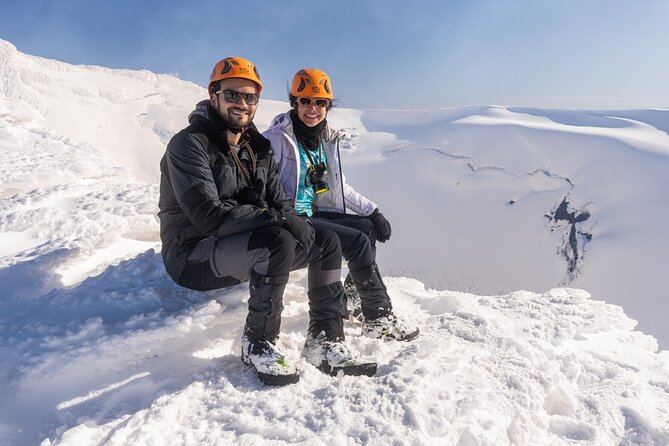
Villarrica Volcano gives you a real mountaineering day, not just a scenic walk. You begin on foot with poles, switch to crampons and an ice axe, and may finish near the crater of one of South America’s most active volcanoes. I like the small groups and the chance to slide down snowy sections on a board. I also like that Zenit holds an equipment fitting before the climb.
The catch is simple: weather controls the day. Cloud, frost, wind, and volcanic activity can block the crater view or make the descent rough. You need moderate fitness, a flexible schedule, and enough time in Pucón to postpone the climb if conditions turn poor.
Key points before you commit
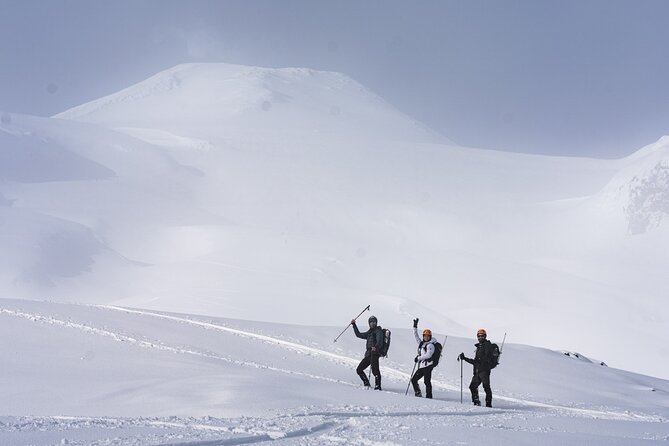
- A 1,700-meter ascent: This is a serious uphill effort to reach Villarrica’s 2,847-meter summit area.
- A changing climbing style: You move from walking with poles to using crampons and an ice axe on steeper, more exposed snow.
- A truly active volcano: At the top, you may see fumaroles and, if conditions allow, glowing magma inside the crater.
- A playful descent: Snow sections can be descended by sliding on a board, locally described as skibunda.
- Small guiding teams: The maximum group size is 12, with several guides used for some departures.
- Early start, long day: Meet at Pedro de Valdivia 205 in Pucón at 6:00 am. About three of the nine hours are spent on transfers.
Villarrica is more than a viewpoint
Villarrica rises to 2,847 meters above the Pucón area, and its appeal comes from the fact that it is still active. This is not a quiet extinct cone where you simply walk to a photo stop. At the summit, the crater can release fumaroles, and under suitable conditions you may see incandescent magma below.
That volcanic activity gives the outing its edge, but it also shapes the rules. Access to the crater edge may be restricted when activity is intense. Even if you reach the summit area, you may not be allowed to approach the rim itself.
I like this honesty. The goal is not only a perfect crater photograph. You are learning how a mountain day changes with snow, wind, visibility, and official safety limits. If the weather closes in, the volcano still gives you a demanding climb, but the views and crater spectacle may disappear.
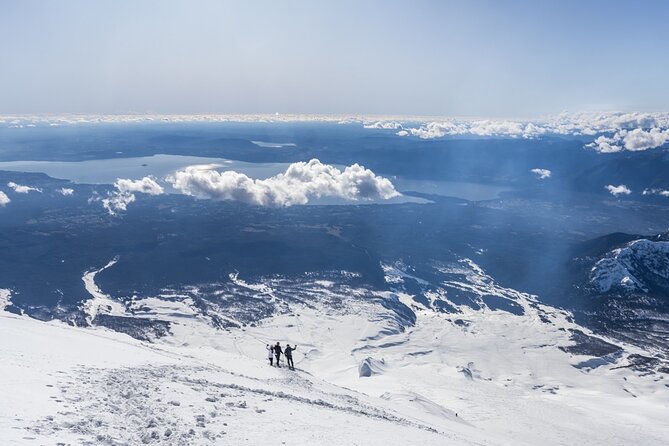
On a clear descent, you can look out over the lakes around Pucón and see how the volcano fits into the wider Araucanía region. Those views are especially valuable after the climb because they show the scale of the terrain you have just crossed.
More volcano climbs near Chile:
- From Santiago: Cajón del Maipo and Volcán San José Hike 8K
★ 4.9 · 418 reviews - Pucón: Villarrica Volcano Climb
★ 4.8 · 191 reviews - Bariloche: Cerro Tronador Tour
★ 4.5 · 129 reviews
What the 6:00 am start really means
You meet at Zenit’s office at Pedro de Valdivia 205 in Pucón. The start time is 6:00 am, so this is not a relaxed morning activity. You need to be ready early, with the rest of your day planned around a demanding nine-hour outing.
The tour duration includes transportation. About three hours of the total time are used for transfers to and from the volcano. That leaves roughly six hours for the mountain portion, though the exact timing can change with the group, snow, weather, and safety decisions.
I see the early departure as useful rather than inconvenient. A mountain day needs room for changing conditions, and a morning start gives the team more time to make progress before the weather shifts. Still, do not book a late afternoon commitment in Pucón. The return time is approximate.
The meeting point is near public transportation, and the activity ends back there. That makes the start and finish fairly simple if you are staying in town.
The equipment fitting is worth taking seriously
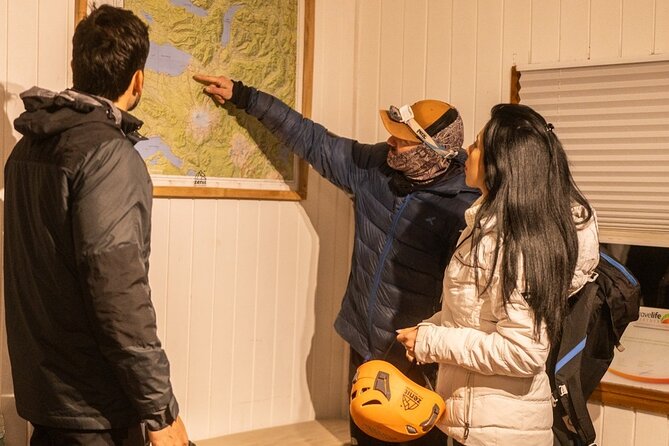
Zenit arranges a preparation meeting at the agency on the day before the ascent. You receive more detail about the day and try on trekking boots before the early start.
That fitting matters. Boots that feel acceptable for a short walk can become a problem after hours of uphill movement. Use the meeting to check the fit, ask about the equipment, and make sure you understand how the day will progress.
The agency supplies the equipment needed for the climb. The equipment described for the ascent includes trekking boots, poles, crampons, an ice axe, and snow boards for the descent. Guides decide when the terrain requires a change in equipment.
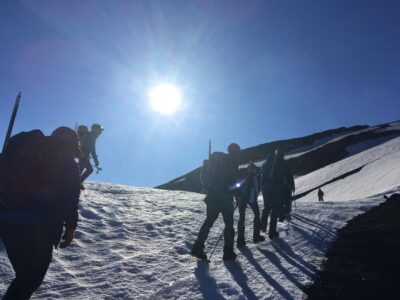
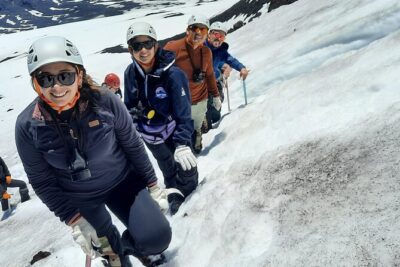
You begin with walking poles on the lower section. Higher up, when the snow becomes more exposed or technical, you use crampons and an ice axe. That transition is one of the best features of the trip because you experience several parts of mountaineering in one day.
You should still treat the equipment as a tool, not a substitute for fitness. Crampons can improve traction, but they do not make a steep climb easy. The ice axe is there for safe movement on snow, and you need to follow the guide’s instructions closely.
The uphill route builds from walking to mountaineering
The climb gains about 1,700 meters in elevation. That figure tells you more than the nine-hour duration does. You are not spending the day on a gentle trail. The uphill work is continuous enough that the guides use regular stops to help the group recover.
The first section may include a snow lift, which can reduce the amount of lower climbing. It is a possibility, not something to assume for every outing. If the lift is operating and conditions permit, it can save energy for the higher section.
From there, the day becomes a steady test of legs and lungs. The group walks with poles at first, then changes to crampons and ice axes where the snow and slope call for them. The terrain grows more exposed, and your focus shifts from simply walking uphill to placing each step with care.
This is where the guides make a major difference. Luisa and Felipe are among the guides associated with Zenit departures, while Agustin, Leo, Edgar, and Jorge have also been named as part of the guiding team. The key benefit is not entertainment alone. A good guide keeps the group moving at a sensible pace, watches for fatigue, and helps you handle the harder sections.
You should expect encouragement, but not an effortless ascent. One account of the climb describes the uphill section as tiring, with the stops and guide support helping the group regain energy. That is a fair picture of what you are buying: a supported climb, not a shortcut to the top.
A few more Chile half-days to weigh up
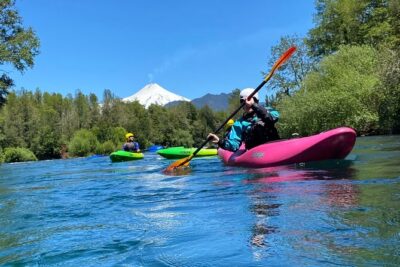
- Guided Kayak Trip on Liucura River
★ 5.0 · 87 reviews - Full Day Mountaineering to Villarrica Volcano from Pucón
★ 5.0 · 62 reviews - Horseback Trailride Excursion
★ 5.0 · 48 reviews - Trekking Mirador el volcano + Geometric hot springs
★ 5.0 · 38 reviews
The summit brings both heat and uncertainty
Near the summit, Villarrica’s character becomes clear. The volcano may release smoke and gas through fumaroles, and the crater can reveal a glow from magma if the weather and activity level allow it.
Do not make the magma view your only measure of success. Visibility can drop to almost nothing. Frost can collect on your glasses, and cloud can hide the crater edge as well as the lakes below. One climb took place in conditions with only about 10 meters of visibility, yet the group still reached the summit area.
That kind of day can feel very different from the image you may have in mind. The mountain remains a physical achievement, but the reward becomes the climb itself rather than a wide panorama.
There is another important limit. The crater edge may be closed because of intense volcanic activity. In that case, reaching the highest permitted point is still the finish, but you will not necessarily peer directly into the crater.
I appreciate that Zenit does not treat access as guaranteed. A live volcano demands changing safety rules. Your guide’s decision, along with the current restrictions, matters more than a promised photograph.
The descent is not simply the easy half
After the uphill work, the descent can feel like a release. Snow boards let you slide down selected sections, turning part of the return into a controlled, playful ride. This skibunda element is unusual and gives the day a memorable change of pace.
But downhill does not mean risk-free. A tired body may find the descent harder than expected, especially in poor visibility or cold conditions. One difficult outing included frost on the glasses and a serious thigh cramp during the way down.
That is a useful warning. Bring patience for the return, listen to the guide, and do not rush because you are eager to finish. The snow slide sections are fun, but they are only part of the descent. You still need to walk and manage your body after a long climb.
In clear weather, the downhill views can be the visual payoff. The lakes near Pucón and the surrounding geography open out below you. If cloud covers everything, you may get little more than a white and grey mountain day. That is not Zenit’s fault, but it is a real part of the decision to book.
Why the guides matter on this particular climb
The strongest praise for Zenit centers on the guide team. Luisa, Felipe, Agustin, Leo, Edgar, and Jorge have all been singled out in connection with successful climbs. Their role includes route support, equipment use, pacing, communication, and morale.
That last part is easy to underestimate. A long ascent can become a mental problem before it becomes a physical one. Friendly guides who explain the next section and stop when needed can help you keep moving when your legs begin to fade.
The group limit is 12 people. Some departures may use several guides, including a small group with four guides. That ratio can make a difference on steeper snow, where the team needs to monitor several people at once.
The small-group format also makes the day more social. You are not wandering alone, but you are less likely to be lost in a large crowd. A group of three with one guide has also been used, though the exact guide setup can vary.
Is $195 a fair price?
At $195 per person, this is not a cheap half-day outing. It is a full mountain operation with transportation included, equipment supplied, guide support, and a maximum group size of 12.
I think the price is reasonable if you would otherwise need to rent technical gear and arrange mountain transport separately. The value also comes from the guides. On Villarrica, support with crampons, an ice axe, pacing, and changing conditions is more important than a low headline price.
The cost is harder to justify if you mainly want a volcano viewpoint and are not prepared to work hard. You could spend the day cold, tired, and unable to see the crater. This is best understood as a guided ascent with scenic and volcanic rewards, not as a guaranteed sightseeing trip.
The included equipment adds practical value, especially for visitors who do not already carry mountaineering gear. The pre-climb boot fitting also reduces one common source of trouble.
Who should book the ascent?
You should consider this climb if you have moderate physical fitness, enjoy strenuous outdoor activities, and want a genuine introduction to snow mountaineering. It suits people who are willing to follow instructions, accept a slow pace, and work through a long uphill day.
It is also a good choice if you want more than a standard viewpoint. You will use poles, crampons, and an ice axe, then possibly slide down snowy sections. That mix gives the day a clear sense of progression.
You should think twice if you have a tight schedule. The activity averages nine hours, includes three hours of transfers, and requires good weather. If you have only one free day in Pucón, a cancellation or poor visibility could leave you disappointed.
The best plan is to allow at least four days in the area if the volcano is a priority. That gives you a better chance to move the climb when the forecast is poor. The activity can be canceled because of weather, in which case Zenit offers another date or a full refund.
Practical details that affect your day
Confirmation is provided when you book. The activity starts and ends at Pedro de Valdivia 205, and public transportation is available nearby.
The maximum group size is 12 people. The tour requires a moderate level of physical fitness, but the 1,700-meter ascent makes it more demanding than that label may suggest. If you are unsure about your fitness, ask Zenit for a clear description of the current route and conditions before booking.
Free cancellation is available until 24 hours before the 6:00 am start time. Changes or cancellations inside that period are not accepted for a refund. If Zenit cancels because of poor weather, you can choose another date or receive a full refund.
The booking pattern also matters. This outing is booked, on average, 36 days ahead. That suggests you should arrange it early, especially if you need a particular date or want room to move the climb during your stay.
Should you book Villarrica Volcano Ascent with Zenit?
I would book it if climbing an active volcano is one of your main reasons for visiting Pucón. Zenit combines technical gear, a small maximum group, experienced guide support, and a memorable snow descent. Luisa, Felipe, Agustin, Leo, Edgar, and Jorge are names connected with a strong guiding team, and that personal support matters on a climb this demanding.
I would not book it as a guaranteed crater-viewing trip. Weather can erase the scenery, volcanic activity can close the crater edge, and the climb will test your legs even with stops and possible lift assistance.
Give yourself several days in Pucón, keep your schedule flexible, and judge the day by the quality of the climb rather than one perfect summit photo. If that sounds like a fair bargain for $195, this is a serious and rewarding way to meet Villarrica.
FAQ
Where does the Villarrica Volcano ascent begin?
The activity begins at Pedro de Valdivia 205, 4920552 Pucón, in Pucón, Araucanía, Chile.
What time does the tour start?
The start time is 6:00 am.
How long does the activity last?
The full activity lasts about nine hours, including transportation time.
How much of the tour time is used for transfers?
About three hours of the stated duration are used for transfers to and from the volcano.
How high is Villarrica Volcano?
Villarrica Volcano reaches 2,847 meters.
How much elevation do you climb?
The ascent involves about 1,700 meters of elevation gain.
What equipment does Zenit provide?
Zenit provides the equipment needed for the climb, including trekking boots, crampons, and an ice axe. Snow boards are used for sliding on selected sections of the descent.
Is a snow lift included?
A snow lift may be available for the first stretch of the climb. It is described as a possibility, not a guarantee.
Is the crater edge always accessible?
No. Access to the crater edge can be prohibited when volcanic activity is intense. Fumaroles may be visible, and incandescent magma may be seen if weather and conditions allow.
What happens if poor weather cancels the tour?
Zenit offers a different date or a full refund if the activity is canceled because of poor weather. You can also cancel for a full refund if you do so at least 24 hours before the scheduled start time.
Just added around Chile
- Punta Arenas: Magallanes National Reserve and City Tour★ 5.0 · 3 reviews
- San Pedro de Atacama: Cejar Lagoon, Tebenquiche & Ojos Salar★ 3.9 · 3 reviews
- From San Pedro de Atacama: Small group to Moon Valley★ 5.0 · 3 reviews
- Easter Island: 2 Full Days Private Tour★ 3.9 · 3 reviews
- Easter Island: Full Day Ancestral Caves and Orongo Village★ 5.0 · 3 reviews
- Santiago: Private Pomaire, Isla Negra, and Pablo Neruda Tour★ 3.9 · 3 reviews
- San Pedro de Atacama: Canyon Swimming Pools Trekking Trip★ 5.0 · 3 reviews
- Santiago de Chile: Half-Day City Tour with Local Cuisine★ 4.5 · 3 reviews
Pucón Tours, compared.
Full Day Mountaineering to Villarrica Volcano from Pucón
Read our review →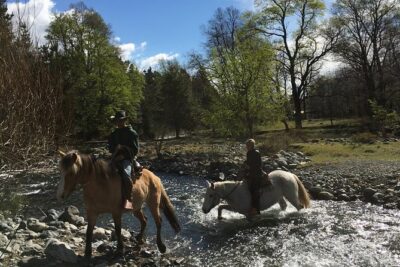
Trekking Mirador el volcano + Geometric hot springs
Read our review →
Ascent to Villarrica volcano 2,847masl, from Pucón
Read our review →
Browse the lists this tour appears in