
Reviewed · PUCÓN TOURS
Pucón: Villarrica Volcano Climb
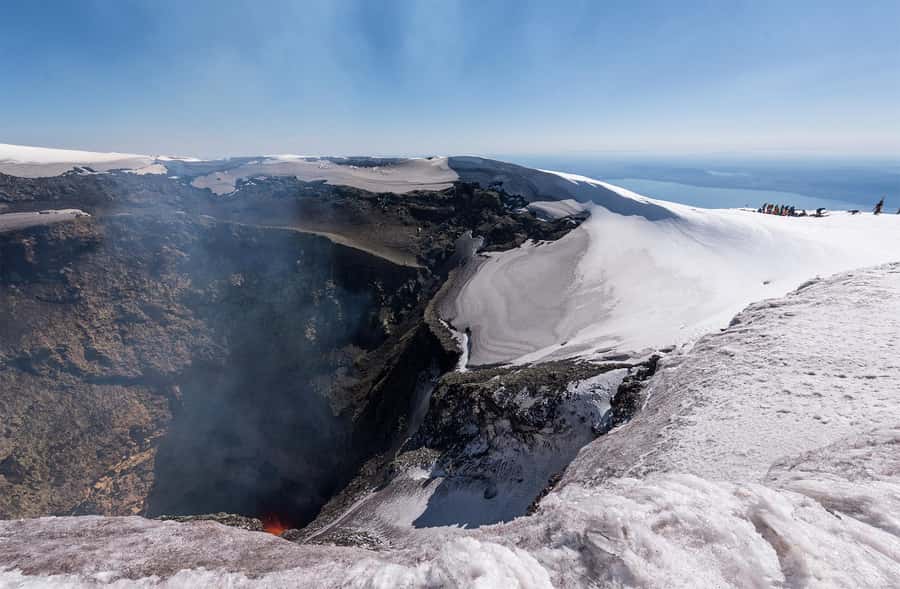
Villarrica is not a gentle hill with a nice viewpoint. It is an active volcano in southern Chile, part of the Pacific Ring of Fire, and the climb takes you from forested lower slopes to ice, gas, and a high crater rim at 2,847 meters. The reward is a rare look into an active volcanic crater, often with fumaroles and, when conditions permit, a glimpse of lava.
I like the small guide ratio, with one certified guide for every three participants, and I like the practical setup: transport, park entry, boots, crampons, ice axe, helmet, clothing, and other mountain gear are included. Guides such as Nacho, Osiel, Chacha, Raul, and Felipe have been singled out for clear instructions, patience, and good English.
The main caution is simple: this is a hard, uphill day, not a relaxed sightseeing trip. Weather, wind, seismic activity, or a temporary summit closure can change the plan, and the climb can be tougher than its no-experience-required description suggests.
Key points to know before climbing Villarrica
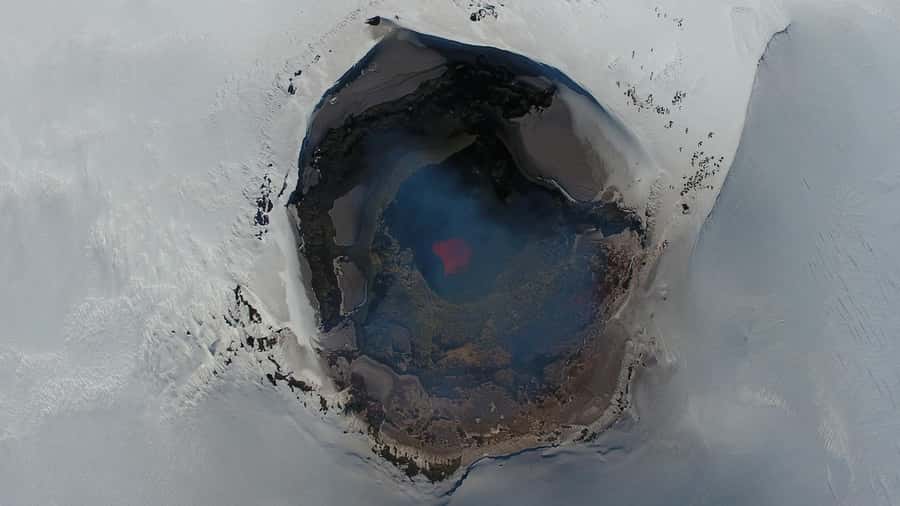
- The summit reaches 2,847 meters: After 5 to 6 hours of steady climbing, you may look into the active crater and see fumaroles or lava, depending on conditions.
- The descent is part of the attraction: When snow conditions are right, you use controlled sitting slides to get down much of the upper slope, often in about half the time of the ascent.
- Equipment is supplied: Mountain boots, trousers, jacket, gloves, gaiters, crampons, ice axe, helmet, poles, and backpack are provided.
- You meet the outfitter twice: Go to the Zenit Travel office the day before for boot fitting and an equipment check, then return at 6:15 a.m. on climb day.
- The group may split by pace: Multiple guides can divide the group according to ability, though a large group may still create delays on the route.
- The summit is never guaranteed: Daily volcanic monitoring and the weather determine how high you can go and whether the snow slide descent is possible.
Why Villarrica is such a special climb
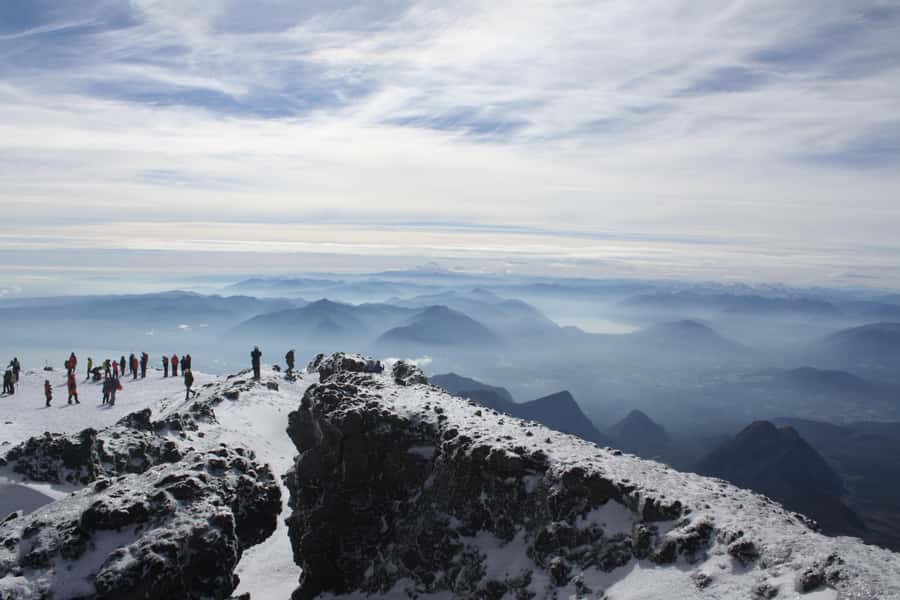
Villarrica gives you something few mountain day trips can offer: an active crater at the end of the route. The mountain is one of Chile’s best-known volcanoes, and the views extend across forests, lagoons, and other volcanoes.
The setting changes as you climb. You begin at about 1,200 meters above sea level on a traditional hiking route. Later, the trail reaches the glacier, where crampons and ice axes become part of the work. At the top, the reward is not just a broad view. You can look into the middle of the crater and see the raw geology of a living volcano.
Conditions matter greatly. When the summit is open and visibility is good, the view can be superb. On other days, strong wind, poor visibility, or volcanic activity may stop the group below the crater rim. That can be disappointing, especially after several hours of effort, but the guides have turned groups around for safety rather than pushing their luck.
More volcano climbs near Chile:
- From Santiago: Cajón del Maipo and Volcán San José Hike 8K
★ 4.9 · 418 reviews - Bariloche: Cerro Tronador Tour
★ 4.5 · 129 reviews - From Puerto Varas: Osorno Volcano & Petrohue Falls Day Tour
★ 4.6 · 121 reviews
The 6:15 a.m. meeting and equipment check
The climb begins at the Zenit Travel office at Pedro de Valdivia 205 in central Pucón. Look for the office under the arch, and arrive at 6:15 a.m. The wider schedule calls for a 6:00 a.m. meeting, so follow the final time given by the local partner.
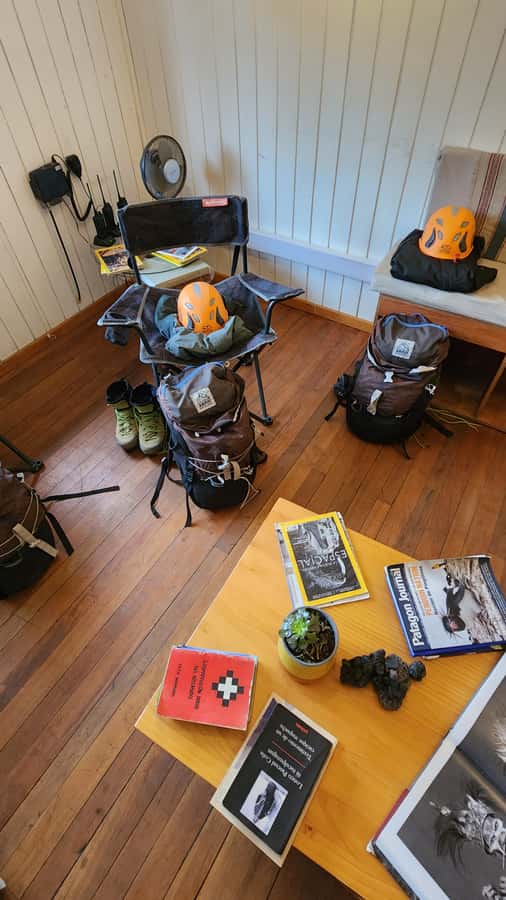
You also need to visit the office the day before. This is not wasted time. You try on the mountain boots, check your clothing, and receive a short explanation of the route and procedures. Proper boot fitting matters here because you spend hours walking uphill in stiff mountain footwear. One person had trouble when the boots prepared the previous day were mixed up, so check the fit carefully before leaving the office.
The equipment package is a strong part of the price. It includes mountain boots, poles, crampons, ice axe, helmet, backpack, trousers, jacket, gloves, and gaiters. You still need to bring your own trekking clothes, sunglasses, sunscreen, food, and drinks.
Pack layers rather than one thick outfit. You can feel warm while climbing, then cold and exposed near the summit. A buff is also a useful suggestion from an experienced participant, especially with wind, snow, and volcanic gases.
The 30-minute drive to Villarrica National Park
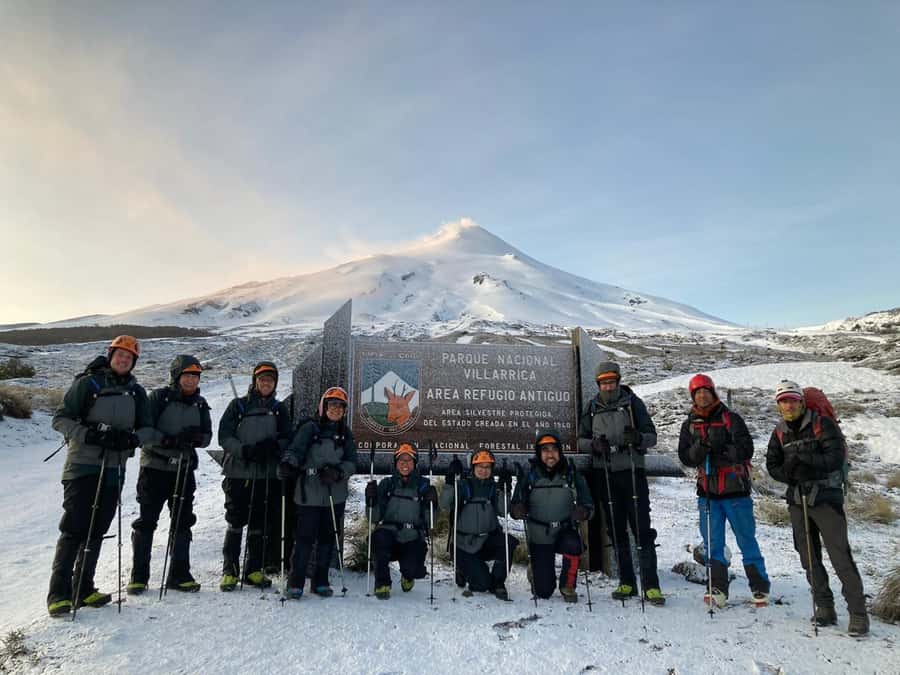
From the Pucón office, the group drives about 30 minutes to the base of Villarrica Volcano. Transport from the office and back again is included, along with the entrance fee to Villarrica National Park.
This short drive keeps the morning efficient. You do not have to arrange a separate transfer, and the guides can begin the day together. Once at the base, the long portion begins: roughly 8.5 hours of hiking, climbing, breaks, and descent inside the park.
An optional ski lift may cover part of the lower approach, but its towing ticket is not included. This detail deserves attention. The lift can save energy early in the day, and several participants considered it worthwhile, but you need to ask about it during the equipment meeting and bring cash if you intend to use it. Do not assume the lift is part of the $190 price.
Five to six hours of steady uphill work
The first stage feels like a mountain hike rather than a technical climb. You start at around 1,200 meters and move upward at a controlled pace. The guides encourage an easy rhythm, which helps you conserve energy for the steeper snow section.
Do not mistake the word easy for effortless. The route is uphill for much of the way, with few flat stretches. One person described the climb as harder than expected even with an athletic background, while another found it manageable with reasonable fitness. Both impressions can be true. Your experience depends on your pace, weather, altitude, and how often you train.
The guide team keeps an eye on the group and can adjust the pace. With one guide per three participants, the setup allows closer supervision than a large general hiking group. If abilities vary, the guides may separate people into smaller groups. That can help strong climbers move steadily while giving others time for breaks.
Large groups can still slow the route. At busy times, you may encounter traffic from other climbing parties on narrow or steep sections. An earlier start could reduce this problem, but the published meeting time is already early, so ask the operator if an earlier departure is available.
A few more Chile half-days to weigh up
- Villarrica Volcano Ascent – Zenit
★ 5.0 · 111 reviews - Guided Kayak Trip on Liucura River
★ 5.0 · 87 reviews - Full Day Mountaineering to Villarrica Volcano from Pucón
★ 5.0 · 62 reviews - Horseback Trailride Excursion
★ 5.0 · 48 reviews
Crampons, ice axes, and the glacier section
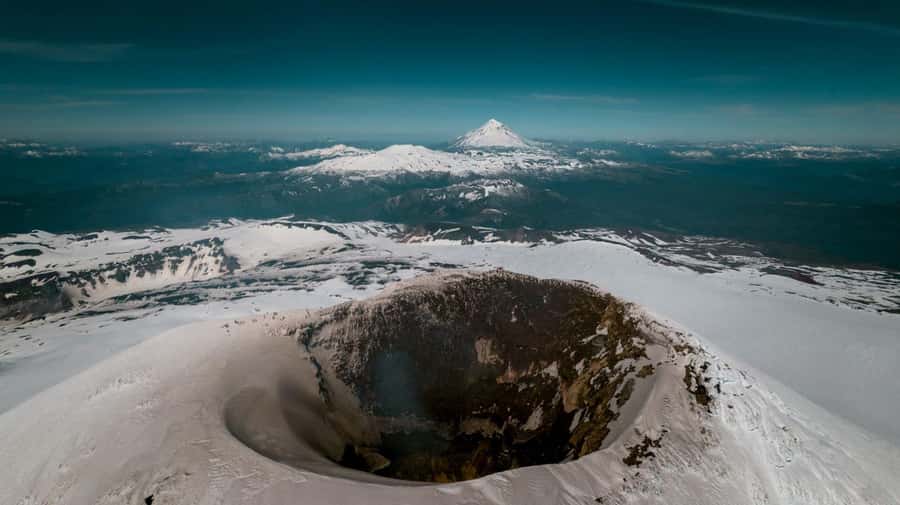
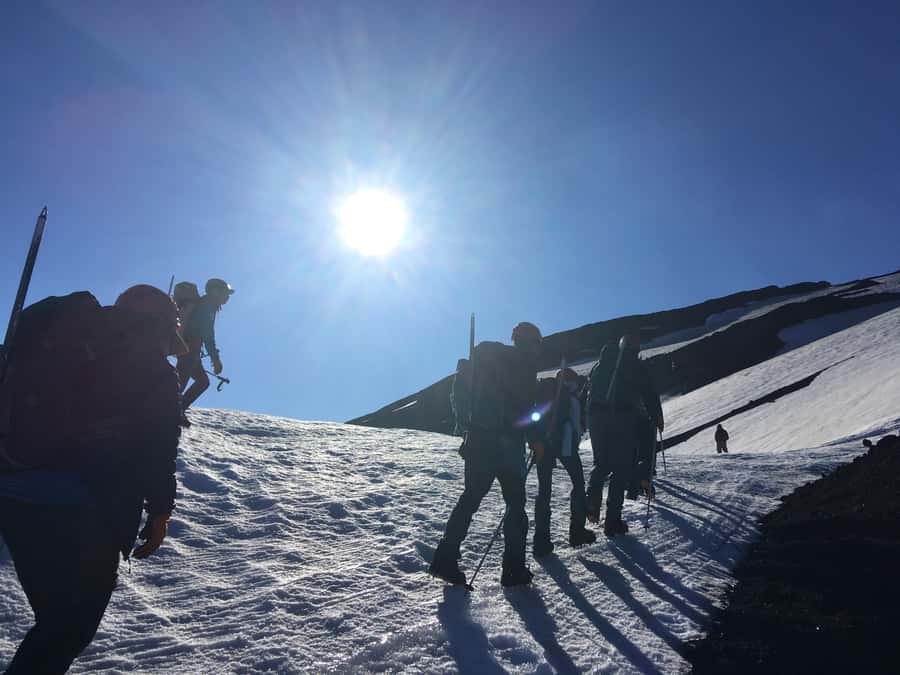
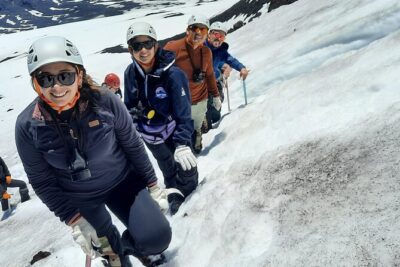
As you approach the glacier, the nature of the climb changes. The guides explain how to use the crampons and ice axe, then help you transition from ordinary hiking to snow and ice travel.
You do not need previous mountaineering experience for this activity, but you do need a minimum level of physical fitness and the ability to follow instructions. The equipment is supplied, yet it does not make the uphill work easy. You still need balance, leg strength, stamina, and patience.
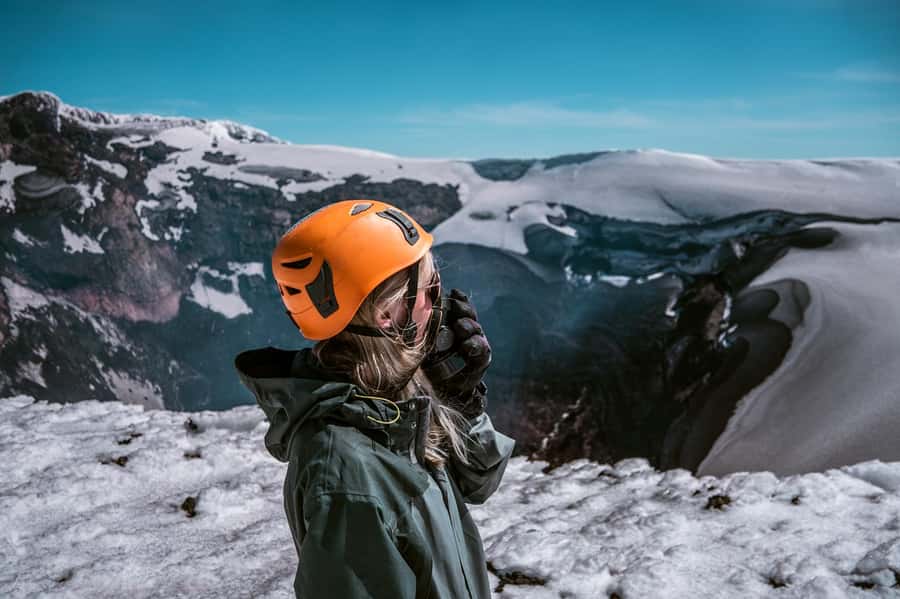
Listen closely during the instruction. Crampons are useful only when your feet are placed correctly, and an ice axe is more than a prop for photographs. The guides focus on safety and communicate with radios as the group spreads out. Their calm approach is especially valuable when conditions change or someone needs a slower pace.
The lower part may be faster with the ski lift, but that option has a cost and must be arranged separately. If you are unsure about your fitness, saving energy at the beginning could make the difference later in the climb.
Reaching the 2,847-meter crater rim
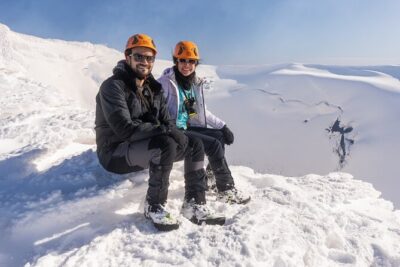
After about five to six hours of climbing, the group aims for the summit at 2,847 meters. At the top, you spend about 30 minutes taking in the crater and the views.
This is the moment that makes the effort worthwhile. You may see fumaroles rising from the crater and possibly lava, depending on volcanic activity and visibility. The guides also point out surrounding volcanoes, lagoons, forests, and other features across the region.
The summit experience is not guaranteed. Villarrica is monitored daily for seismic activity, and officials can restrict access. Wind can be a problem as well. In one case, extreme Puelche winds forced an early end to the climb. On another day, a poor forecast left the summit in doubt, but a brief weather window allowed the group to reach the top.
You should approach the trip with a flexible idea of success. Reaching the crater is the best result, but a safe climb to a lower point can still provide snow travel, mountain views, and a serious day outdoors. The operator has also used alternative plans when Villarrica was closed, though you should confirm what happens on your date rather than count on a substitute.
The snow-slide descent
The way down is faster and often more playful than the way up. The standard plan combines walking with controlled sliding on the snow. When conditions are right, you sit and slide down prepared sections, sometimes covering much of the upper route this way.
This is not an amusement-park ride. You need to follow the guide’s instructions, control your direction, and avoid sliding into another person. You may get wet and cold, so keep a layer in your pack and protect your eyes from glare.
The descent is also kinder to tired knees than a long walk down steep snow, though the sliding position may not suit every ankle or hip. One participant with knee concerns found the snow descent particularly helpful. The fun factor is real, but it comes after several hours of exertion, so do not expect to arrive at the top fresh and ready for another activity.
Poor weather can cancel the slides. On a cloudy or windy day, you may walk down instead. That is one of the reasons to treat the snow slides as a bonus, not the sole reason to book the climb.
The guides and the human side of the day
The guide team is one of the strongest reasons to choose this outing. The setup includes one certified guide for every three people, and the team can keep in touch by radio as groups spread out.
Guides such as Osiel, Nacho, Chacha, Sebastian, Raul, and Felipe have been praised for clear explanations, patience, humor, and close attention to safety. English is available, and communication is important here because you receive instructions about crampons, ice axes, snow slides, pace, and changing volcanic conditions.
The conversation is not limited to route directions. The guides discuss Andean Indigenous peoples, the relationship between mountain communities and high peaks, and basic volcanology. I would like even more geology explained along the climb, especially when the group passes features worth identifying, but the cultural and volcanic context adds meaning to what you are seeing.
A good guide also knows when not to chase the summit. The safest decisions may mean turning around, waiting for a weather window, or stopping below the crater. That can feel frustrating after an early start, but it is part of climbing an active volcano.
Is $190 a fair price?
At $190 per person, this is not a cheap half-day walk. It is a full nine-hour outing with transport from central Pucón, national park entry, a certified guide team, and a substantial set of mountain equipment.
Buying or renting the same equipment separately would add cost and create a packing problem. The guide ratio also matters. You are not simply being driven to a trailhead and pointed uphill. The team handles equipment checks, route management, safety procedures, and changing conditions on an active volcano.
Food and drinks are not included, and you must provide sunscreen, sunglasses, and trekking clothes. The ski lift is also extra. Those costs are easy to manage, but include them in your budget.
The flexible booking terms add practical value: you can cancel up to 24 hours before the activity for a full refund, and you can reserve now and pay later. Still, the main value comes from the equipment and professional supervision, not from the meal arrangements or transport alone.
Fitness, clothing, and preparation
You do not need previous climbing experience, but you should be comfortable with a long, steep mountain day. The ascent has few flat sections, and several hours of continuous uphill work can test your legs even if you exercise regularly.
The operator advises eating carbohydrates, ideally pasta, the night before and staying well hydrated. Avoid alcohol the evening before. On the morning of the climb, bring food and drinks because nothing is supplied during the day.
Bring:
- Sunscreen and sunglasses
- Water and food for the full outing
- Trekking clothes and warm layers
- A buff or neck covering
- Comfortable personal socks to reduce blister risk
- Any clothing you may need beneath the supplied jacket and trousers
Try every item of borrowed equipment during the previous-day fitting. Pay special attention to boots, because blisters can turn an exciting climb into a painful one. Tell the guides early if something rubs, pinches, or feels unstable.
This activity is for adults aged 18 and over. It is best for fit adults who want a demanding outdoor day, not for anyone seeking a slow scenic tour with frequent flat walks.
Practical timing and group concerns
The total duration is about nine hours, including two 30-minute van rides and around 8.5 hours in Villarrica National Park. The start is early, which gives you a full mountain day but leaves little room for a late night beforehand.
Group size affects the pace. The guide ratio is excellent, but a larger total group can create bottlenecks when many climbing parties share the route. If you prefer a faster pace, ask how the group is divided and whether a smaller or earlier departure is available.
The return to Pedro de Valdivia 205 is included. Hotel pickup and drop-off are not, so you need to reach the central office yourself and arrange your own return from there if your accommodation is outside the included route.
Should you book the Villarrica Volcano climb?
Book it if you want a serious mountain challenge with a striking payoff: an active crater, high volcanic views, crampon work, and a snow-slide descent. The $190 price is reasonable for the equipment, park entry, transport, and close guide coverage.
Think twice if you dislike early starts, steep uphill walking, uncertain weather, or plans that may change for safety. You also need to accept that a summit attempt can end below the crater, and the snow slides may not be available.
My practical advice is to schedule this early in your Pucón stay if possible, leaving room for a weather-related change. Complete the equipment fitting the day before, ask clearly about the lift and its cash cost, pack food and layers, and judge the day by the quality of the experience rather than by the summit alone. For a fit adult who wants one of Pucón’s most memorable outdoor challenges, this is a strong choice.
FAQ
How long does the Villarrica Volcano climb take?
The activity lasts about nine hours. This includes a 30-minute van ride from central Pucón to the volcano, about 8.5 hours in Villarrica National Park, and a 30-minute return drive.
Where do I meet the group?
Meet at Pedro de Valdivia 205 in central Pucón. Look for Zenit Travel under the arch and arrive at 6:15 a.m. on the activity day.
Do I need to visit the office before climb day?
Yes. You meet the local partner the day before for an equipment check, boot fitting, and a short explanation of the hike.
Do I need previous climbing experience?
No previous experience is required. You do need a minimum level of physical fitness because the climb includes five to six hours of uphill work and steep snow sections.
What equipment is included?
The activity includes mountain boots, poles, crampons, an ice axe, helmet, backpack, trousers, jacket, gloves, and gaiters. Park entry and transport from the central office are also included.
What should I bring myself?
Bring food, drinks, trekking clothes, sunglasses, sunscreen, and suitable personal layers. A buff is also useful for wind and snow.
Is the summit guaranteed?
No. The program depends on weather, wind, visibility, volcanic seismic activity, and access conditions. The group may stop below the crater or end the climb early if conditions are unsafe.
Are children allowed to join?
No. The activity is not suitable for children under 18.
Just added around Chile
- Punta Arenas: Magallanes National Reserve and City Tour★ 5.0 · 3 reviews
- San Pedro de Atacama: Cejar Lagoon, Tebenquiche & Ojos Salar★ 3.9 · 3 reviews
- From San Pedro de Atacama: Small group to Moon Valley★ 5.0 · 3 reviews
- Easter Island: 2 Full Days Private Tour★ 3.9 · 3 reviews
- Easter Island: Full Day Ancestral Caves and Orongo Village★ 5.0 · 3 reviews
- Santiago: Private Pomaire, Isla Negra, and Pablo Neruda Tour★ 3.9 · 3 reviews
- Santiago de Chile: Half-Day City Tour with Local Cuisine★ 4.5 · 3 reviews
- Santiago: Guided City Tour through the historic center of Santiago★ 4.1 · 3 reviews
Pucón Tours, compared.
Full Day Mountaineering to Villarrica Volcano from Pucón
Read our review →
Trekking Mirador el volcano + Geometric hot springs
Read our review →
Ascent to Villarrica volcano 2,847masl, from Pucón
Read our review →
Browse the lists this tour appears in