
Reviewed · SANTIAGO TOURS
Museo Chileno de Arte Precolombino Admission Ticket
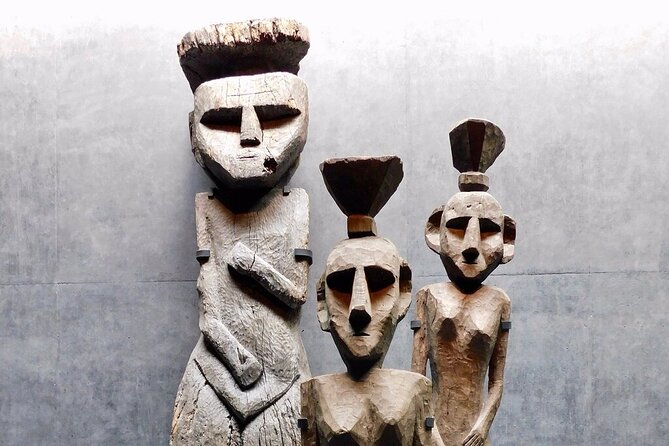
Santiago’s Museo Chileno de Arte Precolombino puts the art of ancient South and Central America in a handsome former government building. I especially like the clear Spanish and English explanations and the way the collection connects early peoples with present-day Chilean identity. The museum is not huge, so you can see it without giving up half your day.
I also like the easy central location, the calm self-guided format, and the café and gift shop inside. The main caution is that the museum may feel smaller than expected, and one exhibition area has sometimes been closed, leaving fewer galleries open than planned.
Key points to know before you go
- The setting is part of the visit: The museum occupies an 1805 neoclassical building that once housed the Royal Customs House.
- Chile before Chile is the main focus: The permanent exhibition looks at more than 14,000 years of human settlement in what is now Chile.
- Plan for about two hours: The named permanent exhibition can take roughly 30 minutes, but the full museum visit may last longer depending on your pace.
- Bilingual displays help: Explanations are available in Spanish and English, making the collection easier to follow without a guide.
- The $17 ticket buys a focused cultural stop: It is a reasonable choice if you want context for Chilean identity, indigenous cultures, and ancient art.
- Check the exhibition situation: A closed gallery can reduce the amount on view, so keep your expectations flexible.
A former customs house in central Santiago
Before you look at a single object, take a moment to notice the building. The museum occupies a distinguished colonial-era structure completed in 1805, designed in the neoclassical style. It originally served as Santiago’s Royal Customs House, a fitting home for a collection concerned with trade, culture, and the movement of people across the Americas.
The building gives the visit a sense of place that a modern gallery could not provide. You are not entering an isolated art box. You are seeing ancient objects in the center of Santiago, inside a building tied to the city’s colonial government.
The location is practical, too. The museum is near public transportation, and it is within walking distance of some central hotels, including the area around the Crowne Plaza. That makes it easy to add before or after other stops in central Santiago.
Admission costs $17 per person. At that price, I would view the museum as a focused cultural appointment rather than an all-day attraction. If you enjoy art, archaeology, or Chilean history, the ticket offers solid value. If you are looking for a huge museum with room after room of displays, you may find the visit more modest.
A few more Santiago half-days to weigh up
- Santiago: Cajon del Maipo/Embalse del Yeso Tour with Picnic
★ 4.3 · 3,789 reviews - Santiago: Vina Del Mar, Valparaiso, Casablanca & Reñaca Tour
★ 4.2 · 2,838 reviews - Small-Group Cajón del Maipo Full-Day Tour and Picnic
★ 4.5 · 2,277 reviews
What Chile before Chile tries to explain
The permanent exhibition is called Chile before Chile. Its starting point is broad: humans first arrived in the territory now known as Chile more than 14,000 years ago. From there, the exhibition introduces different peoples who lived across the country’s varied geography and traces links to indigenous communities living in Chile today.
That approach matters. The museum is not simply presenting old pottery, textiles, tools, or sculptures as disconnected objects. It asks you to consider how artistic traditions, family lines, and shared stories form part of Chilean identity.
You will see art from ancient peoples of South and Central America, with attention to both regional differences and shared ideas. The displays help you compare how communities used materials, patterns, shapes, and decoration. You may find that one object catches your eye first for its design, then makes more sense after you read about the people who made it.
The exhibition also gives you a wider view of Chile. The country is often introduced through its modern cities, mountains, wine regions, and Pacific coast. This museum supplies an older frame. It shows that Chilean identity reaches back through thousands of years and includes many indigenous traditions.
A self-guided visit with useful bilingual text
There is no named guide attached to this admission, and the visit is self-guided. That is a benefit if you like moving at your own speed. You can spend several minutes with an intricate piece, skim a panel that interests you, or move more quickly through a section that does not hold your attention.
The Spanish and English explanations are especially useful. You do not have to rely on guesswork or a phone translation app to understand the basic story of the objects. For an art museum, good labels can make the difference between simply looking and actually following the ideas behind the collection.
One practical point: some signage, particularly in a darker lower-level area, can be harder to read. Give yourself extra time there and do not rush past an object simply because the label is not immediately clear. If reading every panel is important to you, the visit may take longer than the advertised 30 minutes for the permanent exhibition.
The full outing is generally described as taking about two hours. That gives you time for the exhibition, a slower look at selected works, and perhaps a pause at the café. You can make it shorter, but I would not schedule the museum so tightly that you have to race through it.
The collection is smaller than some people expect
The museum has an extensive collection, but the visit itself can feel compact. That is not necessarily a weakness. A smaller museum can be easier to understand, especially when you are already fitting Santiago’s major sights into a busy day.
I like the way a compact visit can leave you with a clear sense of the subject. You are less likely to lose the main thread in endless galleries. The flow through the displays is easy to follow, and the objects are presented in a way that supports a relaxed walk.
Still, you should set your expectations correctly. This is not a vast institution on the scale of Paris’s Quai Branly. If you have seen major international museums devoted to indigenous art, you may find the Chilean museum more limited in size.
The amount on view can also change. One exhibition area has been closed for an extended period, leaving only one main exhibition available at times. That means the $17 price will feel better to someone who values the subject and presentation than to someone judging the ticket only by gallery size.
Same base, a completely different landscape:
- Santiago: Cajon del Maipo & Embalse El Yeso Trip with Picnic
★ 4.5 · 1,859 reviews - Tourist bus around Santiago for a day
★ 4.5 · 1,857 reviews - Viña Del Mar-Valparaiso -Casablanca -Reñaca-Oceanic Rock-Concon
★ 4.5 · 1,564 reviews - Santiago: Valparaiso, Viña del Mar, & Casablanca Valley Tour
★ 4.8 · 1,491 reviews
Objects that reward a slow look
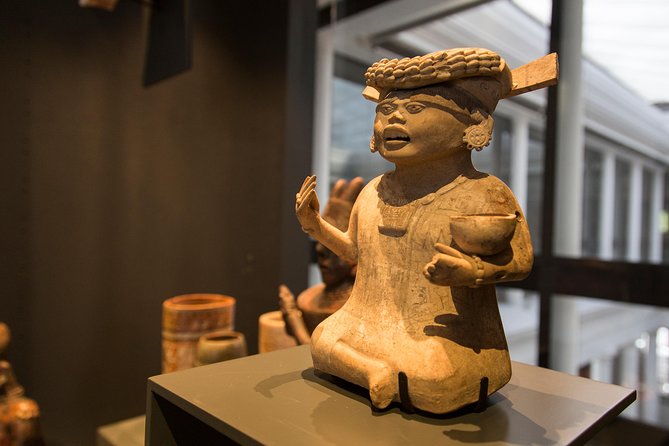
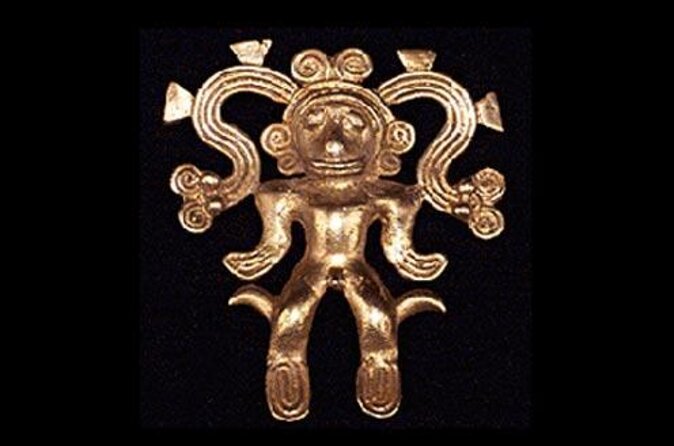
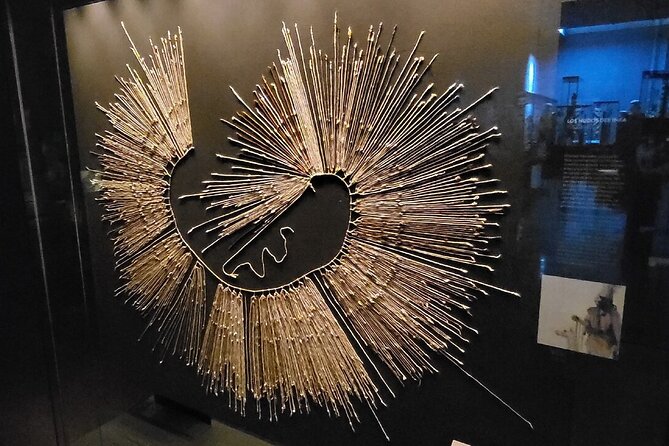
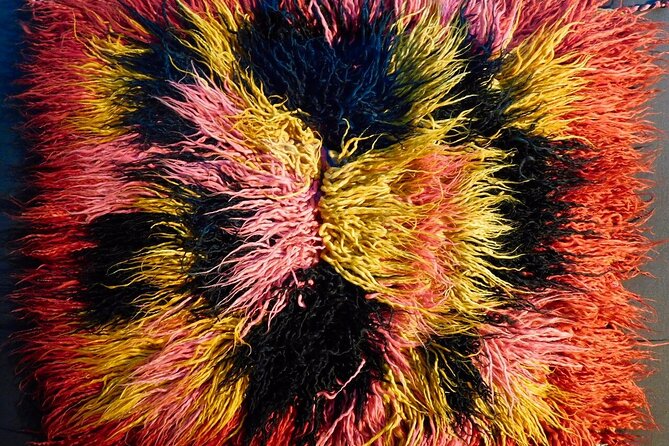
The collection includes ancient, older, and contemporary material, with objects that show careful workmanship and detailed decoration. Even if you know little about pre-Columbian cultures, the visual appeal gives you an immediate way into the visit.
I suggest choosing a few objects to study rather than trying to remember everything. Look at the surface, the repeated patterns, the proportions, and the material. Then read the explanation. The connection between form and culture is where much of the museum’s value lies.
The displays also make comparison possible. You can notice similarities between cultures while still seeing differences in regional craft and customs. This is useful because the phrase pre-Columbian can sound like it refers to one single culture. The museum presents a more accurate picture: many peoples, places, periods, and artistic traditions.
The lower level is described as particularly striking, though it can be dark and the signage may be difficult to read. If you have limited time, do not skip it automatically. Instead, allow a little patience for the lighting and focus on the pieces themselves.
A good family and rainy-day stop
I would recommend this museum for families who want an educational stop that does not demand an entire day. Children must be accompanied by an adult, and most people can participate without special arrangements. The self-guided layout lets each person move at a comfortable pace.
The visual detail can hold a child’s attention better than a long history lecture. You can point out shapes, animals, patterns, and materials, then use the labels to explain that these works were made by different peoples across a very long period.
The museum also works well for a rainy afternoon or a break from outdoor sightseeing. The café gives you a place to sit afterward, and the gift shop adds an easy final stop. A small unexpected touch may occur in the hallway outside, where an opera singer has been heard performing, though that should not be treated as a scheduled part of the visit.
For families, I would allow more than the shortest possible visit. Children may move quickly through some sections and linger over others. The comfortable plan is to reserve two hours, then leave early if everyone has had enough.
How to fit it into a Santiago day
Because the museum is in central Santiago and near public transportation, it is easy to combine with other city sights. You do not need to arrange transportation as part of the ticket. You make your own way there, which keeps the admission simple but means you should plan your route separately.
A morning visit can work well during the museum’s opening hours, Tuesday through Sunday from 10:00 a.m. to 5:00 p.m. The same hours are listed for both 2025 and 2026. Since it is closed on Mondays under this schedule, check your day carefully before setting out.
I would avoid arriving just before closing. Even if the permanent exhibition itself can be seen in about 30 minutes, a late arrival gives you little room for reading, the lower gallery, or a café stop.
The museum is also a useful first stop in Santiago because it provides context for the country you are seeing outside. Afterward, modern Santiago, colonial streets, markets, and other historic places can be understood against a longer timeline.
Is the $17 admission good value?
At $17, the museum is not a throwaway stop, but it is fairly priced for a central Santiago cultural visit if the subject appeals to you. The strongest value comes from the quality of the presentation, the bilingual labels, the central location, and the chance to see a collection focused on ancient American cultures in a building with its own historical importance.
The value is less certain if you expect a large number of open exhibitions. A closed gallery has reduced the visit for some people, and the museum can feel small compared with major international institutions.
For me, the key question is not how many hours you can spend inside. It is whether you want a clear introduction to the peoples and artistic traditions that helped shape Chile. If yes, two hours here can do more for your understanding of the country than another generic sightseeing stop.
Students, Chilean nationals, and foreign residents in Chile can buy discounted tickets directly at the museum entrance by showing identification. That may make the in-person option better for eligible visitors than pre-booking the standard ticket.
Booking, entry, and small practical details
Pre-booking gives you a confirmed admission and can simplify planning, especially if you are building a tight Santiago schedule. Confirmation is provided at booking. The experience has a maximum group size of 15, although the museum visit itself remains self-guided rather than a guided group tour.
Keep your booking details available when you arrive. If a phone app does not display the ticket properly, the desk may still be able to check the reservation and print it. That is useful to know before you panic over a stubborn screen.
Food and drinks are not included, though there is a café inside. Transportation to and from the museum is also not included. The gift shop is another pleasant add-on, particularly if you want a small reminder of the collection without spending more time at another store.
Free cancellation is available if you cancel at least 24 hours before the local start time. Changes or cancellations made within 24 hours are not accepted for a refund.
Who should book this museum visit?
I would book it if you want to understand Chile beyond its modern capital. It suits art lovers, history-minded visitors, families, students, and anyone who appreciates a quiet museum where you can read at your own pace.
It is also a good choice for a first day in Santiago, when you want an indoor activity that gives meaning to the rest of your visit. The bilingual text makes it accessible, and the central setting keeps the logistics simple.
I would hesitate if you have only a few hours in Santiago and are focused entirely on outdoor sights, or if you expect several large exhibitions. The museum is focused and sometimes partly closed, so its appeal depends more on your interest in the subject than on sheer size.
Should you book the Museo Chileno de Arte Precolombino?
Yes, if the $17 price fits your plans and you want a thoughtful introduction to ancient American art and Chilean identity. The best reasons to go are the 1805 building, the well-presented collection, the Spanish and English explanations, and the chance to connect ancient peoples with Chile today.
Book with realistic expectations. Plan on roughly two hours, but know that the main permanent exhibition may take only about 30 minutes if you move quickly. Check which exhibition areas are open, arrive with enough time before the 5:00 p.m. closing, and use the café or gift shop to round out the stop.
This is not Santiago’s biggest museum. It may be one of its most useful for seeing the country through a longer, more human story.
FAQ
How much does admission cost?
The standard admission price is $17 per person. Chilean nationals, foreign residents in Chile, and students can buy discounted tickets at the museum entrance by showing identification.
How long does the museum visit take?
The experience is listed as approximately two hours. The permanent exhibition Chile before Chile is allocated about 30 minutes, though you can spend longer reading and examining the displays.
When is the museum open?
The museum is open Tuesday through Sunday from 10:00 a.m. to 5:00 p.m. The listed hours apply for both 2025 and 2026.
Is the visit guided?
No guide is included with this admission. You visit the museum independently, using the displays and explanations provided in Spanish and English.
Is the museum suitable for children?
Yes. Most people can participate, but children must be accompanied by an adult.
Can I cancel my booking for a refund?
Yes, you can receive a full refund if you cancel at least 24 hours before the experience start time. Cancellations or changes made less than 24 hours before the start time are not accepted for a refund.
Just added around Santiago
- Santiago: Private Pomaire, Isla Negra, and Pablo Neruda Tour★ 3.9 · 3 reviews
- Santiago de Chile: Half-Day City Tour with Local Cuisine★ 4.5 · 3 reviews
- Santiago: Guided City Tour through the historic center of Santiago★ 4.1 · 3 reviews
- ISLA NEGRA AND ALGARROBO WITH VINICOLA UNDURRAGA – TOUR : CHILE★ 3.3 · 3 reviews
- Valparaíso Tour with Funicular Ride and small groups★ 5.0 · 3 reviews
- Portillo & Laguna del Inca with Lunch at the Hotel Portillo★ 5.0 · 3 reviews
- Santiago: Private Half-Day City Tour★ 4.2 · 3 reviews
- From Santiago: Isla Negra, Pablo Neruda Museum & Winery Tour★ 5.0 · 3 reviews
Santiago Tours, compared.

Cajon del Maipo/Embalse del Yeso Tour with Picnic
Read our review →
Vina Del Mar, Valparaiso, Casablanca & Reñaca Tour
Read our review →
Small-Group Cajón del Maipo Full-Day Tour and Picnic
Read our review →
Valparaiso -Casablanca -Reñaca-Oceanic Rock-Concon
Read our review →
Valparaiso, Viña del Mar, & Casablanca Valley Tour
Read our review →

Portillo and Laguna del Inca Day Trip with Picnic
Read our review →Browse the lists this tour appears in