

Reviewed · SANTIAGO TOURS
Tourist bus around Santiago for a day
Santiago’s red double-decker bus gives you a quick look at a very spread-out city, from the old center and La Moneda to Bellavista, San Cristobal Hill, Providencia, and the Costanera Center. The best part is the freedom to get off when a place catches your eye, then rejoin the loop later.
I like the high viewpoint from the open upper deck, which helps you understand Santiago’s layout, and I like the air-conditioned lower deck on hot afternoons. The recorded commentary adds useful context, though the audio equipment can be uneven. The main concern is timing: traffic, unclear stop locations, and long waits may make it hard to visit more than two or three sights in one day.
Key points to know before you board
- The full loop takes about two hours without getting off.
- Service is scheduled from 9:30am to 6pm, with buses intended to arrive about every 30 minutes.
- San Cristobal Hill is the strongest sightseeing stop, with the cable car and funicular nearby.
- Plaza de Armas, La Moneda, and Santa Lucia make the central section useful for first-time visitors.
- Stop signs can be hard to spot, so use the app and confirm the exact pickup point before leaving the bus.
- The $50 price is easiest to justify if you use the bus for several rides and make multiple stops.
A useful first look at Santiago from the upper deck
I see this bus as a city orientation tool, not a substitute for exploring Santiago on foot. From the upper deck, you can spot the old center, modern office districts, leafy parks, and the Andes beyond the buildings. The route also saves you from working out several separate rides during your first day.
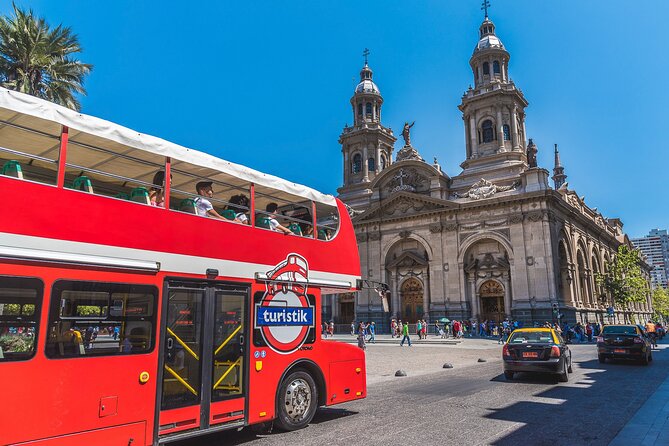
The service is operated by Turistik and uses a distinctive red double-decker bus. You receive an unlimited one-day ticket, so you can ride the complete loop or break it up with visits to the places that interest you most. The route is designed to run between 9:30am and 6pm, with buses scheduled roughly every 30 minutes.
That sounds generous on paper, but Santiago traffic can change the pace. Some rides have been smooth, while other trips have involved waits closer to 45 minutes or longer. If you want a relaxed day with many stops, start early and keep your plan selective.
A few more Santiago half-days to weigh up
- Santiago: Cajon del Maipo/Embalse del Yeso Tour with Picnic
★ 4.3 · 3,789 reviews - Santiago: Vina Del Mar, Valparaiso, Casablanca & Reñaca Tour
★ 4.2 · 2,838 reviews - Small-Group Cajón del Maipo Full-Day Tour and Picnic
★ 4.5 · 2,277 reviews
What the $50 ticket is really buying you
At $50 per person, this is not the cheapest way to move around Santiago. Its value comes from combining transportation, a broad city route, an elevated view, and commentary in one ticket. You can use it to see how the districts fit together before deciding where to return later.
The ticket includes only the hop-on hop-off bus. Cable car, funicular, museum, shopping, and observation-deck tickets cost extra. That matters most at San Cristobal Hill, where the ride itself can take you near the cable car and funicular, but the actual hill attractions are not included in the bus ticket.
I would book it if you want a simple first-day overview, especially if you are staying near one of the route stops. I would think twice if you already know Santiago well or plan to spend most of the day inside museums and historic buildings. In that case, ordinary city transport and walking may offer better value.
The 9:30am start and the route’s timing
The day begins at 9:30am, and you can board at any serviced stop. A full circuit takes about two hours when traffic behaves, giving you a useful look at Santiago even if you never leave the bus.
The practical challenge is that the bus does not operate like a private car. Traffic around the center, Providencia, and the taller office districts can slow everything down. A two-hour loop can stretch, and every stop you add uses more of the service window that ends at 6pm.
I would not try to visit every stop in one day. Pick two or three priorities, then use the complete loop as your moving city tour. For example, you might ride through the central district, get off at Plaza de Armas, visit Santa Lucia later, and finish near San Cristobal Hill or Costanera Center.
The published route describes 12 stops, while the detailed stop-by-stop information names 10 locations. Because pickup points and operating patterns can change, check the current route map and app on the morning of your ride.
Stop 1: Parque Arauco for shopping and a polished start

Mall Parque Arauco sits in the eastern part of Santiago and combines international stores with an outdoor dining boulevard. It is a practical stop if you want shopping, a meal, or a walk in a modern commercial district.
This is not the place to begin if your main goal is colonial Santiago. It is far from Plaza de Armas, but it helps show the city’s modern side. The bus route makes more sense here for visitors staying in Las Condes or Vitacura than for someone focused only on the old center.
Same base, a completely different landscape:
- Santiago: Cajon del Maipo & Embalse El Yeso Trip with Picnic
★ 4.5 · 1,859 reviews - Viña Del Mar-Valparaiso -Casablanca -Reñaca-Oceanic Rock-Concon
★ 4.5 · 1,564 reviews - Santiago: Valparaiso, Viña del Mar, & Casablanca Valley Tour
★ 4.8 · 1,491 reviews - Farellones Park Tour
★ 5.0 · 848 reviews
Stop 2: Bicentennial Park and its lagoons
Bicentennial Park is a 27-hectare green area beside the eastern districts. Its lagoons attract swans, flamingos, and herons, and the open setting gives you room for a stroll and wide city photographs.
I like this stop as a break from traffic and buildings. Give it time if you want a proper walk, since a quick ten-minute hop off will not show much of the park. It also works well for a quieter part of the day, though the bus schedule may make a long pause harder to fit into a one-day ticket.
Stops 3 and 4: San Cristobal Hill by cable car or funicular

The route offers two ways to reach Santiago’s famous hill. From the stop at Los Conquistadores and Pedro de Valdivia Norte, the Santiago Cable Car is about a five-minute walk away. Its summit gives you a 360-degree view of the city and the Andes.
At Pio Nono 445, you are near the Santiago Funicular, a historic railway linking Bellavista with the top of San Cristobal Hill. Its Gothic entrance and steep ride are part of the appeal. The two stops serve different sides of the hill, so check which one fits your plan before getting off.
This is the stop I would prioritize. The view gives you a clear sense of Santiago’s size and the mountains around it. The bus ticket does not include the cable car or funicular ride, so budget for a separate admission.
San Cristobal Hill is also where timing matters most. A short visit may leave you watching the clock, while a proper cable car or funicular outing can take a large part of the afternoon. If you want the hill, make it your main stop rather than trying to squeeze it between several central attractions.
Stop 5: Plaza de Armas, Santiago’s historic center
Plaza de Armas is the city’s traditional heart. The Metropolitan Cathedral and Central Mail surround the square, and the nearby streets offer the clearest introduction to Santiago’s older center.
This is a good place to leave the bus and walk. You can see the square, look into the cathedral, and continue toward other central sights. The square is large, and the exact bus pickup point may not be obvious, so take note of where you got off before wandering away.
Several people have had trouble finding the pickup location here. Do not assume the bus will be waiting in the most obvious part of the plaza. The app can help, but I would still ask the onboard staff or a local business for the current stop before leaving the area.
Stop 6: Palacio de La Moneda and the republican center
The stop on Teatinos is intended for Palacio de La Moneda, the seat of Chile’s government. The palace represents the institutional side of Santiago and adds political context to a day otherwise filled with parks, shopping, and viewpoints.
The stop information is worth checking carefully. Some buses have reportedly skipped or altered the La Moneda stop without a clear announcement. If this palace is a priority, confirm with staff before getting off and make sure you know where the next bus should collect you.
This is one of the places where the bus is more useful as a connector than as a complete visit. You will need time on foot to appreciate the surrounding streets and buildings.
Stop 7: Santa Lucia Hill and Barrio Lastarria
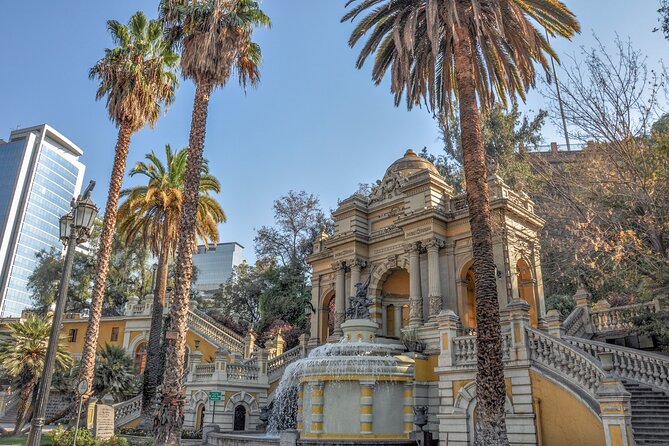
Cerro Santa Lucia is an urban park with terraces, fountains, and viewpoints. It has been linked to Santiago’s early development and remains one of the city’s classic central sights.
Nearby Barrio Lastarria adds cafes, restaurants, and cultural venues. I like this pairing because you can combine a short climb and city views with an easy meal or coffee. It is a more rewarding stop than simply photographing the bus route from above.
Wear sensible shoes if you plan to explore the hill’s terraces. The bus stop is on Alameda, a busy avenue, so allow time to cross safely and find your way back to the exact pickup point.
Stop 8: Plaza la Aviacion in Providencia
Plaza la Aviacion sits beside the Mapocho River and is known for its large fountain and green spaces. The surrounding Providencia district has cafes and bars, making this a useful stop for a walk or a break.
This area shows another face of Santiago: less colonial than the center, but still pleasant for strolling. It can be a good place to pause before continuing toward the eastern districts.
The drawback is that a stop like this can become a long wait if the next bus is delayed. If you leave here, use the app to track the vehicle and avoid spending too much of your afternoon standing beside the road.
Stop 9: Costanera Center and Sky Costanera
Mall Costanera Center is next to the region’s tallest tower, Sky Costanera. The observation deck offers 360-degree views of Santiago, though its admission is separate from the bus ticket.
This is a strong final stop if you want shopping, food, or a high view after seeing the city from street level. It also makes a useful contrast with Plaza de Armas and Santa Lucia. The old center shows Santiago’s earlier character, while Costanera Center shows its modern commercial side.
Plan this stop only if the bus is running close to schedule. The eastern districts are not a quick detour from the center, and a long stop here could leave you with less time for the return loop.
Stop 10: El Golf and the interactive museum
The stop at Isidora Goyenechea serves the elegant El Golf neighborhood. Modern architecture, cafes, and restaurants surround the area, along with the Las Condes Interactive Museum.
The museum uses audiovisual displays and interactive activities, making it a reasonable choice for families. It is also a useful stop if you want an indoor visit during hot weather. As with the other museums and attractions, admission is not part of the bus ticket.
El Golf is best treated as a planned stop rather than an accidental one. Decide before boarding if the museum matters to you, then check how much time remains before the final bus departure.
Commentary, comfort, and the upper deck
The open upper deck gives you the best view, particularly when the bus passes broad avenues and mountain-facing parts of the city. Tree branches can brush the upper level on parts of the route, so you may want to sit toward the center rather than right at the front or edge.
The lower deck is air-conditioned and more comfortable during a hot afternoon. It is also the sensible choice if you want a steadier ride or need a break from the sun.
Audio commentary is available through onboard headsets and covers Santiago’s sights in several languages. When the system works, it adds useful background to the buildings and districts passing outside. Headphone jacks have not been reliable on every bus, and some equipment has produced static or unclear sound.
I would test the headset soon after boarding. If one socket crackles, try another. Some buses have also had audio systems that did not function properly, so keep your expectations modest and use the ride mainly for the view and transportation.
Finding the stops and managing the app
The biggest practical weakness is stop signage. Several pickup points are not clearly marked, and an address in the booking information may not place you directly beside the bus. Plaza de Armas is especially confusing because it is large, and some stops have reportedly shifted by a block or more.
Use the Turistik app to track buses when possible. It can show vehicles in real time, which is helpful when you are deciding whether to wait or find another way across town. Still, an app cannot fix a bus that leaves the route early or fails to stop.
Before you get off, ask where the next pickup point is. Keep a note or photo of the bus stop location. This small step can save you a long search on a busy avenue.
How the service performs in real life
The staff are one of the stronger parts of this experience. Onboard assistants have been friendly, helpful, and able to communicate in English and other languages. Specific staff praised by name include Miguel and Helen, though staffing changes from day to day.
The service itself has been less consistent. Many rides have been clean, comfortable, and easy to use, with buses arriving close to schedule. Other trips have involved long waits, missing audio, unclear stops, or buses leaving the route before the advertised 6pm end.
One serious complaint described a vehicle problem that caused a passenger to leave the route and arrange an Uber. That appears to be an isolated but important warning. If a bus seems unsafe or poorly maintained, do not feel obliged to remain onboard.
The cancellation terms are straightforward: cancel at least 24 hours before the start time for a full refund. Cancellations made later are not refunded, and poor weather may lead to a new date or a full refund.
Who will get the most from this bus
I would recommend this experience for a first day in Santiago when you want to understand the city’s layout before choosing where to spend more time. It is especially useful for solo visitors, families, and anyone who prefers not to arrange several separate rides.
It also suits you if you want a broad look at Santiago but do not need a guide walking beside you at every stop. The audio gives you a basic explanation, while the staff can help with practical questions.
I would be cautious if you have only a few hours, need exact departure times, or want a fully guided historical tour. Heavy traffic and uncertain waits can eat into the day. It is also a weaker choice if your only goal is Plaza de Armas and Santa Lucia, since those areas are close enough to explore mainly on foot.
Should you book the Santiago bus?
Book it if you value flexibility, want San Cristobal Hill and the central sights linked in one route, and are willing to accept a loose schedule. Start at 9:30am, ride part of the loop without getting off, then choose no more than two or three stops.
The best use of the $50 fare is a full sightseeing day with several rides, not a single two-hour circuit. Confirm the stops, test the audio, track the buses, and protect your return time. If you need dependable transport above all else, Santiago’s regular transit or taxis may be a better backup.
FAQ
How long does the Santiago hop-on hop-off bus loop take?
The complete city loop takes about two hours, although traffic can make the actual ride longer.
What hours does the bus operate?
The service is scheduled to run from 9:30am until 6pm.
How often do buses leave each stop?
Buses are scheduled to depart from each stop about every 30 minutes.
Can I get on and off more than once?
Yes. Your one-day ticket allows unlimited hop-on hop-off use during the operating period.
What is included in the ticket?
The ticket includes unlimited hop-on hop-off bus rides for one day.
Are the cable car and funicular included?
No. Tickets for the Santiago Cable Car, Santiago Funicular, museums, Sky Costanera, and other attractions are not included.
Where can I see Santiago from above?
San Cristobal Hill offers 360-degree city views. You can reach it near the Santiago Cable Car or Santiago Funicular stops.
Does the bus have air-conditioning?
The lower deck is air-conditioned. The upper deck is open and provides a higher viewing position.
Is audio commentary available?
Yes. Audio commentary is provided through onboard headsets and is available in several languages. Equipment quality can vary between buses.
Can I cancel for a full refund?
Yes, if you cancel at least 24 hours before the experience start time. Late cancellations and late changes are not accepted for a refund. If poor weather causes the operator to cancel, you will be offered another date or a full refund.
Just added around Santiago
- Santiago: Private Pomaire, Isla Negra, and Pablo Neruda Tour★ 3.9 · 3 reviews
- Santiago de Chile: Half-Day City Tour with Local Cuisine★ 4.5 · 3 reviews
- Santiago: Guided City Tour through the historic center of Santiago★ 4.1 · 3 reviews
- ISLA NEGRA AND ALGARROBO WITH VINICOLA UNDURRAGA – TOUR : CHILE★ 3.3 · 3 reviews
- Valparaíso Tour with Funicular Ride and small groups★ 5.0 · 3 reviews
- Portillo & Laguna del Inca with Lunch at the Hotel Portillo★ 5.0 · 3 reviews
- Santiago: Private Half-Day City Tour★ 4.2 · 3 reviews
- From Santiago: Isla Negra, Pablo Neruda Museum & Winery Tour★ 5.0 · 3 reviews
Santiago Tours, compared.

Cajon del Maipo/Embalse del Yeso Tour with Picnic
Read our review →
Vina Del Mar, Valparaiso, Casablanca & Reñaca Tour
Read our review →
Small-Group Cajón del Maipo Full-Day Tour and Picnic
Read our review →
Valparaiso -Casablanca -Reñaca-Oceanic Rock-Concon
Read our review →
Valparaiso, Viña del Mar, & Casablanca Valley Tour
Read our review →


Portillo and Laguna del Inca Day Trip with Picnic
Read our review →Browse the lists this tour appears in