Reviewed · TOURS
The Magnificient Elqui Valley Grand Tour
The Elqui Valley is one of Chile’s most unusual day trips: a dry mountain corridor where Diaguita art, Spanish haciendas, pisco, poetry, and new age traditions all meet. In 10 hours, you move from La Serena into villages, vineyards, steep mineral-colored peaks, and towns tied to Nobel Prize-winning poet Gabriela Mistral.
I like the range of this outing. You get more than scenery, with a pisco museum, food and wine tasting, indigenous villages, a solar-cooking restaurant, and stops tied to Mistral. I also like the guiding. Cristóbal is praised for explaining the valley’s past and culture in a way that gives each stop a reason to matter.
The tradeoff is its full schedule. With roughly 17 stops, some visits last only 10 to 15 minutes, while the long drive and repeated getting in and out can feel tiring. Bring water, and do not book this if you need an easy-access outing or prefer a slow visit at one place.
Key points to know before you book
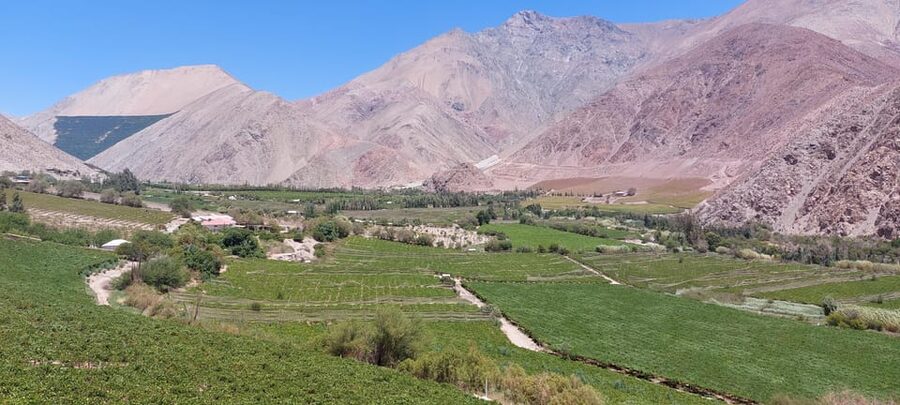
- Pisco and Chilean wine: Visit the Capel Pisco Distillery and Museum, plus a gourmet food and wine stop with tasting opportunities.
- Gabriela Mistral country: See the Casa Escuela Gabriela Mistral and the towns connected with her life and work.
- Indigenous villages: Walk through El Molle, El Tambo, and Diaguitas, with time for local crafts and small purchases.
- Solar cooking lunch: Enjoy a three-course meal with several food and drink choices at Entre Cordilleras.
- Full-day value: The $195 price includes air-conditioned transport, selected admissions, tastings, lunch, and pickup and drop-off in qualifying parts of La Serena.
- Strong guiding: Cristóbal’s detailed explanations are a major asset, especially if you want context rather than a simple scenic drive.
Why the Elqui Valley makes such a good day trip
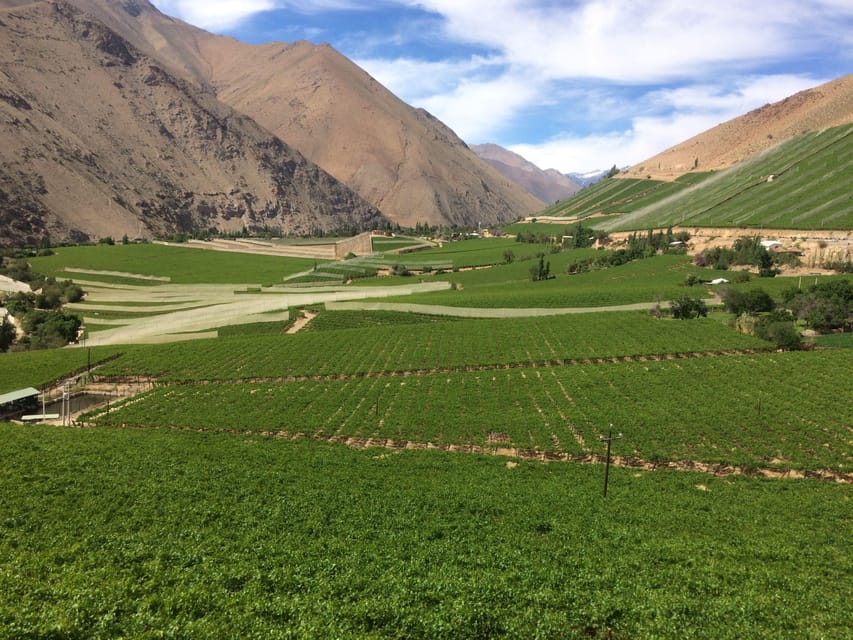
The Elqui Valley is not just a pretty road through the mountains. It is a meeting point between several strands of Chilean culture.
Pre-Columbian villages and Diaguita traditions sit alongside churches and hacienda houses built during the Spanish period. Vineyards and fruit crops thrive in a dry climate, while pisco distilleries turn local grapes into one of Chile’s best-known spirits. The valley also has a strong connection to Gabriela Mistral, whose poetry and life are closely tied to the area.
You will see this mixture as the day unfolds. One moment you may be looking at a dam and sharp, pyramid-shaped mountains. Later, you may be tasting pisco, browsing pottery, eating food prepared with solar heat, or standing near the school where Mistral taught.
That variety is the main reason to choose this experience. It gives you a broad introduction to the valley without asking you to arrange several separate visits.
Other Chile days people book alongside this one:
- Santiago: Cajon del Maipo/Embalse del Yeso Tour with Picnic
★ 4.3 · 3,789 reviews - Santiago: Vina Del Mar, Valparaiso, Casablanca & Reñaca Tour
★ 4.2 · 2,838 reviews - Small-Group Cajón del Maipo Full-Day Tour and Picnic
★ 4.5 · 2,277 reviews
Leaving La Serena for Paihuano and Vicuña
Pickup is provided from accommodations in La Serena’s historic center and along the Avenue of the Sea. The exact pickup time is sent the day before, so you need to give the operator your accommodation address and be ready at that location.
The air-conditioned vehicle matters here. This is a long day with plenty of road time, and the valley can be warm and dry. The drive itself is part of the experience, with views toward the semiarid hills, cultivated areas, and mountain formations.
The first listed stop is Paihuano, where you receive a short guided visit and a look at the scenery along the way. The stop is brief, about 10 minutes, so think of it as an introduction to the valley rather than a full town tour.
Vicuña receives another short visit. This is one of the valley’s principal historic towns, and the stop helps place the surrounding villages, vineyards, and cultural sites in context. With only about 10 minutes scheduled, you will not have time to explore every corner, but you can get a feel for the town and hear why it matters.
Gabriela Mistral’s school and the Puclaro Dam
The Casa Escuela Gabriela Mistral is one of the more meaningful stops. The small schoolhouse connects the scenery to the poet’s early life and gives the valley a personal story, not just a list of attractions.
The visit is planned for about 15 minutes. That is enough for an introduction and a look around, but it is short if you like reading every panel or lingering over literary details. If Gabriela Mistral interests you, listen closely to the guide and keep your expectations realistic. This is a compact visit within a large day.
At Puclaro Dam, the focus shifts back to views. You get around 15 minutes for photographs and an explanation of the area. The dam provides a clear contrast between the dry surrounding hills and the importance of water in the valley.
I like this pairing. The school gives you a human story, while the dam shows the practical side of life in a dry region. Together, they help explain why agriculture developed here despite the semiarid climate.
Capel pisco, El Molle, and the first village stops
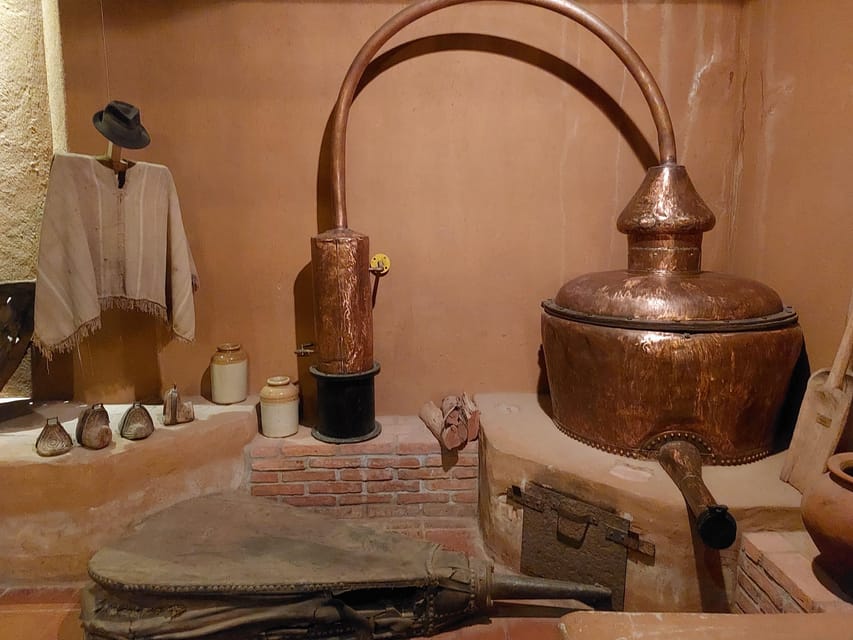
The Centro Turístico Capel offers a stop connected with Chilean pisco production. You can expect a guided visit and time for photographs, with about 15 minutes scheduled.
The tour description also identifies the Capel Pisco Distillery and Museum as part of the day. The short timing means you should expect an overview rather than a long production tour. Still, it gives useful context before later tastings and helps explain why pisco is so closely linked to the Elqui Valley.
El Molle follows with about 20 minutes for a visit, a break, photographs, and a guided look around. The village is presented as an indigenous settlement, and it is one of the places where the valley’s older cultural roots come into view.
You may find the short stops appealing if you want variety. If you prefer to sit in one café, study architecture, or spend an hour browsing, the pace may feel rushed. This outing is designed as a survey of the valley, not a village-by-village walking tour.
Same base, a completely different landscape:
- Santiago: Cajon del Maipo & Embalse El Yeso Trip with Picnic
★ 4.5 · 1,859 reviews - Tourist bus around Santiago for a day
★ 4.5 · 1,857 reviews - Viña Del Mar-Valparaiso -Casablanca -Reñaca-Oceanic Rock-Concon
★ 4.5 · 1,564 reviews - Santiago: Valparaiso, Viña del Mar, & Casablanca Valley Tour
★ 4.8 · 1,491 reviews
Small-town Chile at Plaza de Armas and El Tambo
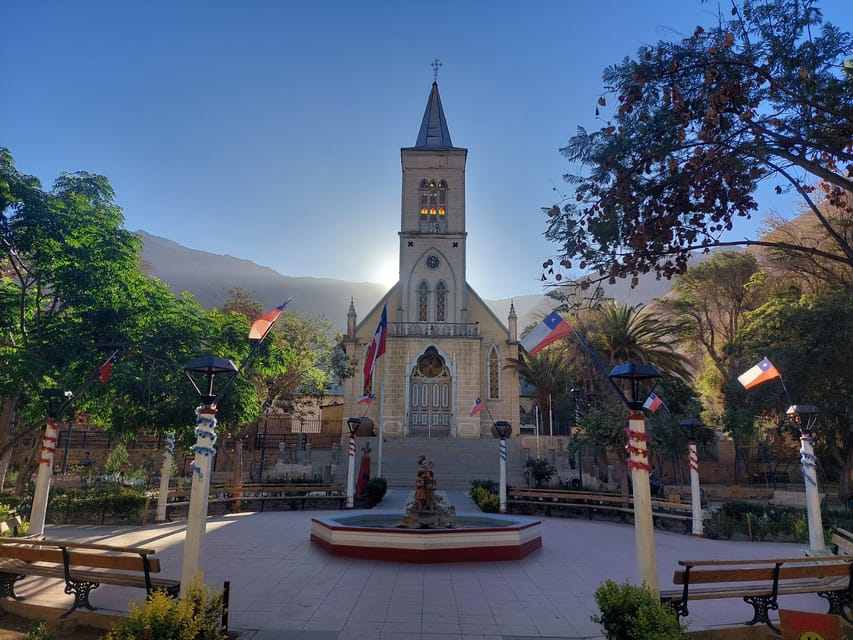
A Plaza de Armas stop gives you another view of local town life. The visit lasts about 15 minutes and includes guiding and sightseeing.
These central squares are useful points for understanding the valley’s Spanish colonial influence. You can look for the relationship between the square, nearby buildings, and the religious or civic traditions brought during the Spanish period. The guide’s explanation is especially helpful because the stop itself is brief.
At the Papayas Olivier salesroom or Vineyard Felarnia, the pace slows slightly. You have about 25 minutes for a visit, wine tasting, food tasting, and shopping.
This is a practical stop for sampling regional products. It also shows how the valley’s dry climate supports fruit and grape production. The wording allows for either the papaya salesroom or Vineyard Felarnia, so the exact focus may vary, but you should expect a food or wine-related tasting and the chance to buy something.
El Tambo comes next, with about 15 minutes for a guided visit, photographs, and a walk. Like El Molle, it is a brief encounter with a village rather than a long independent exploration.
I appreciate that the route includes these smaller places instead of concentrating only on famous towns. You get a better sense of the valley as a lived-in region, not just a chain of scenic viewpoints.
Solar cooking and a proper lunch at Entre Cordilleras
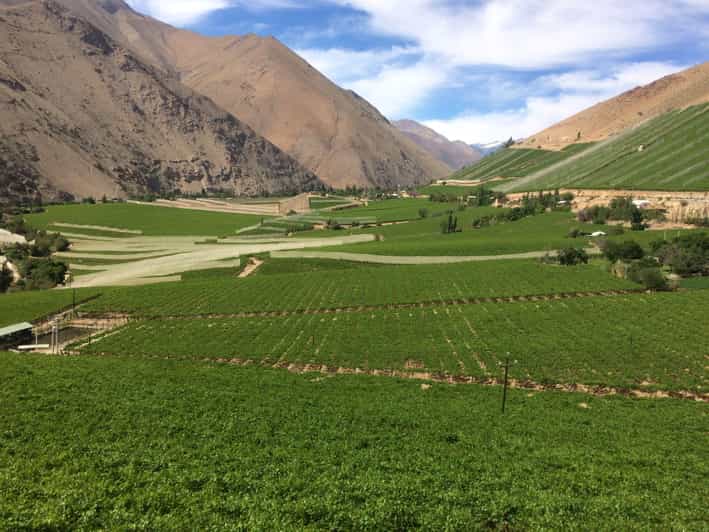
The meal at Restaurant Solar Entre Cordilleras is one of the day’s most distinctive features. You have about 40 minutes for lunch, free time, shopping, sightseeing, and a visit to an arts and crafts market.
The lunch menu includes a starter, main course, and dessert, with several choices of dishes and drinks. The restaurant’s solar cooking theme connects the meal to the valley’s strong sunshine and dry climate. It is a memorable cultural detail, not simply a convenient place to eat.
The 40-minute timing is useful, but it is not leisurely by restaurant standards. You should have enough time for the included meal, yet you may need to keep an eye on the clock if you also want to browse the crafts market.
I like that lunch is built into the day rather than left for you to solve. It keeps the group moving and makes the $195 price easier to judge. A meal, tastings, transport, admissions, and guiding add up quickly when booked separately.
Diaguitas and the valley’s craft traditions
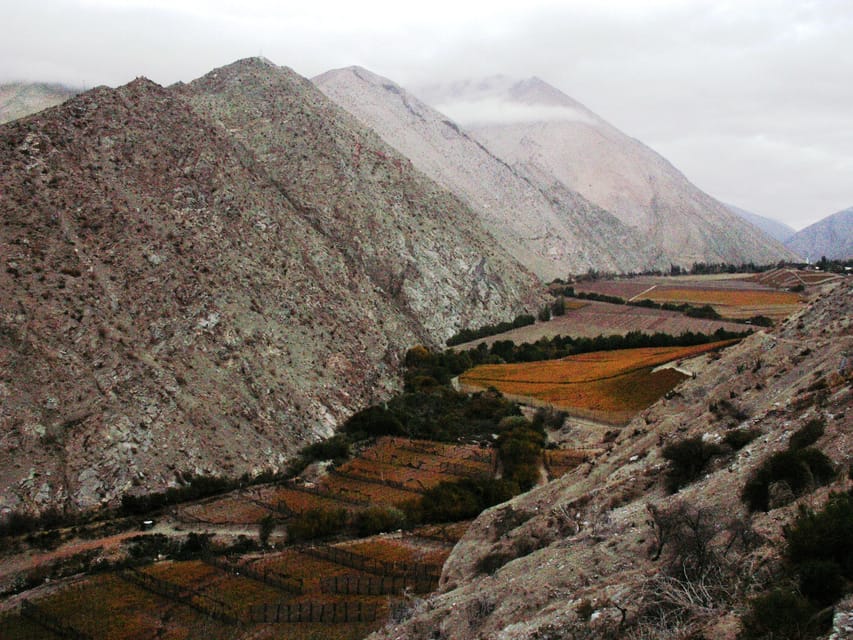
Diaguitas receives the longest scheduled visit before the final stretch of the tour, about 80 minutes. You have time for a guided visit, walking, free time, shopping, and a look at local spirits.
This is where the cultural side of the outing gets room to breathe. You can browse crafts, look for Diaguita-inspired designs, and spend time in the village without being hurried through a 10-minute photo stop.
The valley’s indigenous art is one of the most interesting parts of the experience. The Diaguitas are associated with distinctive pottery and geometric patterns, and the stop gives you a chance to see local craft traditions in their home setting. The supplied information does not specify exactly which shops or objects will be available, so treat the shopping as an opportunity rather than a guaranteed purchase list.
If you want authentic souvenirs, this may be one of the better places to consider buying something. Small craft purchases support local makers more directly than a generic gift shop, though you should judge each item for yourself.
Regional food, Altovalsol, and Cerro Polla Alta
A stop on Avenida Francisco de Aguirre includes regional food, dessert, wine, cocktails, and an aperitif, with about 15 minutes scheduled. The list of inclusions suggests a tasting-oriented pause, though the exact order and amount of food can vary.
This is another chance to connect what you see in the valley with what you taste. Fruit, grapes, wine, pisco, and local cooking all reflect the area’s unusual combination of sun, dry air, and cultivated land.
Altovalsol offers about 25 minutes for a guided visit, a walk, photographs, and free time. The stop adds another local settlement to the day and gives you a chance to step out of the vehicle.
At Mirador Cerro Polla Alta, you have about 25 minutes for views and photographs. This is the kind of stop that helps the entire route make sense. From a lookout, the valley’s cultivated strips, dry hills, and sharp mountain forms are easier to read as one connected place.
I would use these stops to slow down mentally, even if the schedule remains busy. Put the camera down for a moment and listen to the guide describe how the villages, farms, vineyards, and mountains fit together.
Pisco Elqui, the best-known village on the route
Pisco Elqui is one of the headline stops. You have about 40 minutes for a guided visit, walking, shopping, photographs, and an arts and crafts market.
The town is known for its connection to pisco and its craft market. You should have time to walk around and browse, though not enough for a long, unplanned wander. This is a good place to look for locally themed objects and to enjoy the town’s mountain setting.
The tour also presents Pisco Elqui as a place associated with mystical and new age communities. That adds another layer to the valley’s identity. Along with indigenous traditions, Catholic and Spanish influences, poetry, agriculture, and distilling, the area has attracted spiritual and alternative communities.
Do not expect the whole visit to focus on that subject. It is part of the valley’s character, but the day gives equal weight to food, history, scenery, and local products.
The final views at Río Marquesa
Río Marquesa is the last major stop before returning to La Serena. About 40 minutes are scheduled for a guided visit, photographs, and a walk.
By this point, you will have seen the valley from several angles. The river setting provides a final chance to stretch your legs and take in the scenery before the return journey.
The route back to La Serena completes a long loop through the valley. Since the total experience lasts about 10 hours, you should plan for a full day rather than an easy half-day outing. Comfortable clothing, water, and shoes suitable for short walks are sensible choices, although the only required item specifically given is water.
What the $195 price really covers
At $195 per person, this is not the cheapest way to see the Elqui Valley. Its value comes from how much is bundled into one day.
The price includes:
- Air-conditioned transportation
- Pickup and drop-off from qualifying La Serena accommodations
- A bilingual guide in English or Spanish
- Tickets and listed admissions
- Tastings
- A starter, main course, dessert, and drink options at lunch
- Visits to villages, cultural sites, viewpoints, and pisco-related attractions
If you hired transport, arranged a private route, paid for meals, and added tastings separately, the cost could rise quickly. The tour also removes the need to plan the order of distant stops.
The limitation is control. You do not decide how long to stay in Vicuña, Diaguitas, or Pisco Elqui, and some visits are tightly timed. I see the price as fair for a visitor who wants a broad, guided introduction in one day. It is less compelling for someone already based in the valley who can visit slowly and independently.
Who should choose this Elqui Valley tour
I would recommend it to you if you are staying in La Serena and want one substantial day devoted to the Elqui Valley. It suits people who enjoy a mix of scenery, food, alcohol tastings, local crafts, poetry, and cultural background.
It is also a good fit if you prefer explanations while you travel. Cristóbal’s detailed storytelling is a real advantage, especially when the route moves quickly between indigenous, colonial, agricultural, and literary subjects.
You may want a different plan if you dislike long days, short stops, or frequent vehicle changes. The experience is not suitable for people with mobility impairments or people over 95 years old. Pets, alcohol, and drugs are not permitted, and you need to supply your accommodation address in advance for pickup coordination.
Free cancellation is available up to 24 hours before the tour for a full refund, and you can reserve now while paying later. Those policies make it easier to hold a place while your La Serena plans take shape.
Should you book the Magnificient Elqui Valley Grand Tour?
Book it if you want the big-picture Elqui Valley experience and value having transport, a bilingual guide, lunch, and tastings handled in one package. You will see more cultural sites and villages than you could comfortably arrange on your own in a single day.
I would be especially inclined to book if Gabriela Mistral, Chilean pisco, indigenous crafts, and solar cooking appeal to you. Skip it in favor of a slower private or independent visit if your priority is lingering in one town or taking long, unplanned walks.
The strongest reason to go is the mix. The mountains are beautiful, but the pisco, poetry, village life, food, and local stories are what give the day its shape.
FAQ
Where does the Elqui Valley Grand Tour start and finish?
The tour starts and returns to La Serena. Pickup and drop-off are included only from accommodations along the Avenue of the Sea and in La Serena’s historic town area.
How long does the tour last?
The experience lasts 10 hours. The exact starting time depends on availability, and the pickup time is sent to you the day before the tour.
Which languages are available?
The tour has a live bilingual guide in English and Spanish.
Is lunch included?
Yes. Lunch includes a starter, main course, and dessert, with several options for dishes and drinks. The meal takes place at the solar restaurant Entre Cordilleras.
What should I bring?
Bring water. The day includes walking, outdoor viewpoints, village visits, and time in a dry mountain region.
Can I cancel the tour?
Yes. You can cancel up to 24 hours in advance for a full refund. You can also reserve now and pay later.
Just added around Chile
- Punta Arenas: Magallanes National Reserve and City Tour★ 5.0 · 3 reviews
- San Pedro de Atacama: Cejar Lagoon, Tebenquiche & Ojos Salar★ 3.9 · 3 reviews
- From San Pedro de Atacama: Small group to Moon Valley★ 5.0 · 3 reviews
- Easter Island: 2 Full Days Private Tour★ 3.9 · 3 reviews
- Easter Island: Full Day Ancestral Caves and Orongo Village★ 5.0 · 3 reviews
- Santiago: Private Pomaire, Isla Negra, and Pablo Neruda Tour★ 3.9 · 3 reviews
- San Pedro de Atacama: Canyon Swimming Pools Trekking Trip★ 5.0 · 3 reviews
- Santiago de Chile: Half-Day City Tour with Local Cuisine★ 4.5 · 3 reviews
Tours, compared.

Cajon del Maipo/Embalse del Yeso Tour with Picnic
Read our review →
Vina Del Mar, Valparaiso, Casablanca & Reñaca Tour
Read our review →
Small-Group Cajón del Maipo Full-Day Tour and Picnic
Read our review →
Valparaiso, Viña del Mar, & Casablanca Valley Tour
Read our review →