
Reviewed · STARGAZING & ASTRONOMY TOURS
Stargazing Hiking Valle de Elqui
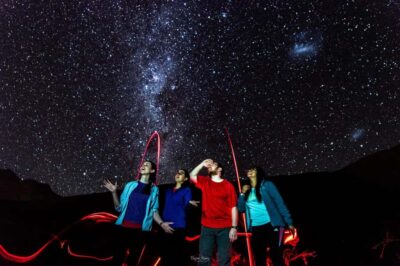
The best part of this Valle de Elqui outing comes after sunset, when Loreto turns a simple night hike into a guided look at Andean constellations and Indigenous astronomy. You will use Celestron 20×80 astronomical binoculars on a tripod, then take home an astronomical photograph from the evening.
I like the blend of sunset, quiet walking, meditation, and cultural teaching. I also like the practical touches: trekking poles, a portable chair, hot coffee or herbal tea, snacks, and private transport from Vicuña to Villaseca. The main consideration is the timing. You need moderate fitness, proper hiking shoes, and strict punctuality, and the activity is not suitable for anyone under 14.
Key points to know before booking
- The sky viewing uses Celestron 20×80 binoculars: These are mounted on a tripod, giving you a steadier look at the night sky than handheld binoculars.
- Loreto leads a cultural astronomy experience: The evening includes Indigenous worldviews, ancestral links between cultures, and Andean constellations.
- Sunset comes before the stars: You begin at a mountain viewpoint, so the outing has a scenic warm-up before darkness arrives.
- Sound therapy and meditation set the tone: Bowls and guided reflection are part of the experience, not an optional extra.
- The tour is private: Only your group participates, which matters if you prefer a quieter and more personal evening.
- You need to plan around a firm start: Arrive 15 minutes early. A delay of more than 10 minutes can mean exclusion without a refund.
Sunset first, stars later in the Valle de Elqui
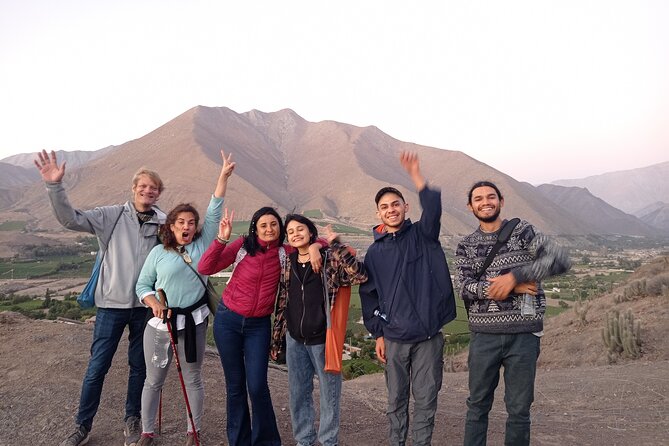
This experience wisely begins before full darkness. You start with safety recommendations at Casa Pumagui, then head toward a viewpoint for sunset over the mountains. That opening gives you time to settle into the setting before the astronomy begins.
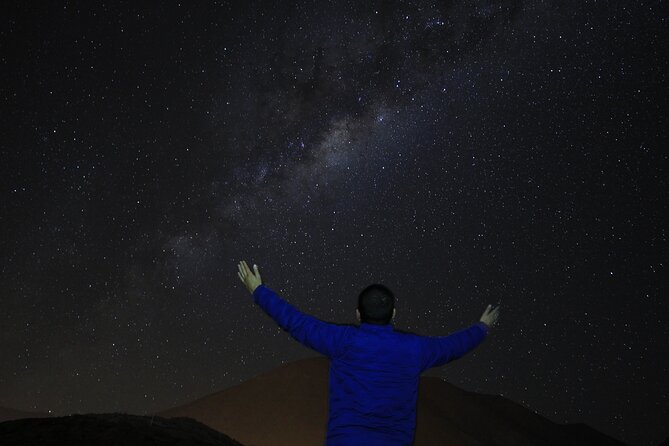
I like this order. A night-sky outing can feel abrupt if you simply arrive, sit down, and look up. Here, the fading light creates a clear transition from mountain scenery to the night sky. The sunset is also a good reason to bring a camera, though the included astronomical photography is the more unusual photographic keepsake.
The itinerary lasts about four and a half hours. Exact departure times shift by month. During January, the listed operating window runs from about 8:00 PM to 9:00 PM. In February, it moves earlier, from about 7:30 PM to 9:00 PM. During March, departures are listed from about 7:00 PM to 9:00 PM from Monday through Saturday.
Those times are best understood as seasonal scheduling windows rather than a promise that every departure begins at the same minute. When you book, confirm your exact start time and allow extra time to reach the meeting point.
More Stargazing Tours in Chile:
- San Pedro de Atacama: Etno-Stargazing Tour with Transfer
★ 4.8 · 629 reviews - San Pedro de Atacama: Stargazing Experience
★ 4.7 · 489 reviews - Astronomical Tour with Guide and Pick Up San Pedro de Atacama
★ 4.5 · 145 reviews
A gentle start with safety and sound
The evening starts with safety instructions at Casa Pumagui. That may sound routine, but it matters on a hike that continues after dark. You will be walking outdoors, and the provider asks you to wear hiking shoes and have a moderate level of physical fitness.
Trekking poles are included. They can help on uneven ground and give you more confidence as light fades, especially if you are not used to walking outside at night. The activity is not presented as a hard trek, but it is still a walking experience rather than a drive-up stargazing session.
The meditation and sound therapy follow. Singing bowls are used to help you focus on the surroundings before the astronomy lesson begins. I see this as a strong fit for people who enjoy a slower, reflective evening. If you want only technical facts about planets and stars, this portion may feel less essential. The tour clearly aims for a personal connection with the setting, not just a lesson in equipment.
That blend is also what makes the outing different from a standard observatory visit. You are not simply looking through a telescope while someone lists objects in the sky. The experience links the sky to attention, place, and cultural meaning.
Andean constellations and Indigenous sky knowledge
After the meditation, Loreto introduces the Indigenous worldview connected with the stars. The focus includes ancestral links between cultures and the way Andean communities understand the night sky.
This is an important part of the experience because astronomy does not belong only to modern instruments and scientific charts. Different cultures have read the same stars in different ways, assigning them meaning based on seasons, animals, farming, travel, and spiritual life. The provided details do not promise a fixed list of constellations or specific cultural groups, so you should expect a broad introduction rather than a specialized academic lecture.
Loreto is the guide named for this experience, and her role appears to be central to the evening. Her approach combines astronomy with cultural interpretation and meditation. That makes the quality of the outing closely tied to your interest in listening and asking questions. A person who enjoys a thoughtful guide-led experience will likely get more from it than someone who wants a fast sequence of star facts.
The cultural material is also handled with an emphasis on respect. The guide’s response to one participant specifically thanked her for engaging with the cultural content and approaching the experience with respect. That gives you a useful clue about the tone: come with curiosity, patience, and a willingness to hear a worldview that may differ from the familiar Western map of the stars.
Seeing the night sky through Celestron binoculars
The main viewing tool is a pair of Celestron 20×80 astronomical binoculars mounted on a tripod. The 20x magnification can bring distant sky objects closer, while the 80-millimeter objective lenses gather more light than ordinary compact binoculars.
The tripod matters. At high magnification, even small movements can make viewing frustrating. A stable mount lets you spend more time looking and less time trying to hold the image still. You will be guided toward Andean constellations rather than left to operate the equipment on your own.
These binoculars are not the same as a large observatory telescope, and the experience does not claim to be one. That is worth keeping in mind if you are an experienced amateur astronomer hoping for advanced equipment or a long catalog of deep-sky objects. The strength here is the combination of clear guidance, cultural context, and a portable viewing setup.
The evening is also shaped by local conditions. This activity requires good weather. If poor weather forces a cancellation, you can receive a full refund or choose another date. That policy is sensible for an outdoor astronomy tour, but it also means you should keep some flexibility in your schedule.
More Hiking Tours in Chile:
- Puerto Natales: Base of the Towers Day Hike
★ 4.8 · 727 reviews - From Santiago: Cajón del Maipo and Volcán San José Hike 8K
★ 4.9 · 418 reviews - Puerto Natales: Base of the Towers Trekking Experience
★ 4.8 · 191 reviews - Puerto Natales: Base Torres Small Group Trekking
★ 4.9 · 106 reviews
A quiet private outing, not a large group show
This is a private activity. Only your group participates, which changes the feel of the evening. You will not be sharing the guide’s attention with a busload of people, and the meditation and cultural discussion should be easier to follow.
A private tour can also be better for questions. If you want Loreto to explain a particular constellation, repeat a point, or adjust the pace, your group has more room to do that. The tradeoff is that private experiences often depend heavily on the interests and energy of the people who book them. If one person wants a silent meditation and another wants nonstop astronomy facts, the group should discuss expectations in advance.
The minimum age is 14. Children under 14 cannot participate. Service animals are allowed, and the meeting area is near public transportation, though the activity itself includes private transfer details that should be confirmed when booking.
What the included extras mean in practice
The $100 price per person is not just for a short viewing session. It covers about four and a half hours, a private group format, the guided hike, astronomical binoculars, trekking poles, a portable chair, snacks, coffee or tea, herbal tea, and astronomical photography.
I especially like the portable chair. After walking and during the sky viewing, having somewhere to sit makes a real difference. It also means you are not expected to stand for the entire astronomy portion.
The refreshments are simple, but they suit the setting. Coffee, herbal tea, and a snack can make a cool evening more comfortable. The supplied information does not specify the exact snack or drink choices, so tell the provider about any dietary needs before you go rather than assuming a particular option will be available.
Astronomical photography is included as a memory of the evening. The details do not state the number of images, delivery method, or exact style of photograph. Ask those questions before booking if the photo is a major reason you are choosing the activity.
Private transport is included from the city of Vicuña to Villaseca, where the activity takes place. The price does not include transfers from other places not named in the transport information, and an air-conditioned vehicle is not included. If you are staying outside Vicuña, do not assume pickup is covered.
Meeting point, footwear, and punctuality
The listed starting point is Navarino, Peralillo, Vicuña, Coquimbo, Chile. The activity ends back at the meeting point. The transport description also refers to transfer from Vicuña to Villaseca, so I would confirm the exact pickup instructions, especially if you are arranging your own way to the starting point.
Arrive 15 minutes before departure. This is not a relaxed suggestion. Delays of more than 10 minutes can result in exclusion from the experience, and the cancellation terms say that late changes or cancellations within 24 hours are not refunded.
Wear hiking shoes. This requirement is specific, and ordinary sandals or casual city shoes are a poor choice for a dark outdoor walk. You should also dress for changing temperatures, though the supplied information does not specify a clothing list. The important point is to prepare for an evening outside and avoid treating this as a seated indoor astronomy talk.
Alcohol is prohibited before or during participation. The provider reserves the right of admission to anyone under the influence. That rule is especially reasonable for a nighttime hike where footing, attention, and group safety matter.
Cancellation rules and the weather question
You can cancel for a full refund up to 24 hours before the start time. Inside that 24-hour window, the amount paid is not refunded, and changes are not accepted.
Poor weather is handled separately. If the provider cancels because conditions are unsuitable, you will be offered another date or a full refund. Because clear skies are essential to the experience, I would avoid booking this on the final night of a tightly packed itinerary if seeing the stars is your main goal.
The seasonal hours also make advance planning useful. The activity is booked, on average, 16 days ahead, so you should not leave it until the last minute if your dates in the Elqui Valley are fixed.
Who will enjoy this most
I would choose this outing if you want several elements in one evening: a sunset, a moderate outdoor walk, a reflective exercise, cultural interpretation, star viewing, and a photograph to take home.
It is a particularly good match for:
- Couples or friends who prefer a private evening
- Adults and teenagers aged 14 or older
- People curious about Indigenous astronomy
- Visitors who enjoy nature but do not want a demanding full-day trek
- Amateur sky watchers who value guidance and stable binocular viewing
- Anyone who likes a slower activity with time to pause and listen
I would hesitate if you want a purely scientific observatory program, a strenuous hike, or a very flexible start time. The meditation and sound therapy are core parts of the evening, so you should be comfortable with that style before booking.
Should you book the Valle de Elqui stargazing hike?
I would book it if you want your night under the stars to feel personal and rooted in the place, not just technical. Loreto’s mix of meditation, sound bowls, Indigenous sky traditions, Andean constellations, and binocular viewing gives the evening a clear identity.
The $100 price makes the most sense for someone who will use the full package: private transport from Vicuña, a four-and-a-half-hour outing, equipment, refreshments, a chair, poles, and photography. It is less compelling if you only want a quick look at the stars.
Before paying, confirm your exact departure time, pickup details, transport from your accommodation, photo arrangements, and any food requirements. Arrive early, wear hiking shoes, and keep a backup date in mind because the experience depends on good weather.
FAQ
How long does the stargazing hike last?
The experience lasts approximately 4 hours and 30 minutes.
Where does the activity start?
The listed meeting point is Navarino, Peralillo, Vicuña, Coquimbo, Chile. The activity ends back at the meeting point.
Is transportation included?
Private transportation is included from the city of Vicuña to Villaseca, the activity location. Transfers from other places not mentioned are not included.
What equipment is provided?
The experience provides trekking poles, a portable chair, astronomical binoculars, and astronomical photography. The binoculars are Celestron 20×80 models mounted on a tripod.
Is the activity suitable for children?
No. Participants must be at least 14 years old.
What should I wear?
You must wear hiking shoes. Participants should also have a moderate level of physical fitness.
What happens if the weather is poor?
The activity requires good weather. If it is canceled because of poor conditions, you will be offered another date or a full refund.
What is the cancellation policy?
You can cancel at least 24 hours before the start time for a full refund. Cancellations or changes made less than 24 hours before the start time are not accepted, and the amount paid is not refunded.
Just added around Chile
- Punta Arenas: Magallanes National Reserve and City Tour★ 5.0 · 3 reviews
- San Pedro de Atacama: Cejar Lagoon, Tebenquiche & Ojos Salar★ 3.9 · 3 reviews
- From San Pedro de Atacama: Small group to Moon Valley★ 5.0 · 3 reviews
- Easter Island: 2 Full Days Private Tour★ 3.9 · 3 reviews
- Easter Island: Full Day Ancestral Caves and Orongo Village★ 5.0 · 3 reviews
- Santiago: Private Pomaire, Isla Negra, and Pablo Neruda Tour★ 3.9 · 3 reviews
- San Pedro de Atacama: Canyon Swimming Pools Trekking Trip★ 5.0 · 3 reviews
- Santiago de Chile: Half-Day City Tour with Local Cuisine★ 4.5 · 3 reviews
Stargazing & Astronomy Tours, compared.
San Pedro de Atacama: Etno-Stargazing Tour with Transfer
Read our review →
Astronomical Tour with Guide and Pick Up San Pedro de Atacama
Read our review →
“Astronomical Adventure in San Pedro de Atacama”
Read our review →
Pisco Elqui: Mountaintop Stargazing and Night Portrait
Read our review →
Milky Way Sanctuary Stargazing Tour at Pangue Observatory
Read our review →Browse the lists this tour appears in