
Reviewed · SAN PEDRO DE ATACAMA TOURS
Astronomical Tour with Guide and Pick Up San Pedro de Atacama
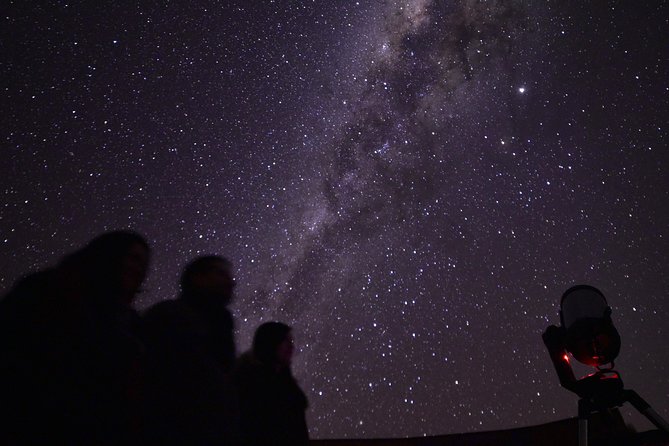
San Pedro de Atacama is famous for its clear, dark sky, and this tour gives you a simple way to enjoy it without renting a car or finding your own viewing spot. The best moments come when a telescope turns a faint point of light into Saturn, Jupiter, the Moon, or a star cluster with visible shape.
I like the expert guides, especially Patricio and Nathan, who explain big ideas in plain language and use a laser to trace southern constellations. I also like the practical touches: blankets, chairs, warm drinks, snacks, and a professional photograph. The main caution is group flow. With two telescopes and up to 16 people, or occasionally more during busy periods, you may spend a fair amount of time waiting your turn.
Key points to know before booking
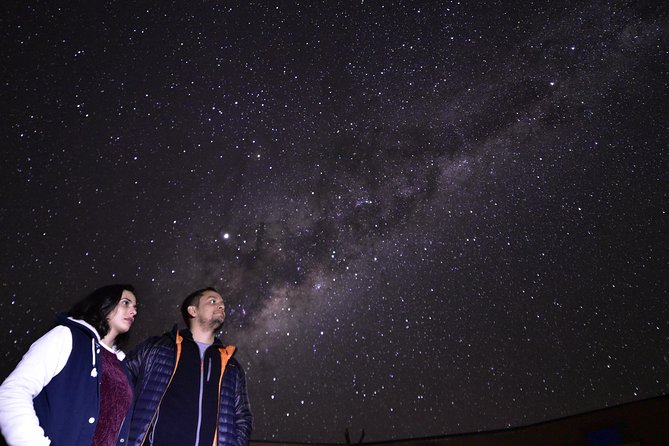
- The Moon changes the whole experience: A dark or nearly new Moon gives you the best chance of seeing the Milky Way, while a bright Moon is excellent for lunar photographs.
- You look through real observing telescopes: The guides may show planets, clusters, galaxies, nebulae, and stars, depending on the season and conditions.
- The astronomy lesson is a major part of the evening: This is not just a quick telescope stop. Expect explanations about stars, galaxies, distances, and southern constellations.
- Pickup begins at about 9:30 p.m.: The ride from central San Pedro to the viewing site is short, but hotel pickups and drop-offs can lengthen the evening.
- Language can affect the pace: Some departures use Spanish with English translation, while other guides have delivered the full tour in English.
- The price includes more than stargazing: At about $38 per person, you also get transport, refreshments, blankets, chairs, and a photo when conditions allow.
Why Atacama nights are worth planning around
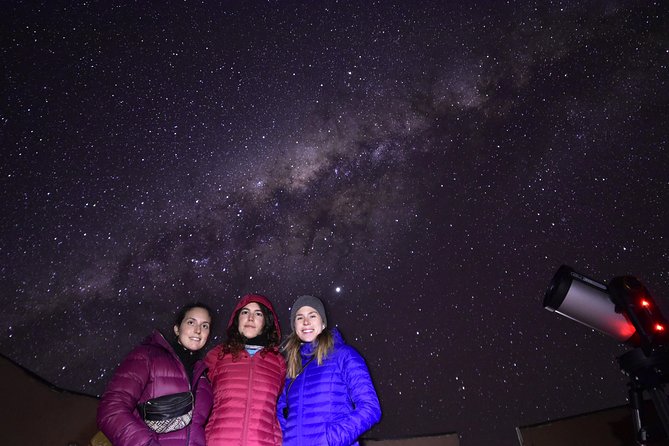
Atacama is a natural place for astronomy. The air is dry, the region has little rain, and San Pedro sits far from the bright lights of a major city. That does not guarantee a perfect sky every night, but it gives this activity a strong setting.
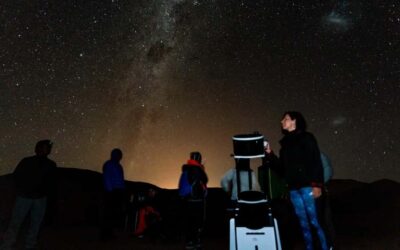
You do not need to know the names of stars before you arrive. The guide uses an astronomical laser pointer to show major constellations in the southern hemisphere, then explains what you are seeing. For me, that is the difference between simply looking at a sky full of stars and understanding how to read it.
The tour lasts about two and a half hours, including transport, setup, observing, photographs, and refreshments. It starts late because the sky needs to be dark, so you should plan for a night that runs well past midnight once the return ride is finished.
More Stargazing Tours in San Pedro de Atacama
- San Pedro de Atacama: Etno-Stargazing Tour with Transfer
★ 4.8 · 629 reviews - San Pedro de Atacama: Stargazing Experience
★ 4.7 · 489 reviews - “Astronomical Adventure in San Pedro de Atacama”
★ 4.5 · 96 reviews
What happens from the 9:30 p.m. pickup
The only scheduled stop is San Pedro de Atacama, but the evening has several distinct parts. Pickup is offered from accommodation in town, with an important limit: the service does not collect from the ayllus of Cucuter, Tulor, Coyo, Solor, or Quitor.
The vehicle takes you away from the central lights to the astronomy site. Some people have described the ride as around 10 to 15 minutes once underway. The slower part can be collecting several hotel guests, and one account reported about 15 to 20 minutes spent on pickups. Another described much longer delays during a crowded holiday period.
At the site, chairs are arranged around the telescopes. Blankets are available, which matters in the desert after dark. Evenings can feel cold, and the warm coffee or tea at the end is a welcome touch. Soft drinks, alcoholic drinks, and snacks are also provided.
The telescope session: expect turns, not constant viewing
The heart of the evening is the telescope session. The equipment may include computerized and manual telescopes, with reports of two or three instruments depending on the group and departure. The guide points each telescope at selected objects, then you take turns looking through the eyepiece.
This is a shared activity, not a private observatory appointment. Your actual time at the eyepiece depends on the group size, the number of telescopes, and how quickly the guide can move between targets. Some departures have felt relaxed, with enough time for each person to look carefully. Others have felt slow, with only a few minutes of personal viewing because people were waiting in line.
That difference is worth understanding before you pay. The tour is strongest when you treat the explanations as part of the experience rather than waiting only for your turn with the telescope. The guide may discuss the life of stars, the scale of the universe, and the distance to what you are seeing. You can also ask questions, though conversation and translation may become harder when several people are speaking at once.
The telescopes are powerful enough to show detail in the Moon and star clusters, and they may reveal planets such as Saturn and Jupiter. One guide helped a participant use a personal camera with the telescope, while another helped visitors photograph the Moon with a phone. Still, these are ground-based telescopes. Do not expect the sharply processed images produced by a space telescope or a large scientific observatory.
Patricio, Nathan, and the value of a good guide
The guide can make or break an astronomy tour. Patricio is repeatedly described as an engaging astronomy teacher who answers questions clearly and keeps the subject accessible. Nathan has also led departures in English and is praised for bringing real enthusiasm to the subject.
Language deserves special attention. Some sessions are fully in English. Others are mainly in Spanish, with a second guide translating. That arrangement can work well when the group is small and the guide pauses between telescope turns. It can feel rushed when the main guide is speaking beside one telescope while the translator is busy helping people at another.
If English is important to you, confirm the language before booking. The experience is much easier to follow when you can understand the explanation as the laser moves across the sky. A mixed-language group may still be enjoyable, but the English portion could receive less time.
Same base, a completely different landscape:
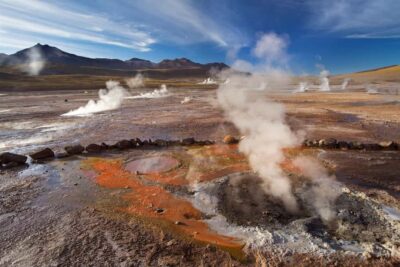
- San Pedro de Atacama: El Tatio Geysers Tour
★ 4.7 · 943 reviews - Piedras Rojas, Altiplanics Lagoons & Salar Full-Day Tour
★ 4.7 · 592 reviews - San Pedro Atacama: Baltinache Lagoons
★ 4.6 · 359 reviews - San Pedro de Atacama: Valle de la Luna Guided Tour
★ 4.4 · 312 reviews
Moon phases and the best night to go
The Moon is the single most important planning detail. A new Moon or a night with little moonlight gives you the best chance of seeing the Milky Way and faint objects such as galaxies and nebulae. This is the classic dark-sky version of the tour, with the broadest view of the stars.
A full or bright Moon does not make the evening pointless. It can be the star of the session, especially through a telescope. The craters and bright surface details can be striking, and the guides can still show planets, clusters, and other objects. The professional photo may also feature the Moon rather than the Milky Way.
The tradeoff is simple: choose a dark Moon for broad sky views, or accept a bright Moon for excellent lunar viewing and a lighter, less dramatic star field. If the Moon is half full, your view of the Milky Way may be limited. Check the lunar phase when choosing your date, and keep your expectations aligned with it.
Weather can cancel the night
Clear skies are essential. Cloud, wind, humidity, and other conditions can affect what the telescope can show. The operator may cancel based on weather forecasts and satellite observations, sometimes making the decision around 8 p.m.
That timing can be frustrating if you have already arranged your evening. There have also been cases where poor communication caused confusion around a cancellation, while other departures were cancelled for two nights and then ran successfully on the third. The sensible approach is to keep a backup night available if astronomy is important to you.
If poor weather cancels the tour, you are offered a different date or a full refund. If you cancel yourself, the stated policy allows a full refund when you cancel at least 24 hours before the 9:30 p.m. start. Changes or cancellations inside that window are not accepted for a refund.
Summer in San Pedro can bring periods of unstable weather, including the local rainy season from December through March. That does not mean every summer night will be bad, and the operator says it uses weather reports and satellite views rather than simple local assumptions. Still, a flexible schedule is wise during this period.
The astrophotography stop
Photography is included when there is no Moon, and a professional camera setup is used to take a souvenir image of you beneath the sky. This is one of the tour’s strongest extras. You can leave with a photograph that would be difficult to produce quickly with a phone.
The photo session can also slow down the evening. People may gather around the camera, repeat poses, or wait for their turn. On a busy night, this can take more time than expected and reduce the time available for telescope viewing.
The quality is generally a reason to book, but it is not guaranteed to be perfect. One photograph was described as blurry, while other photos were considered beautiful. Wind, focus, movement, lighting, and the Moon all affect the result. Think of the picture as a useful souvenir, not the sole reason to choose the tour.
Drinks, snacks, and staying warm
Refreshments come after the main observing session. You may have coffee or tea, soft drinks, wine, whiskey, or other alcoholic beverages, along with snacks. The warm options are especially useful because the desert night can be cold.
Do not mistake this for a meal. The food is a small finishing touch, not dinner, and the drinks have been described as arriving at the end rather than throughout the telescope session. Eat beforehand if you need a proper meal, and bring clothing suited to a cold night even though blankets are supplied.
The closing period may include drinks, questions, and final photographs. Allow yourself to enjoy it, but pay attention to instructions about departure. One account described the group being told rather abruptly to leave after the photographs, so the ending may be more practical than leisurely.
Is $38 a fair price?
At $38 per person, this is a reasonable price for a guided night out in San Pedro. You are paying for transport, access to observing equipment, an astronomy lesson, chairs, blankets, refreshments, and a professional photo in suitable conditions.
The value is best if you do not have your own car, camera, tripod, or astronomy experience. You could find a dark spot outside town and use a phone app to identify constellations, but you would not get the guide’s explanations, telescope views, refreshments, or organized photography.
The price becomes less attractive if you expect private telescope time or a large observatory-style show. In a full group, waiting can take up much of the evening. Holiday weekends may also bring larger crowds and slower transfers. If you can travel in a quieter period, April through August was identified as a lower-demand window, except around holiday weekends.
Who will enjoy this most
I would choose this tour for families, couples, and anyone curious about astronomy but unsure how to begin. Children often respond strongly to seeing the Moon or a planet through the eyepiece, while adults can enjoy the scale and science behind the view.
It also suits couples looking for a quiet night with a photograph and a drink at the end. A honeymoon couple even received champagne, though you should not assume that special arrangement is part of the standard offering.
Photographers may like the included night-sky portrait, but serious astrophotographers should see it as an introduction rather than a dedicated photo workshop. The operator may help with a personal camera, but the session is shared and the main aim is education and observation.
You may be disappointed if you want uninterrupted telescope time, a guaranteed Milky Way view, a private guide, or advanced astrophotography instruction. You should also think twice if your schedule cannot absorb a weather cancellation.
Practical ways to improve your night
Book as early as you can if your dates are fixed. The activity is booked an average of 23 days ahead, which suggests that popular nights can fill before your arrival.
Choose a date with little or no Moon if the Milky Way is your main goal. Choose a bright Moon if lunar detail and a Moon portrait appeal more to you.
Ask about the language of your departure, especially if you do not understand Spanish. Also confirm your pickup location, since the listed ayllus outside the collection area are not served.
Wear warm layers and closed shoes. Blankets are provided, but they are a supplement, not a substitute for clothing suited to a cold desert night.
Finally, keep your expectations realistic. The sky may be spectacular, but the telescope image will not resemble a polished space-agency photograph. The real reward is the combination of direct viewing, a clear explanation, and the strange pleasure of seeing a distant object with your own eyes.
Should you book the Astrotour?
Yes, if you want an affordable, organized introduction to the Atacama sky and you can choose a dark, clear night. The expert teaching, southern constellations, telescope views, refreshments, and included photo give the experience good value.
Book with caution if your priority is maximum eyepiece time. Ask about group size and English service, and avoid placing the tour on the last night of your stay. For the best chance of a memorable sky, plan around a new Moon and leave room for a weather-related reschedule.
FAQ
Where does the astronomical tour take place?
The experience takes place in San Pedro de Atacama, Chile, at a viewing site outside the central lights of town.
What time does the tour start?
The stated start time is 9:30 p.m.
How long does the tour last?
The tour lasts approximately 2 hours and 30 minutes, including transport and the activities at the viewing site.
Is hotel pickup included?
Yes, pickup from accommodation is included, subject to the service area.
Which areas are not included in pickup?
Pickup is not provided from the ayllus of Cucuter, Tulor, Coyo, Solor, or Quitor.
What can I see through the telescopes?
Depending on the season and sky conditions, you may see planets, star clusters, galaxies, nebulae, stars, and the Moon.
Is a photograph included?
Astro photography is included when there is no Moon. The tour also offers professional photographs under the night sky, although the final result depends on conditions.
Is the tour available in English?
Some tours are conducted fully in English. Other departures use Spanish with English translation, so you should confirm the language arrangement before booking.
What happens if bad weather cancels the tour?
If the tour is cancelled because of poor weather, you are offered another date or a full refund.
Just added around San Pedro de Atacama
- San Pedro de Atacama: Cejar Lagoon, Tebenquiche & Ojos Salar★ 3.9 · 3 reviews
- From San Pedro de Atacama: Small group to Moon Valley★ 5.0 · 3 reviews
- San Pedro de Atacama: Canyon Swimming Pools Trekking Trip★ 5.0 · 3 reviews
- San Pedro de Atacama: Rainbow Valley & Good Herbs Tour★ 4.3 · 3 reviews
- Full Desert. The most complete program you will find★ 3.2 · 3 reviews
- From San Pedro de Atacama: The Salt Flats Route, Full Day★ 3.7 · 3 reviews
- San Pedro de Atacama: Valle de la luna★ 3.0 · 3 reviews
- Valle de la Luna: A Moon-Like Escape in Atacama★ 5.0 · 3 reviews
San Pedro de Atacama Tours, compared.
San Pedro de Atacama: Etno-Stargazing Tour with Transfer
Read our review →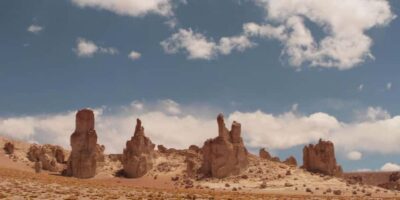
Piedras Rojas, Altiplanics Lagoons & Salar Full-Day Tour
Read our review →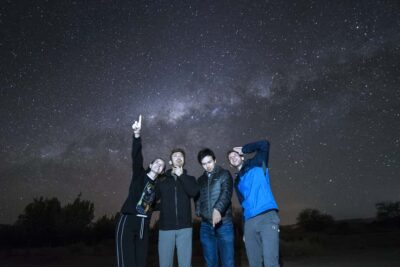
San Pedro de Atacama: 3-Day Activity Combo with 4 Tours
Read our review →
Triple tour: Red stones, highland lagoons and Chaxa Lagoon
Read our review →Browse the lists this tour appears in